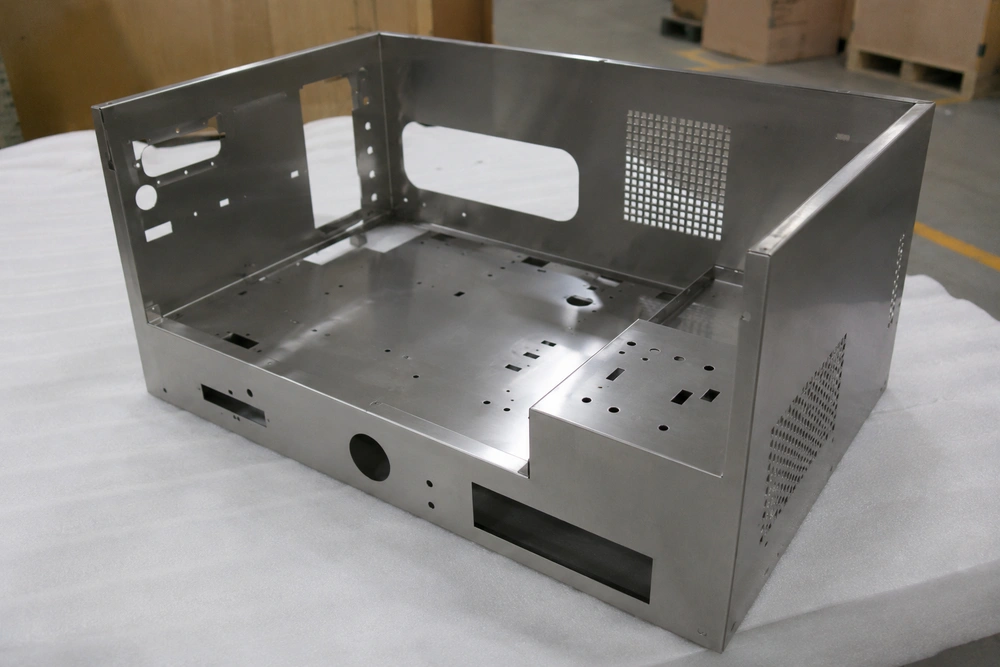

In the world of metal stamping, a die is a crucial component that shapes the entire manufacturing process. As a seasoned Metal Stamping supplier, I've witnessed firsthand the importance of dies in creating high - quality stamped parts. This blog post aims to provide an in - depth understanding of what a die is in metal stamping, its types, functions, and how it impacts the final product.
Definition of a Die in Metal Stamping
A die in metal stamping is a specialized tool used to cut, shape, or form metal sheets into specific parts. It is essentially a custom - made mold that determines the final shape and dimensions of the stamped product. Dies are typically made from high - strength materials such as tool steel, carbide, or other alloys that can withstand the high pressures and forces involved in the stamping process.

Types of Dies in Metal Stamping
- Cutting Dies: These are the most basic type of dies used in metal stamping. Their primary function is to cut the metal sheet into the desired shape. There are different subtypes of cutting dies, including blanking dies, which are used to cut out individual pieces from a larger sheet; and piercing dies, which create holes in the metal. For example, when manufacturing electronic enclosures, cutting dies are used to cut out the basic shape of the enclosure and pierce holes for buttons and connectors.
- Forming Dies: Forming dies are used to bend, stretch, or reshape the metal into a three - dimensional form. This can include operations such as bending, drawing, and embossing. Deep drawing dies, for instance, are used to create parts with a significant depth, like [BBQ Oven Cover Deep Drawing Stamping Part with Die or Mould](/metal - stamping/stamping - part.html). These dies gradually shape the metal sheet into a cup - like or box - like structure.
- Progressive Dies: Progressive dies are a more complex type of die that perform multiple operations in a single stamping press stroke. As the metal strip moves through the die, different stations perform various tasks such as cutting, forming, and bending. Progressive dies are highly efficient and are commonly used for high - volume production of small to medium - sized parts. For example, in the production of automotive components, progressive dies can produce multiple parts simultaneously, increasing productivity and reducing costs.
- Compound Dies: Compound dies are similar to progressive dies in that they perform multiple operations at once. However, unlike progressive dies, all the operations in a compound die occur at the same station. This makes compound dies suitable for producing parts with complex shapes and tight tolerances.
Functions of a Die in Metal Stamping
- Precision Shaping: One of the main functions of a die is to shape the metal with high precision. The design of the die is carefully engineered to ensure that the final part meets the exact specifications required by the customer. This is crucial, especially in industries such as aerospace and medical, where even the slightest deviation from the design can lead to product failure.
- Repeatability: Dies allow for consistent and repeatable production of parts. Once a die is designed and manufactured, it can be used to produce thousands or even millions of identical parts. This is essential for mass production, as it ensures that each part has the same quality and dimensions.
- Efficiency: By using dies in metal stamping, the production process becomes more efficient. Dies can perform multiple operations in a single stroke, reducing the number of steps required to produce a part. This not only saves time but also reduces labor costs and increases overall productivity.
Design and Manufacturing of Dies
The design and manufacturing of dies are complex processes that require expertise and precision. The first step in die design is to understand the customer's requirements, including the shape, size, and material of the part. Computer - Aided Design (CAD) software is then used to create a detailed 3D model of the die. This model takes into account factors such as the metal's flow characteristics, the stamping force required, and the clearance between the die components.
Once the design is finalized, the die is manufactured using advanced machining techniques such as CNC milling, EDM (Electrical Discharge Machining), and grinding. The die components are then heat - treated to increase their hardness and durability. After manufacturing, the die is carefully assembled and tested to ensure that it functions correctly.
Maintenance and Care of Dies
Proper maintenance and care of dies are essential to ensure their longevity and performance. Dies should be regularly cleaned to remove any debris or metal shavings that may accumulate during the stamping process. Lubrication is also crucial to reduce friction between the die and the metal sheet, which can prevent wear and tear.
In addition, dies should be inspected regularly for signs of damage or wear. Any worn - out components should be replaced immediately to prevent further damage to the die and ensure the quality of the stamped parts. Proper storage of dies when not in use is also important to prevent corrosion and other forms of damage.
Impact of Dies on the Final Product
The quality of the die has a direct impact on the quality of the final stamped product. A well - designed and maintained die will produce parts with consistent dimensions, smooth surfaces, and high precision. On the other hand, a poorly designed or worn - out die can result in parts with defects such as burrs, cracks, or dimensional inaccuracies.
In addition, the choice of die type can also affect the functionality and appearance of the final product. For example, a well - executed deep - drawing die can create a part with a seamless and aesthetically pleasing finish, while a poorly designed cutting die may leave rough edges on the part.
Our Metal Stamping Services
As a Metal Stamping supplier, we offer a wide range of metal stamping services using high - quality dies. Our services include [OEM Stamping Parts Stainless Steel Stamping Service Custom Die](/metal - stamping/stainless - steel - stamping.html) and [Custom Precision Mild Steel Stamped Sheet Metal with Mould Design](/metal - stamping/stamped - sheet - metal.html). We have a team of experienced engineers and technicians who are experts in die design and manufacturing. We use the latest technology and equipment to ensure that our dies are of the highest quality and can produce parts with the tightest tolerances.
Whether you need a small - batch production of custom - made parts or a high - volume production of standard components, we can meet your needs. We work closely with our customers to understand their requirements and provide them with the best possible solutions.

Conclusion
In conclusion, a die is an essential tool in metal stamping that plays a vital role in shaping the final product. Understanding the different types of dies, their functions, and how they are designed, manufactured, and maintained is crucial for anyone involved in the metal stamping industry. As a Metal Stamping supplier, we are committed to providing our customers with high - quality dies and metal stamping services. If you are interested in our services or have any questions about metal stamping or dies, please feel free to contact us for a purchase negotiation. We look forward to working with you to bring your metal stamping projects to life.
References
- "Metal Stamping Handbook" by George E. Dieter
- "Tool and Manufacturing Engineers Handbook" (Volume 4: Forming)