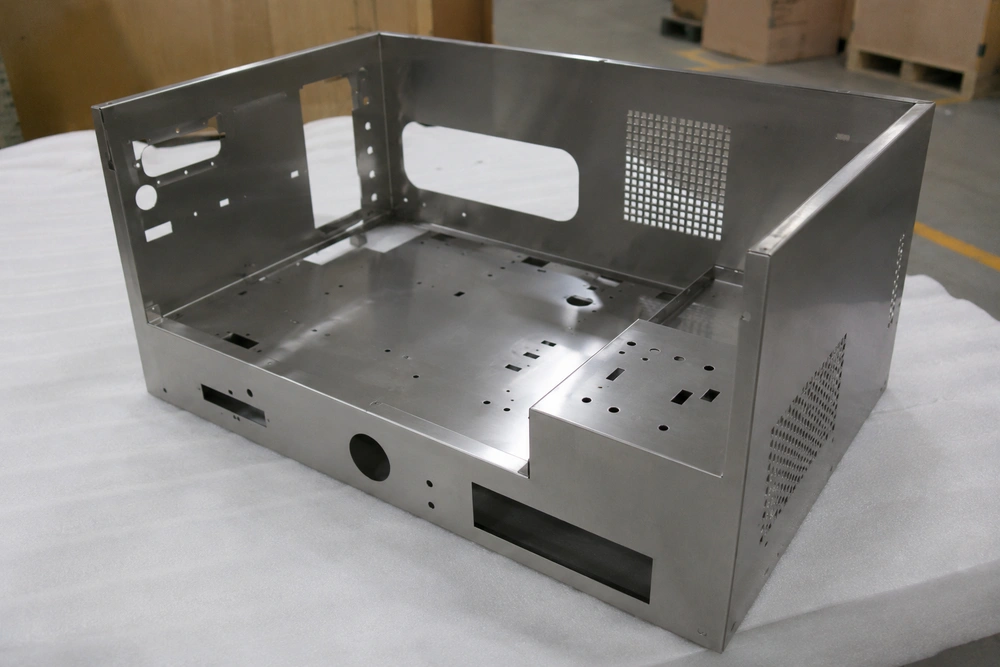

Can Metal Bending be used to create metal barriers?
As a seasoned supplier in the metal bending industry, I've witnessed firsthand the remarkable versatility and potential of metal bending technology. One question that often arises is whether metal bending can be effectively used to create metal barriers. In this blog post, I'll delve into this topic, exploring the feasibility, benefits, and considerations of using metal bending for metal barrier production.
The Feasibility of Metal Bending for Metal Barriers
Metal bending is a well - established manufacturing process that involves deforming metal sheets or bars to achieve a desired shape. When it comes to creating metal barriers, this process is highly feasible. There are several types of metal bending techniques available, such as press brake bending, roll bending, and tube bending, each suitable for different barrier designs and metal materials.
Press brake bending is a common method used in creating straight - edged metal barriers. It uses a press brake machine to apply force to a metal sheet, causing it to bend at a specific angle. This technique is precise and can be used to create barriers with sharp corners and clean edges. For more complex barrier shapes, roll bending can be employed. Roll bending involves passing a metal sheet or bar through a series of rollers to create a curved shape. This is ideal for barriers that require rounded edges or a circular design.
Tube bending is another option, especially for creating barriers with tubular components. By bending tubes, we can form unique and sturdy barrier structures. Whether it's a simple railing for a staircase or a large - scale perimeter barrier, metal bending can be tailored to meet the specific requirements of the project.
Benefits of Using Metal Bending for Metal Barriers
Customization
One of the most significant advantages of using metal bending for metal barriers is the high level of customization it offers. Unlike pre - fabricated barriers, which often come in standard sizes and shapes, metal bending allows us to create barriers that are specifically designed to fit the needs of the customer. We can adjust the length, height, angle, and curvature of the barrier according to the site conditions and the client's aesthetic preferences. For example, in a modern architectural project, we can use metal bending to create sleek and minimalist barriers that complement the overall design of the building.
Strength and Durability
Metal barriers created through bending are known for their strength and durability. The bending process can enhance the structural integrity of the metal, making it more resistant to impacts, weather conditions, and wear and tear. Depending on the type of metal used, such as steel or aluminum, the barriers can withstand heavy loads and harsh environments. Steel barriers, for instance, are commonly used in industrial settings where high - strength barriers are required to protect machinery and personnel.
Cost - effectiveness
In many cases, metal bending can be a cost - effective solution for creating metal barriers. By using standard metal sheets or bars and bending them into the desired shape, we can reduce the need for expensive custom - made components. Additionally, the bending process is relatively efficient, which can save on labor costs. For large - scale projects, the cost savings can be significant.
Considerations in Using Metal Bending for Metal Barriers
Material Selection
The choice of metal material is crucial when creating metal barriers through bending. Different metals have different properties, such as strength, corrosion resistance, and malleability. For outdoor barriers, metals with high corrosion resistance, like stainless steel or aluminum, are often preferred. Stainless steel is known for its excellent corrosion resistance and strength, making it suitable for barriers in coastal areas or industrial environments. Aluminum, on the other hand, is lightweight and has good corrosion resistance, making it a popular choice for barriers in architectural applications.

Design Complexity
While metal bending allows for a high degree of customization, overly complex designs can pose challenges. Complex designs may require specialized bending equipment and techniques, which can increase the production cost and time. It's important to strike a balance between the desired design and the practicality of the bending process. For example, if a barrier design has multiple sharp bends and intricate shapes, it may be necessary to use advanced CNC (Computer Numerical Control) bending techniques.
Quality Control
Ensuring the quality of the bent metal barriers is essential. This involves checking the accuracy of the bend angles, the smoothness of the bends, and the overall structural integrity of the barrier. Quality control measures should be in place throughout the production process, from material inspection to the final assembly of the barrier. By maintaining high - quality standards, we can ensure that the barriers meet the safety and performance requirements of the project.
Examples of Metal Bending in Metal Barrier Production
In the construction industry, metal bending is widely used to create safety barriers for buildings and infrastructure. For example, Precision CNC Bending Sheet Metal Fabricated Parts OEM ODM can be used to produce high - precision barriers for balconies and staircases. These barriers are not only functional but also add an aesthetic touch to the building.
In the automotive industry, metal bending is used to create crash barriers and protective structures. CNC Aluminum Sheet Metal Bending Forming Brackets are commonly used in the production of lightweight and strong barriers that can absorb impact energy and protect passengers.
In industrial settings, metal bending is employed to create perimeter barriers for factories and warehouses. CNC Machining Precise Sheet Metal Bending Manufacturer in China can produce large - scale barriers that are designed to withstand heavy loads and protect equipment and personnel.
Conclusion
In conclusion, metal bending is a highly effective method for creating metal barriers. It offers a wide range of benefits, including customization, strength, durability, and cost - effectiveness. However, it's important to consider factors such as material selection, design complexity, and quality control when using this process.
As a metal bending supplier, we have the expertise and experience to produce high - quality metal barriers that meet the diverse needs of our customers. Whether you're looking for a simple and functional barrier or a complex and aesthetically pleasing design, we can provide customized solutions.

If you're interested in using metal bending for your metal barrier project, we invite you to contact us for a consultation. Our team of experts will work closely with you to understand your requirements and provide the best possible solutions. Let's start a conversation about how we can bring your metal barrier ideas to life.
References
- ASM Handbook Committee. (2008). ASM Handbook: Volume 14B: Metalworking: Sheet Forming. ASM International.
- Kalpakjian, S., & Schmid, S. R. (2014). Manufacturing Engineering and Technology. Pearson.