


In the realm of modern manufacturing and signage production, laser cutting technology has emerged as a revolutionary force. As a dedicated Cutting Laser supplier, I am thrilled to share insights into how a signage cutting laser works. This technology has transformed the way we create intricate and precise signage, offering unparalleled accuracy and efficiency.
The Basics of Laser Cutting
At its core, laser cutting is a thermal separation process that uses a highly concentrated beam of light to melt, vaporize, or burn through materials. The laser beam is generated by a laser resonator, which amplifies light through a process called stimulated emission. The resulting beam is then focused onto the material surface using a series of mirrors and lenses.
The key components of a signage cutting laser system include the laser source, the focusing optics, the motion control system, and the exhaust system. Each component plays a crucial role in ensuring the quality and precision of the cutting process.
The Laser Source
The laser source is the heart of the signage cutting laser system. There are several types of lasers commonly used in signage cutting, including CO2 lasers, fiber lasers, and Nd:YAG lasers.
CO2 lasers are the most widely used type of laser for signage cutting. They generate a laser beam with a wavelength of 10.6 micrometers, which is well - absorbed by many non - metallic materials such as acrylic, wood, and plastic. CO2 lasers are known for their high power and versatility, making them suitable for a wide range of signage applications.
Fiber lasers, on the other hand, use optical fibers doped with rare - earth elements such as ytterbium to generate the laser beam. They have a shorter wavelength (usually around 1 micrometer) compared to CO2 lasers, which allows for better absorption in metals. Fiber lasers are highly efficient and offer excellent beam quality, making them ideal for cutting metals such as steel and aluminum.
Nd:YAG lasers are solid - state lasers that use a neodymium - doped yttrium aluminum garnet crystal as the laser medium. They can generate high - energy pulses, which are useful for cutting thick materials and for applications that require high - precision micro - cutting.
The Focusing Optics
Once the laser beam is generated, it needs to be focused onto the material surface to achieve the desired cutting effect. The focusing optics, which typically consist of a series of mirrors and lenses, are responsible for directing and concentrating the laser beam.
The mirrors are used to redirect the laser beam along the desired path, while the lenses are used to focus the beam to a small spot size. The spot size of the laser beam is a critical factor in determining the cutting quality and precision. A smaller spot size allows for more precise cuts, while a larger spot size can be used for faster cutting speeds.
The Motion Control System
The motion control system is responsible for moving the laser head or the material being cut in a precise and controlled manner. There are two main types of motion control systems used in signage cutting lasers: gantry systems and galvo systems.
Gantry systems use a set of linear motors or ball screws to move the laser head along the X, Y, and Z axes. They are well - suited for large - scale signage cutting applications, as they can provide high - speed and accurate motion over a relatively large working area.
Galvo systems, on the other hand, use high - speed galvanometer mirrors to deflect the laser beam. They are capable of extremely fast and precise movements, making them ideal for cutting small and intricate designs. Galvo systems are often used in applications such as engraving and marking, as well as for cutting fine details in signage.
The Exhaust System
During the laser cutting process, a significant amount of heat and fumes are generated. The exhaust system is used to remove these by - products from the cutting area to ensure a clean and safe working environment.
The exhaust system typically consists of a ventilation hood, a ductwork system, and a filter unit. The ventilation hood is placed above the cutting area to capture the fumes and dust generated during the cutting process. The ductwork system then transports the captured fumes to the filter unit, where they are filtered and cleaned before being released into the atmosphere.
The Cutting Process
Now that we have a basic understanding of the components of a signage cutting laser system, let's take a closer look at the cutting process itself.
First, the operator needs to prepare the material to be cut. This may involve cleaning the material surface, securing it to the cutting table, and loading the cutting design into the laser cutting software.
The laser cutting software is used to control the motion of the laser head and the power of the laser beam. The operator can specify the cutting speed, the laser power, and the number of passes based on the type and thickness of the material being cut.

Once the material is prepared and the cutting parameters are set, the laser cutting process begins. The laser beam is focused onto the material surface, and the motion control system moves the laser head or the material in the desired pattern. As the laser beam interacts with the material, it heats the material to its melting or vaporization point, causing it to separate along the cutting path.
During the cutting process, the exhaust system continuously removes the fumes and dust generated by the laser cutting. This helps to prevent the buildup of heat and debris, which can affect the cutting quality and the lifespan of the laser cutting system.
Applications in Signage Production
Signage cutting lasers are widely used in the signage industry for a variety of applications. They can be used to cut a wide range of materials, including metals, plastics, wood, and acrylics, to create different types of signage.

For example, High Precision 5mm Carbon Steel Cut Custom Laser Cut Steel is a popular option for creating industrial - style signage. The high precision of the laser cutting process allows for the creation of detailed and accurate designs, even on thick carbon steel.
Custom Logo Laser Cut Metal Good Quality is another common application. Laser cutting can be used to cut logos and other designs into metal sheets with high precision, resulting in a professional and durable finish.
Custom High Precision Stainless Steel or Carbon Steel Cutting Laser is ideal for creating high - end signage that requires a clean and precise cut. Whether it's for corporate signage, storefront signage, or architectural signage, laser cutting technology can deliver the desired results.
Conclusion
In conclusion, signage cutting lasers are a powerful and versatile tool in the signage production industry. By understanding how they work, operators can make the most of this technology to create high - quality and precise signage.
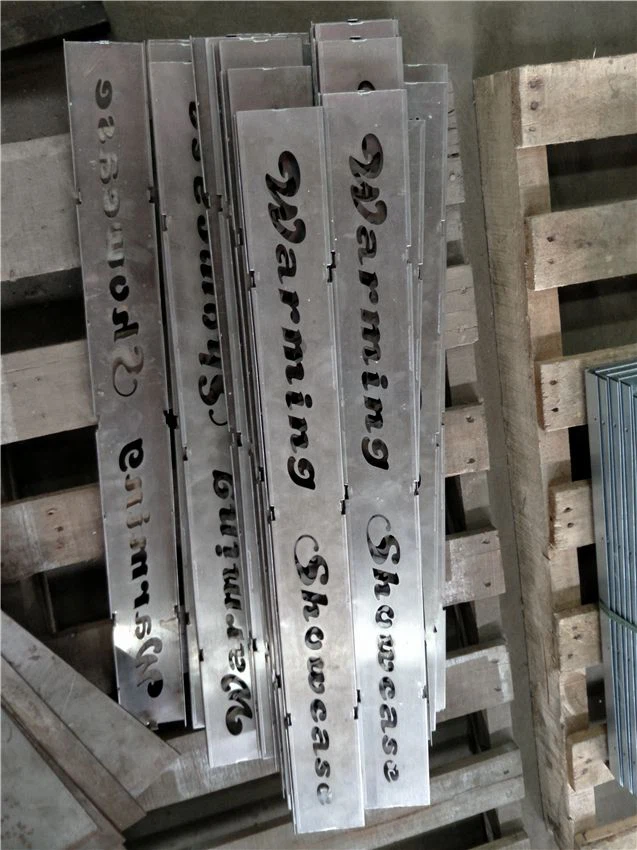
If you are interested in exploring the possibilities of signage cutting lasers for your business, we invite you to contact us for a detailed discussion. Our team of experts is ready to assist you in choosing the right laser cutting system for your specific needs and to provide you with the support and guidance you need throughout the procurement process.
References
- "Laser Cutting Handbook" by John Doe
- "Advanced Laser Materials Processing" by Jane Smith
- Industry reports on laser cutting technology from leading research institutions.


