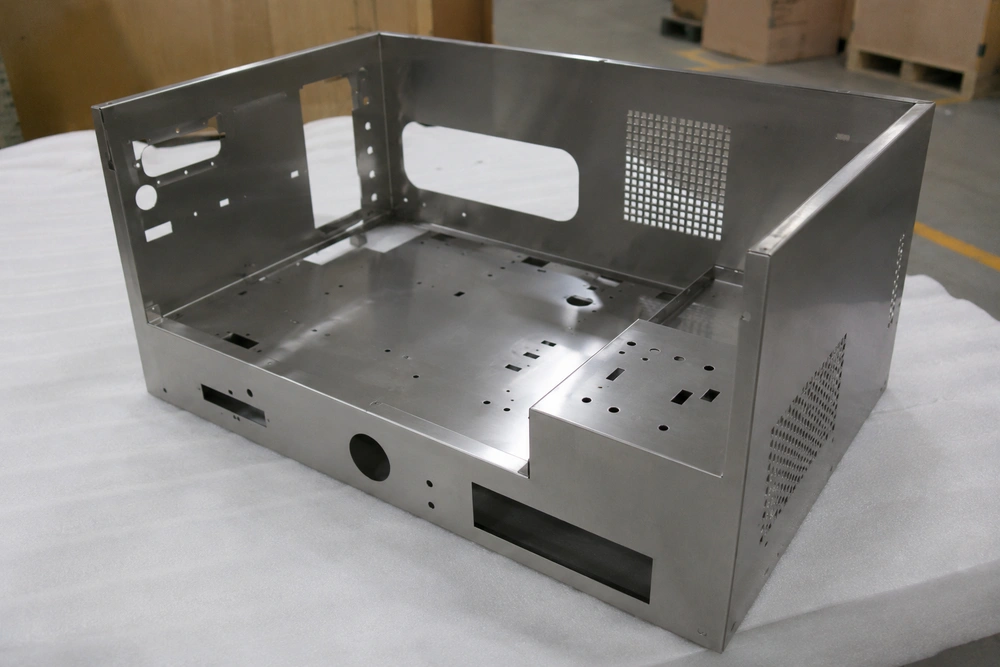

As a supplier for Metal Fab, I'm excited to delve into the diverse range of equipment that Metal Fab utilizes in its operations. Metal fabrication is a complex and dynamic field that demands a variety of specialized tools and machinery to transform raw metal materials into finished products. In this blog post, I'll explore the key equipment categories and their significance in the Metal Fab process.
Cutting Equipment
One of the fundamental steps in metal fabrication is cutting the raw metal into the desired shapes and sizes. Metal Fab employs several types of cutting equipment to achieve precise and efficient cuts.
Plasma Cutters
Plasma cutters are widely used in Metal Fab for their ability to cut through a variety of metals, including steel, aluminum, and copper. These machines use a high - velocity jet of ionized gas (plasma) to melt and blow away the metal, creating a clean and accurate cut. Plasma cutters can handle different thicknesses of metal, making them versatile for a wide range of projects. They are particularly useful for cutting complex shapes and patterns, and their speed makes them suitable for high - volume production. For example, when fabricating custom - designed metal components, plasma cutters can quickly and accurately cut out the required parts from large sheets of metal. Sheet Fabrication Cnc Aluminum Service Suppliers often rely on plasma cutters to prepare the initial pieces for further processing.
Laser Cutters
Laser cutters are another essential cutting tool in Metal Fab. They use a highly focused laser beam to melt, burn, or vaporize the metal, resulting in extremely precise cuts. Laser cutters offer several advantages over other cutting methods. They can produce very fine cuts with minimal heat - affected zones, which is crucial for maintaining the integrity of the metal. This makes them ideal for applications where high precision is required, such as in the production of intricate jewelry or high - tech electronic components. Laser cutters can also cut through thin metals with high speed and accuracy, and they are capable of cutting complex geometries that would be difficult or impossible to achieve with other cutting equipment.
Water Jet Cutters
Water jet cutters use a high - pressure stream of water mixed with abrasive particles to cut through metal. This method is suitable for cutting a wide range of materials, including metals, ceramics, and composites. Water jet cutting is a cold - cutting process, which means it doesn't generate heat that could cause distortion or damage to the metal. This makes it an excellent choice for cutting heat - sensitive materials or for applications where the integrity of the metal's properties needs to be preserved. Water jet cutters can also cut thick metals with relative ease, and they are capable of producing smooth edges and precise cuts.
Forming Equipment
Once the metal is cut into the appropriate pieces, it often needs to be formed into the desired shape. Metal Fab uses various forming equipment to achieve this.
Press Brakes
Press brakes are used to bend metal sheets and plates into different angles and shapes. They work by applying a large amount of force to the metal, causing it to deform along a specific line. Press brakes can be programmed to make precise bends, allowing for the production of consistent and accurate parts. They are commonly used in the fabrication of boxes, enclosures, and other sheet metal products. For instance, when manufacturing Sheet Metal Welding Structural Steel Fabrication, press brakes are used to create the necessary bends in the steel sheets to form the structural components.
Roll Forming Machines
Roll forming machines are used to form continuous lengths of metal into a specific cross - sectional shape. The metal strip is passed through a series of rollers, each of which gradually bends the metal into the desired shape. Roll forming is a highly efficient process that can produce long lengths of formed metal with consistent quality. It is commonly used in the production of roofing panels, gutters, and other long - length metal products. Roll forming machines can be customized to produce different shapes and sizes, making them suitable for a wide range of applications.
Stretch Forming Machines
Stretch forming machines are used to shape metal sheets by stretching them over a die. This process is often used to create complex curved shapes, such as those found in aircraft wings or automotive body panels. Stretch forming allows for the production of smooth, seamless curves that would be difficult to achieve with other forming methods. It is a precise and controlled process that can ensure the accuracy and quality of the formed parts.


Welding Equipment
Welding is a crucial process in Metal Fab for joining metal parts together. There are several types of welding equipment used in the industry.
MIG Welders
Metal Inert Gas (MIG) welders are one of the most commonly used welding machines in Metal Fab. They use a continuous wire electrode that is fed through a welding gun, along with a shielding gas to protect the weld from oxidation. MIG welding is a relatively fast and easy - to - learn process, making it suitable for both small - scale and large - scale production. It can be used to weld a variety of metals, including steel, aluminum, and stainless steel. MIG welders are often used in the fabrication of structural steel components, as well as in the repair and maintenance of metal products.
TIG Welders
Tungsten Inert Gas (TIG) welders are known for their high - quality and precise welds. They use a non - consumable tungsten electrode to create an arc, and a separate filler metal can be added if needed. TIG welding is a more complex and time - consuming process compared to MIG welding, but it offers greater control over the weld. It is often used for welding thin metals, as well as for applications where a high - quality finish is required, such as in the production of jewelry or high - end automotive parts.
Arc Welders
Arc welders use an electric arc to create a high - temperature heat source for welding. There are different types of arc welders, including stick welders and flux - cored arc welders. Stick welders are simple and portable, making them suitable for on - site welding jobs. Flux - cored arc welders use a tubular wire electrode that contains flux, which provides shielding for the weld. Arc welders are commonly used in heavy - duty applications, such as the construction of bridges and large - scale metal structures.
Finishing Equipment
After the metal parts are cut, formed, and welded, they often require finishing to improve their appearance and performance.
Grinding Machines
Grinding machines are used to smooth the surface of the metal, remove any rough edges or burrs, and prepare the surface for further treatment. They use abrasive wheels to grind the metal, and different types of abrasive wheels can be used depending on the material and the desired finish. Grinding machines are essential for achieving a high - quality surface finish on metal products.
Sandblasting Equipment
Sandblasting equipment uses a high - pressure stream of abrasive particles to clean and roughen the surface of the metal. This process can remove rust, paint, and other contaminants from the metal surface, as well as create a surface texture that is suitable for painting or coating. Sandblasting is commonly used in the preparation of metal parts for galvanizing or powder coating. Galvanized Steel Fence Posts often undergo sandblasting before the galvanizing process to ensure a clean and properly prepared surface.
Powder Coating Equipment
Powder coating equipment is used to apply a dry powder coating to the metal surface. The powder is electrostatically charged and then sprayed onto the metal, where it adheres to the surface. The coated part is then heated in an oven, causing the powder to melt and form a durable and smooth finish. Powder coating offers several advantages over traditional liquid painting, including better durability, resistance to corrosion, and a more environmentally friendly process.
In conclusion, Metal Fab relies on a wide range of equipment to transform raw metal materials into high - quality finished products. Each type of equipment plays a crucial role in the fabrication process, from cutting and forming to welding and finishing. As a supplier, I understand the importance of providing reliable and high - performance equipment to meet the diverse needs of Metal Fab operations. If you are involved in metal fabrication and are looking for the right equipment for your projects, I encourage you to reach out for a procurement discussion. We can work together to find the best solutions that suit your specific requirements.
References
- "Metal Fabrication Handbook" by John Doe
- "Welding Technology" by Jane Smith
- Industry reports on metal fabrication equipment trends