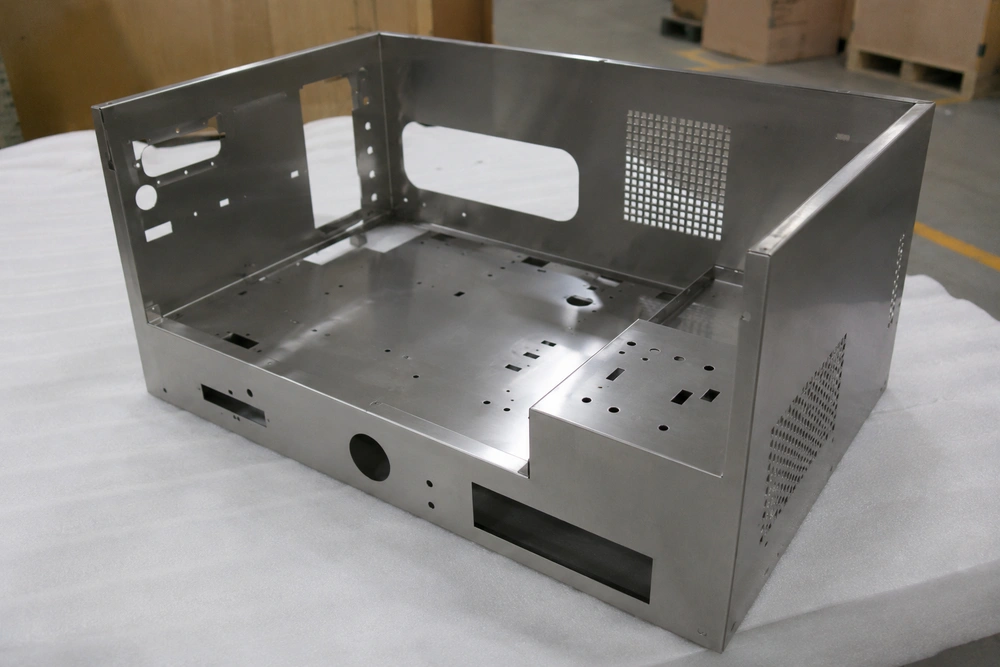

As an OEM CNC parts supplier, I've witnessed firsthand the critical role that quality standards play in the manufacturing industry. In this blog post, I'll delve into the key aspects of the quality standard for OEM CNC parts, sharing insights based on my years of experience in the field.
Material Selection
The foundation of high - quality OEM CNC parts lies in the selection of appropriate materials. Different applications demand different material properties. For instance, in the automotive industry, Custom Stainless Steel Aluminium CNC Machine Parts for Automotive [/cnc-machining/cnc-machine-parts.html] are often required due to their excellent strength - to - weight ratio and corrosion resistance. Stainless steel can withstand harsh environments and high - stress conditions, making it ideal for engine components, suspension parts, and more.
Aluminum alloys are another popular choice, especially for applications where weight reduction is crucial. Custom High precision Aluminum Alloy CNC Machining Aluminium Machining [/cnc-machining/aluminium-machining.html] offers high precision and good thermal conductivity. Aluminum parts are widely used in aerospace, electronics, and consumer products. The material should be sourced from reliable suppliers and meet relevant industry standards, such as ASTM (American Society for Testing and Materials) or ISO (International Organization for Standardization) specifications.
Dimensional Accuracy
Dimensional accuracy is one of the most important quality indicators for OEM CNC parts. In CNC machining, the use of advanced computer - controlled machines allows for extremely precise manufacturing. The tolerance levels for dimensions can be as tight as a few micrometers, depending on the application requirements.
To ensure dimensional accuracy, we use high - precision measuring tools such as coordinate measuring machines (CMMs). These machines can accurately measure the dimensions of the machined parts and compare them with the design specifications. Regular calibration of the CNC machines and measuring tools is also essential. Any deviation from the specified dimensions can lead to fitment issues, reduced performance, or even complete failure of the end - product.
Surface Finish
The surface finish of OEM CNC parts can significantly impact their functionality and appearance. A smooth surface finish can reduce friction, prevent wear and tear, and improve corrosion resistance. For example, in hydraulic systems, a proper surface finish on the piston and cylinder parts is crucial to ensure a tight seal and efficient operation.


There are various methods to achieve the desired surface finish, such as grinding, polishing, and honing. The choice of the surface finishing process depends on the material, part geometry, and application requirements. We also need to control the surface roughness parameters, such as Ra (arithmetical mean deviation of the surface profile), to meet the customer's specifications.
Geometric Tolerance
Geometric tolerance refers to the allowable variation in the shape, orientation, and location of features on a part. In addition to dimensional accuracy, geometric tolerance is equally important for the proper functioning of OEM CNC parts. For example, in a gearbox, the parallelism and perpendicularity of the shafts and gears are critical for smooth and efficient power transmission.
CNC machining allows for precise control of geometric tolerances. We use advanced CAD/CAM (Computer - Aided Design/Computer - Aided Manufacturing) software to design and program the machining operations, ensuring that the geometric features of the parts meet the required standards. Inspection of geometric tolerances is carried out using specialized measuring equipment, such as optical comparators and laser scanners.
Mechanical Properties
The mechanical properties of OEM CNC parts, such as hardness, tensile strength, and ductility, are determined by the material and the manufacturing process. Heat treatment is often used to modify the mechanical properties of the parts. For example, quenching and tempering can increase the hardness and strength of steel parts.
We need to conduct mechanical property testing to ensure that the parts meet the specified requirements. Tensile tests, hardness tests, and impact tests are commonly used to evaluate the mechanical performance of the parts. These tests provide valuable data on the material's behavior under different loading conditions, helping to ensure the reliability and durability of the end - product.
Quality Control System
A robust quality control system is essential for maintaining the quality standard of OEM CNC parts. At our Metal Machining Product CNC Parts OEM & ODM Service Factory [/cnc-machining/cnc-parts.html], we have implemented a comprehensive quality control system that covers every stage of the manufacturing process, from raw material inspection to final product testing.
Incoming raw materials are inspected to ensure their quality and compliance with the specifications. During the machining process, in - process inspections are carried out at regular intervals to detect and correct any potential quality issues. Final product inspection is the last line of defense, where the finished parts are thoroughly inspected to ensure that they meet all the requirements.
We also maintain detailed quality records for each batch of parts, including inspection reports, test results, and production data. These records not only help us to track the quality history of the parts but also provide valuable information for continuous improvement.
Traceability
Traceability is an important aspect of quality management for OEM CNC parts. It allows us to track the origin of the raw materials, the manufacturing process, and the inspection results of each part. In case of any quality issues or recalls, traceability enables us to quickly identify the affected parts and take appropriate corrective actions.
We use a unique identification system for each part, such as barcodes or serial numbers. This system is integrated with our production management software, which records all the relevant information about the part throughout its production lifecycle. Traceability also helps us to meet the requirements of some industries, such as aerospace and medical, where strict quality control and accountability are necessary.
Environmental Compliance
In today's manufacturing industry, environmental compliance is becoming increasingly important. We ensure that our OEM CNC parts manufacturing process complies with relevant environmental regulations. This includes proper management of waste materials, reduction of energy consumption, and use of environmentally friendly machining fluids.
For example, we recycle the metal chips generated during the machining process to reduce waste and conserve resources. We also use water - based machining fluids, which are less harmful to the environment compared to traditional oil - based fluids. By adhering to environmental regulations, we not only contribute to a sustainable future but also enhance our reputation as a responsible manufacturer.
Conclusion
In conclusion, the quality standard of OEM CNC parts encompasses multiple aspects, including material selection, dimensional accuracy, surface finish, geometric tolerance, mechanical properties, quality control, traceability, and environmental compliance. As an OEM CNC parts supplier, we are committed to meeting and exceeding our customers' expectations by adhering to these strict quality standards.
If you are in need of high - quality OEM CNC parts, we invite you to contact us for procurement and negotiation. Our experienced team is ready to work with you to understand your specific requirements and provide customized solutions.
References
- ASME Y14.5 - 2009, Dimensioning and Tolerancing.
- ISO 9001:2015, Quality management systems - Requirements.
- ASTM International Standards, Various standards related to materials and testing.