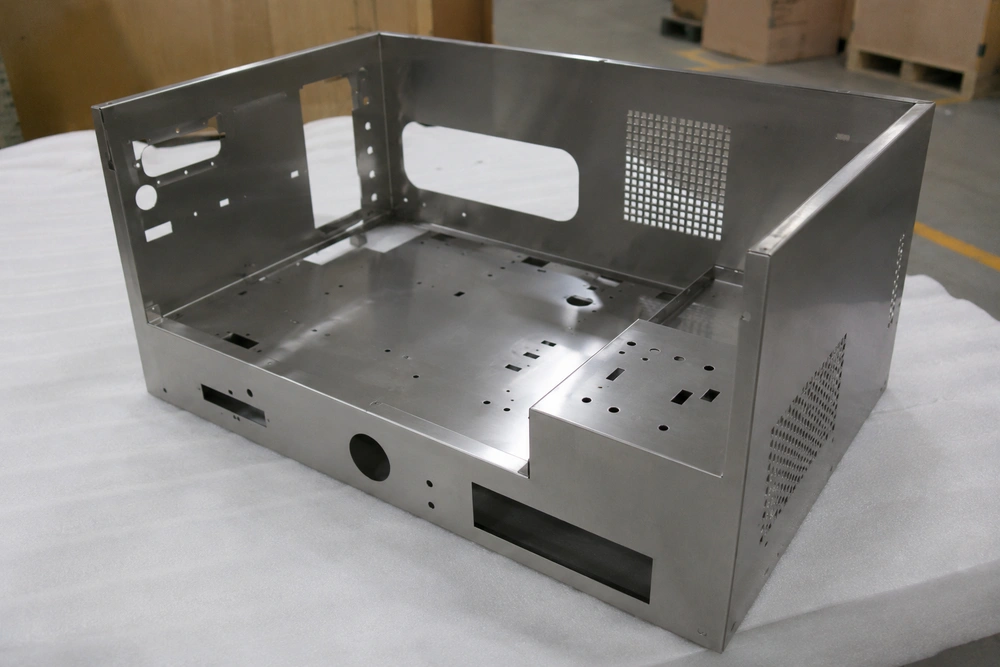

Yo, what's up! I'm a supplier in the stainless steel fabrication game, and today I wanna talk about the electrical conductivity properties of stainless steel fabrication. It's gonna be a bit of a deep dive, but trust me, it's pretty interesting stuff.
First off, let's get a basic understanding of what stainless steel is. Stainless steel is an alloy, which means it's made up of a bunch of different elements. The main ones are iron, chromium, and nickel. The chromium is what gives stainless steel its corrosion - resistant properties. When it comes to electrical conductivity, it's not as straightforward as you might think.
Compared to pure metals like copper or aluminum, stainless steel is a relatively poor conductor of electricity. Copper has an electrical conductivity of around 58×10⁶ S/m at room temperature, while aluminum has about 37.7×10⁶ S/m. In contrast, the electrical conductivity of stainless steel is much lower, usually in the range of 1 - 1.5×10⁶ S/m. This is because of the alloying elements and the structure of stainless steel.
The alloying elements in stainless steel, such as chromium and nickel, disrupt the regular lattice structure of the iron atoms. This disruption makes it harder for electrons to flow freely through the material, which in turn reduces its electrical conductivity. Think of it like a crowded hallway. If there are a bunch of people (alloying elements) blocking the way, it's gonna be tough for others (electrons) to get through quickly.
Now, different types of stainless steel have different electrical conductivity properties. There are a few main types of stainless steel, including austenitic, ferritic, and martensitic. Austenitic stainless steels, like the 304 and 316 grades, are non - magnetic and have relatively lower electrical conductivity compared to ferritic and martensitic stainless steels. Ferritic stainless steels, such as the 430 grade, have a slightly higher electrical conductivity because they have a different crystal structure that allows electrons to move a bit more freely. Martensitic stainless steels, which are often used in cutlery and some high - strength applications, also have a conductivity that falls in between the other two types.
The heat treatment of stainless steel can also affect its electrical conductivity. When stainless steel is heated and then cooled in a certain way, it can change the grain size and the distribution of the alloying elements within the material. For example, annealing, which is a heat treatment process where the material is heated to a high temperature and then slowly cooled, can sometimes increase the electrical conductivity. This is because annealing can relieve internal stresses and make the structure more uniform, allowing electrons to move more easily.
In the world of stainless steel fabrication, these electrical conductivity properties matter in a lot of ways. For instance, if you're fabricating parts for electrical equipment, you need to know how well the stainless steel will conduct electricity. You might need to choose a type of stainless steel with a higher conductivity if the part is going to be used in a circuit where efficient electron flow is crucial.
On the other hand, in some cases, the low electrical conductivity of stainless steel can be an advantage. If you're making a part that needs to be electrically insulated or resist the flow of electricity, stainless steel can be a great choice. For example, in some machinery where you don't want electrical interference, using a stainless steel component with low conductivity can help prevent unwanted electrical currents.


If you're in the market for high - quality stainless steel fabrication, we've got you covered. We offer a wide range of products, like the High Quality Welding Hairline Stainless Fabrication for Machines. These fabricated parts are made with precision and are suitable for various machine applications.
We also have Custom Food Machinery Parts Stainless Steel Fabricators Stainless Tank. Our stainless steel tanks are fabricated to meet the strict standards of the food industry, and we can customize them according to your specific needs.
And if you're looking for sheet metal fabrication, check out our High Quality Welding Stainless Steel Sheet Metal Fabrication Custom Made. We can create custom - made sheet metal parts with excellent welding quality.
Whether you need parts with specific electrical conductivity properties or just high - quality stainless steel fabrication in general, we're here to help. We've got the expertise and the equipment to make sure you get the best products. So, if you're interested in purchasing our stainless steel fabricated products, don't hesitate to reach out and start a procurement discussion. We're ready to work with you to find the perfect solutions for your projects.
References:
- "Introduction to Materials Science for Engineers" by James F. Shackelford
- "Stainless Steel: A Technical Guide" by ASM International