
Hey there! As a steel forming supplier, I've seen firsthand the game - changing impact of hydroforming in steel part production. In this blog, I'm gonna spill the beans on why hydroforming is a top - notch choice for making steel parts.
Precision and Complex Shapes
One of the most amazing things about hydroforming is its ability to create highly precise and complex shapes. Traditional steel forming methods often struggle when it comes to making parts with intricate curves, undercuts, or irregular geometries. But hydroforming? It's like a wizard's wand for shaping steel.
In hydroforming, a high - pressure fluid is used to press the steel sheet against a die. This fluid pressure is evenly distributed across the surface of the steel, allowing it to conform to the exact shape of the die. Whether it's a custom - designed automotive component or a unique architectural element, hydroforming can reproduce the design with incredible accuracy.
For example, in the automotive industry, hydroformed steel parts can be used to create lightweight yet strong frames and chassis components. These parts often have complex shapes that are optimized for performance and safety. By using hydroforming, manufacturers can achieve the exact specifications required, which is crucial for ensuring the overall quality and functionality of the vehicle.
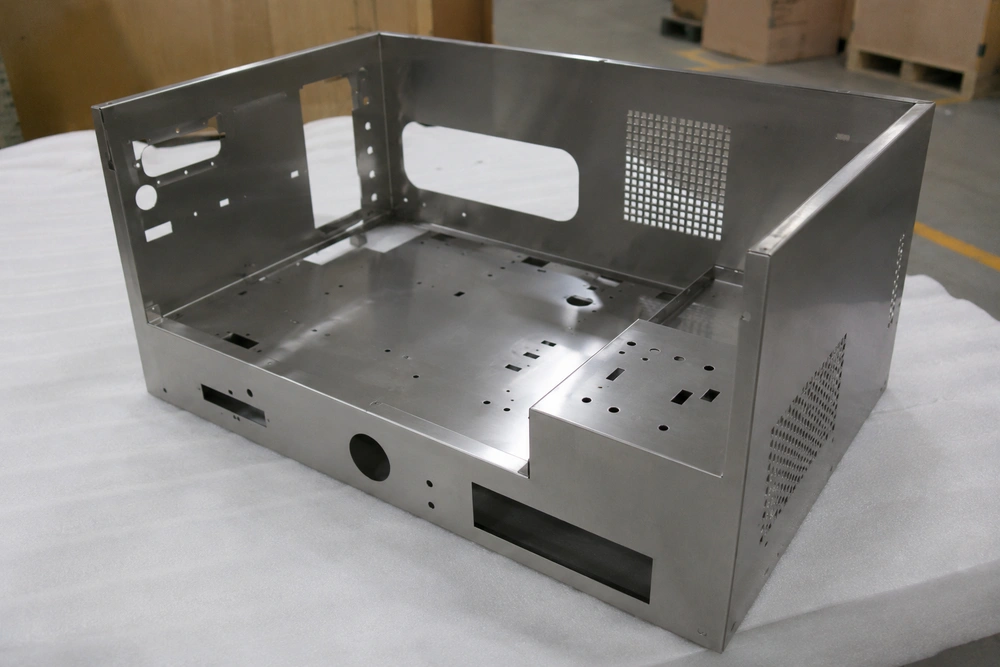
If you're looking for a service that can handle complex metal housing fabrication, check out our Metal Housing Fabrication Service. We've got the expertise to use hydroforming and other techniques to bring your designs to life.
Reduced Tooling Costs
Another big advantage of hydroforming is the potential for reduced tooling costs. In traditional stamping processes, creating a die for a specific part can be extremely expensive. Each new part design usually requires a brand - new die, which means a significant investment in tooling.
With hydroforming, however, the situation is different. Since the high - pressure fluid does most of the work of shaping the steel, the dies used in hydroforming are often simpler and less expensive to manufacture. In some cases, a single die can be used to produce multiple parts with minor design variations. This flexibility not only saves money on tooling but also reduces the lead time for production.
For small - to - medium - sized production runs, the cost savings from reduced tooling can be substantial. Instead of spending a fortune on custom dies, you can use hydroforming to keep your costs in check while still getting high - quality steel parts. And if you're interested in the overall steel manufacturing process, including custom powder coating and NCT punching, take a look at our Custom Powder Coating NCT Punching Steel Manufacturing Process.
Improved Material Utilization
Hydroforming also offers better material utilization compared to some other steel forming methods. In traditional stamping, a significant amount of material can be wasted as scrap. This is because the stamping process often involves cutting out a large blank of steel and then shaping it, leaving behind unused portions.


In hydroforming, the steel sheet is formed in a more controlled manner, which reduces the amount of scrap. The high - pressure fluid helps to stretch and shape the steel precisely, minimizing the need for excessive trimming or cutting. This means that you can get more parts out of each sheet of steel, which is not only cost - effective but also more environmentally friendly.
By maximizing material utilization, you can lower your raw material costs and reduce your environmental footprint. It's a win - win situation for both your bottom line and the planet.
Enhanced Strength and Durability
Steel parts produced through hydroforming often have enhanced strength and durability. The hydroforming process subjects the steel to high pressures, which can improve its mechanical properties. When the steel is deformed under pressure, its grain structure is refined, resulting in increased strength and hardness.
This is particularly important for applications where the steel parts need to withstand high stress or heavy loads. For example, in the construction industry, hydroformed steel components can be used in building frames and bridges. These parts need to be strong enough to support the weight of the structure and resist external forces such as wind and earthquakes.
Our Custom OEM Carbon Steel Fabricators with Powder Coating use hydroforming to create carbon steel parts that are not only strong but also protected against corrosion with powder coating. This ensures that your parts will last for a long time, even in harsh environments.
Faster Production Times
In today's fast - paced manufacturing world, speed is often of the essence. Hydroforming can offer faster production times compared to some traditional steel forming methods. Since the high - pressure fluid can quickly and efficiently shape the steel, the cycle time for each part is reduced.
This means that you can produce more parts in a shorter period of time, which is great for meeting tight deadlines and increasing your overall production capacity. Whether you're in the automotive, aerospace, or consumer goods industry, being able to get your products to market faster can give you a competitive edge.
Cost - Efficiency in the Long Run
When you consider all the factors together - reduced tooling costs, improved material utilization, faster production times, and enhanced part quality - hydroforming is a cost - efficient option in the long run. Although the initial investment in hydroforming equipment may be higher than some traditional methods, the savings and benefits over time can far outweigh the upfront costs.
For businesses that are looking to optimize their steel part production processes and improve their profitability, hydroforming is definitely worth considering. It allows you to produce high - quality parts at a lower cost, which can help you stay competitive in the market.
Wrapping Up
In conclusion, hydroforming offers a wide range of advantages for steel part production. From its ability to create complex shapes with precision to its cost - saving potential and enhanced part quality, it's a technology that can transform the way you manufacture steel parts.
If you're interested in learning more about how hydroforming can benefit your business or if you have a specific project in mind, don't hesitate to reach out. We're here to help you make the most of this amazing technology and get the best - quality steel parts for your needs. Let's start a conversation about how we can work together to take your steel part production to the next level.
References
- ASM Handbook Committee. (2008). ASM Handbook Volume 14A: Metalworking: Bulk Forming. ASM International.
- Kalpakjian, S., & Schmid, S. R. (2013). Manufacturing Engineering and Technology. Pearson.