Hey there! As a supplier in the stainless steel fabrication industry, I've seen firsthand the distinct differences between stainless steel pipe fabrication and plate fabrication. In this blog, I'll break down these differences to help you understand which process might be best for your project.
Material Characteristics
Let's start with the materials themselves. Stainless steel pipes are, well, tubular. They come in various diameters and wall thicknesses, and their shape gives them unique properties. Pipes are great for applications where fluid or gas needs to be transported. Their circular cross - section provides a uniform flow path, minimizing turbulence and pressure drops.
On the other hand, stainless steel plates are flat sheets. They can vary in thickness, from thin gauges used in decorative applications to thick plates for heavy - duty structural purposes. Plates offer a large, flat surface area, which is ideal for creating structures like enclosures or platforms.
Fabrication Processes
Cutting
In pipe fabrication, cutting is often done to achieve the desired length. Common cutting methods include sawing, which is suitable for smaller - diameter pipes, and plasma cutting for larger ones. Sawing provides a clean cut but can be time - consuming for thick - walled pipes. Plasma cutting, on the other hand, is faster but may require some post - processing to smooth the edges.
For plate fabrication, cutting is a bit more complex. You can use shearing for straight cuts on thin plates. It's a fast and cost - effective method. For more intricate shapes or thicker plates, laser cutting is a popular choice. Laser cutting offers high precision and can create complex patterns with ease. You can check out our Sheet Steel Enclosure Custom service, where we use advanced cutting techniques to meet your specific requirements.
Bending
Bending pipes is a crucial step in many pipe fabrication projects. There are different bending methods, such as rotary draw bending, which is used for precise bends with a small radius. It's commonly used in plumbing and HVAC systems. Mandrel bending is another option for tight bends, especially when the pipe's internal diameter needs to remain consistent.
When it comes to plates, bending is used to create angles and curves. Press brakes are the most common tool for plate bending. They can apply a large amount of force to bend the plate to the desired angle. The process requires careful calculation of the bend allowance to ensure the final dimensions are accurate.
Welding
Welding is an essential part of both pipe and plate fabrication. In pipe welding, the goal is to create a leak - proof joint. TIG (Tungsten Inert Gas) welding is often used for high - quality, precision welds, especially in applications where the pipe will carry corrosive fluids. MIG (Metal Inert Gas) welding is faster and more suitable for thicker - walled pipes.
For plate welding, the focus is on creating a strong, structurally sound joint. The choice of welding method depends on the thickness of the plates and the application. Submerged arc welding is commonly used for thick plates as it provides deep penetration and high deposition rates.
Design Considerations
Pipe Fabrication Design
When designing a pipe system, factors like flow rate, pressure, and temperature need to be taken into account. The layout of the pipes should minimize bends and elbows to reduce pressure drops. Pipe supports also play a crucial role in ensuring the stability of the system. They need to be properly spaced and designed to handle the weight of the pipes and the fluid inside.
Plate Fabrication Design
In plate fabrication, the design is often more focused on the overall shape and functionality of the structure. For example, if you're creating a custom enclosure, you need to consider access points, ventilation, and the overall aesthetic. The design should also account for any loads the plate structure will need to support.
Applications
Pipe Fabrication Applications
Pipes are widely used in industries such as oil and gas, water treatment, and HVAC. In the oil and gas industry, pipes are used to transport crude oil, natural gas, and refined products over long distances. In water treatment plants, pipes are used to carry water for purification and distribution. HVAC systems rely on pipes to circulate air and refrigerant.
Plate Fabrication Applications
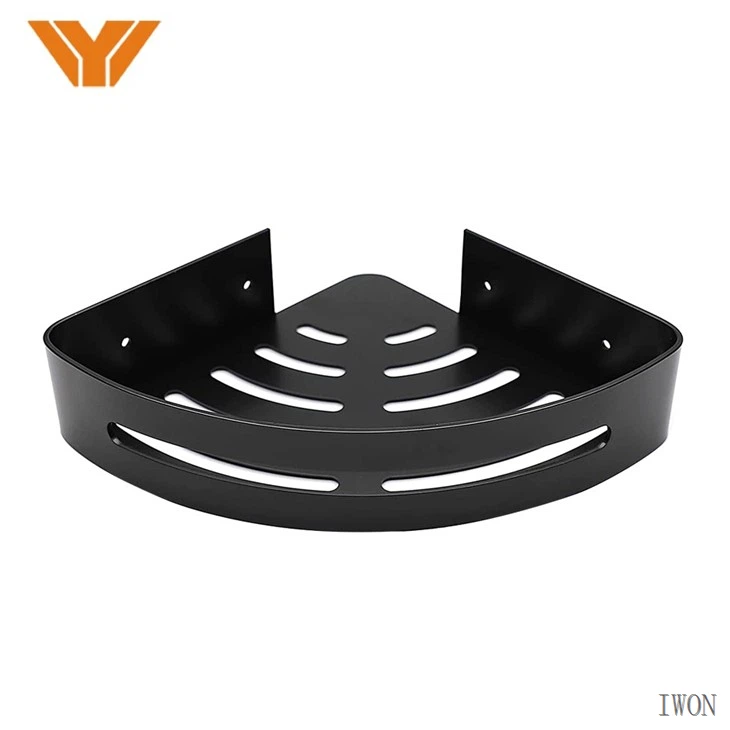
Plates are used in a variety of applications, including architecture, automotive, and industrial equipment. In architecture, stainless steel plates are used for facades, decorative elements, and structural components. In the automotive industry, plates are used to make body panels and frames. Industrial equipment, such as storage tanks and machinery enclosures, also often use stainless steel plates. You can explore our Bathroom Metal Corner Shelf product, which is a great example of plate fabrication in a consumer - oriented application.

Cost Factors
The cost of pipe fabrication and plate fabrication can vary significantly. Pipe fabrication costs are often influenced by the diameter, wall thickness, and length of the pipes. Specialized bending and welding processes can also add to the cost.
Plate fabrication costs depend on the size, thickness, and complexity of the design. Cutting complex shapes and using high - precision welding methods can increase the overall cost. However, we offer Customized Stainless Steel Works OEM Service to Drawings, where we work closely with you to optimize the design and reduce costs without compromising on quality.
Quality Control
Quality control is crucial in both pipe and plate fabrication. In pipe fabrication, non - destructive testing methods like ultrasonic testing and X - ray inspection are used to detect internal defects in the pipes and welds. Pressure testing is also performed to ensure the pipes can withstand the specified pressure.
For plate fabrication, visual inspection is the first step to check for surface defects. Dimensional inspection is also carried out to ensure the plates meet the design specifications. Hardness testing may be done to verify the material properties.
Which One is Right for You?
Deciding between pipe fabrication and plate fabrication depends on your project requirements. If you need to transport fluids or gases, pipe fabrication is the obvious choice. If you're looking to create a structure with a flat surface, like an enclosure or a platform, plate fabrication is more suitable.
We're here to help you make the right decision. Whether you have a small - scale project or a large - scale industrial order, our team of experts can provide you with the best solutions. If you're interested in our stainless steel fabrication services, don't hesitate to reach out for a quote and start a procurement discussion. We're committed to delivering high - quality products that meet your exact needs.
References
- ASME Boiler and Pressure Vessel Code
- AWS Welding Handbook
- ASTM Standards for Stainless Steel Pipes and Plates