


Beam quality plays a pivotal role in metal laser cutting, a process that has revolutionized the manufacturing industry. As a metal laser cutting supplier, I have witnessed firsthand how the characteristics of the laser beam can significantly impact the quality, efficiency, and cost - effectiveness of the cutting process. In this blog, I will delve into the various aspects of how beam quality affects metal laser cutting.
Understanding Beam Quality
Before discussing its impact on metal laser cutting, it's essential to understand what beam quality means. Beam quality is a measure of how well a laser beam can be focused to a small spot size and how far it can maintain its intensity over a distance. It is often quantified using parameters such as the M² factor. A lower M² value indicates a better - quality beam, which can be focused to a smaller spot and has a longer depth of focus.
Impact on Cutting Quality
One of the most obvious ways beam quality affects metal laser cutting is in the quality of the cut. A high - quality beam with a low M² factor can be focused to a very small spot size. This small spot size allows for precise cutting, resulting in clean edges and minimal kerf width. For example, when cutting thin sheets of metal, a high - quality beam can create intricate shapes with sharp corners and smooth edges.
In contrast, a poor - quality beam with a high M² factor may not be able to focus as tightly. This can lead to a wider kerf width, which means more material is removed during the cutting process. Additionally, the edges of the cut may be rough or have a jagged appearance. When cutting thicker metals, a low - quality beam may struggle to penetrate the material evenly, resulting in uneven cuts or incomplete penetrations.
Influence on Cutting Speed
Beam quality also has a significant impact on cutting speed. A high - quality beam can transfer more energy to a smaller area of the metal, which means it can melt and vaporize the material more quickly. This allows for faster cutting speeds, increasing productivity and reducing production time. For instance, in a production line where large quantities of metal parts need to be cut, a high - quality laser beam can cut through the parts much faster than a low - quality one, enabling the manufacturer to meet tight deadlines.
On the other hand, a poor - quality beam may require multiple passes to cut through the metal, or it may need to operate at a slower speed to ensure complete penetration. This not only slows down the cutting process but also increases the energy consumption and wear and tear on the laser cutting equipment.
Effect on Material Thickness and Type
The ability to cut different material thicknesses and types is also affected by beam quality. A high - quality beam can handle a wider range of material thicknesses. It can cut thin sheets with high precision and also penetrate thick metals effectively. For example, a high - quality fiber laser beam can cut through thick carbon steel sheets with relative ease, while a low - quality beam may only be suitable for thin materials.
Different types of metals also respond differently to laser beams of varying quality. Some metals, such as aluminum and copper, are highly reflective and require a high - quality beam to ensure efficient cutting. A poor - quality beam may not be able to overcome the reflectivity of these metals, resulting in inefficient cutting or damage to the laser system.
Cost - Effectiveness
Beam quality has a direct impact on the cost - effectiveness of metal laser cutting. Although high - quality laser systems may have a higher initial investment, they can save costs in the long run. Faster cutting speeds mean more parts can be produced in a shorter time, increasing the overall output. Additionally, the better cutting quality reduces the need for post - processing, such as grinding or polishing, which saves both time and labor costs.
In contrast, a low - quality beam may lead to higher production costs. Slower cutting speeds increase energy consumption, and the need for post - processing to improve the cut quality adds to the overall cost. Moreover, the increased wear and tear on the equipment due to inefficient cutting can result in higher maintenance and replacement costs.
Applications and Examples
In the automotive industry, high - quality laser cutting is crucial for manufacturing precision parts. For example, components such as engine brackets and body panels require clean and accurate cuts. A high - quality beam ensures that these parts are cut to the exact specifications, which is essential for the performance and safety of the vehicles. You can find more information about our high - precision laser - cut steel products at High Precision 5mm Carbon Steel Cut Custom Laser Cut Steel.

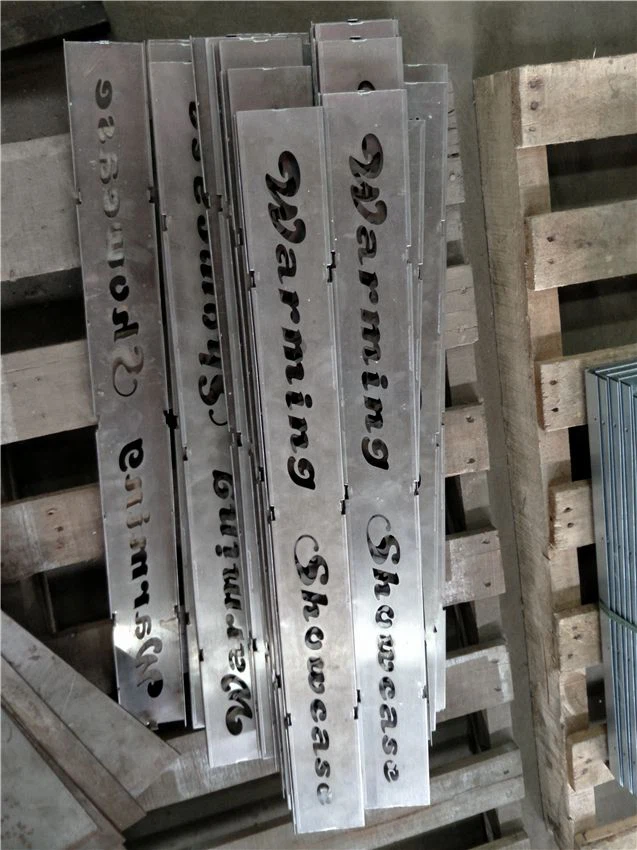
In the electronics industry, custom - shaped metal parts are often needed for enclosures and circuit boards. A high - quality beam allows for the creation of complex shapes with high precision. Our Custom Reasonable Price Non - standard Cutting Sheet Metal products are designed to meet the specific requirements of the electronics industry.
For businesses looking to add custom logos to their metal products, a high - quality laser beam is essential. It can create clear and detailed logos on various metal surfaces. Check out our Custom Logo Laser Cut Metal Good Quality offerings for more details.
Conclusion
In conclusion, beam quality is a critical factor in metal laser cutting. It affects the cutting quality, speed, the ability to handle different materials, and the overall cost - effectiveness of the process. As a metal laser cutting supplier, we understand the importance of providing high - quality laser cutting services. We invest in state - of - the - art laser systems with excellent beam quality to ensure that our customers receive the best possible results.
If you are in need of metal laser cutting services, we invite you to contact us for a detailed discussion. Our team of experts can help you determine the best laser cutting solution for your specific needs, whether it's for a small - scale project or a large - scale production run.
References
- "Laser Cutting Technology: Principles and Applications" by John Doe
- "Advances in Metal Laser Cutting" by Jane Smith
- Industry reports on metal laser cutting from leading research institutions


