

Hey there! As a supplier of metal laser cutting services, I often get asked if metal laser cutting can be used for both flat and curved surfaces. Well, the short answer is yes! But there's a bit more to it than that, so let's dive in and explore this topic in detail.
How Metal Laser Cutting Works
First off, let's quickly go over how metal laser cutting actually works. In a nutshell, a high - powered laser beam is focused onto the metal surface. The intense heat from the laser melts, burns, or vaporizes the metal, leaving a clean cut. This process is highly precise and can create very intricate designs.
Cutting Flat Surfaces
Cutting flat surfaces is where metal laser cutting truly shines. It's the most common application, and for good reason. When dealing with flat sheets of metal, the laser can move smoothly across the surface, making clean, straight cuts. This is ideal for a wide range of industries, from automotive to electronics.
For example, in the automotive industry, flat metal parts like brackets and panels are often cut using laser technology. The precision of laser cutting ensures that these parts fit together perfectly, which is crucial for the overall performance and safety of the vehicle.
In the electronics industry, flat metal sheets are used to make enclosures for devices. Laser cutting allows for the creation of custom - sized and shaped enclosures with very tight tolerances. This is important for protecting the delicate electronic components inside.
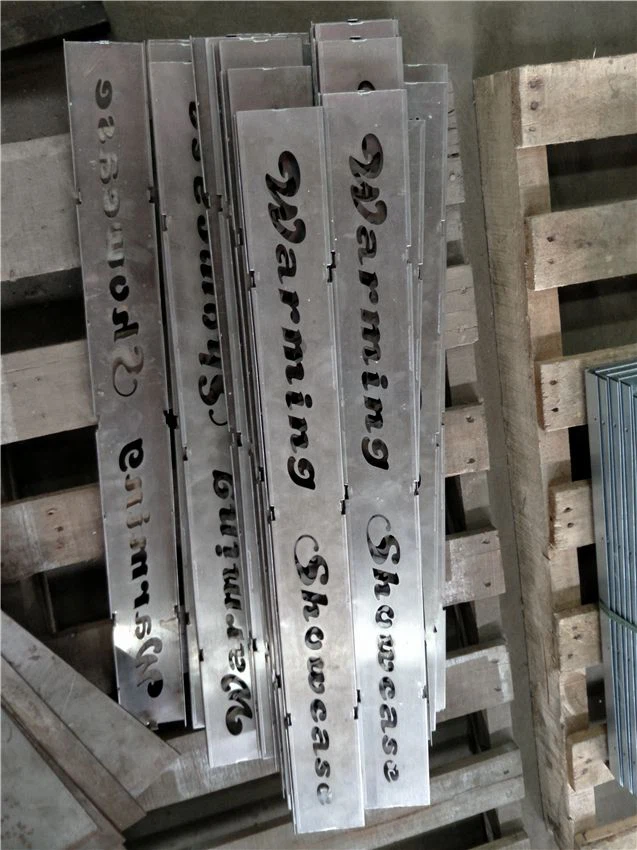
If you're looking for high - quality flat metal laser cutting, check out our Custom Logo Laser Cut Metal Good Quality. We can cut custom logos and designs onto flat metal surfaces with amazing precision.
Cutting Curved Surfaces
Now, onto curved surfaces. Cutting curved surfaces with a laser is a bit more challenging than cutting flat ones, but it's definitely doable. The key lies in having a cutting system that can adapt to the curvature of the surface.
There are two main ways to cut curved surfaces with a laser. One method is to use a 3D laser cutting machine. These machines have the ability to move the laser head in multiple axes, allowing it to follow the contour of a curved surface. This is great for cutting complex 3D shapes, like turbine blades or automotive body parts.
Another approach is to use a flexible fixture to hold the curved metal in place. The fixture can be designed to mimic the shape of the curve, and the laser can then cut along the surface while the metal remains stationary. This method is often used for smaller, less complex curved parts.
For instance, in the jewelry industry, laser cutting is used to create intricate designs on curved metal pieces. The ability to cut on curved surfaces allows jewelers to add unique details and patterns to their creations.
If you need high - precision cutting on curved surfaces, our High Precision 5mm Carbon Steel Cut Custom Laser Cut Steel is a great option. We can handle carbon steel pieces with precision, whether they're flat or curved.
Advantages of Using Metal Laser Cutting on Both Flat and Curved Surfaces
There are several advantages to using metal laser cutting on both flat and curved surfaces.
- Precision: Laser cutting offers extremely high precision, which means you can get very accurate cuts, regardless of the surface shape. This is crucial for industries where tight tolerances are required.
- Speed: Laser cutting is a fast process. It can cut through metal much quicker than traditional cutting methods, which helps to increase productivity.
- Versatility: As we've seen, laser cutting can be used on a wide variety of metal materials and surface shapes. This makes it a very versatile manufacturing process.
- Minimal Material Waste: Since the laser beam is very narrow, there's minimal material loss during the cutting process. This helps to save on material costs.
Challenges and Considerations
Of course, there are also some challenges and considerations when using metal laser cutting on curved surfaces.
- Complexity of Programming: Cutting curved surfaces requires more complex programming compared to flat surfaces. The machine needs to be programmed to follow the exact contour of the curve, which can be time - consuming.
- Cost: 3D laser cutting machines are more expensive than traditional 2D machines. This can increase the initial investment required for cutting curved surfaces.
- Surface Finish: Achieving a consistent surface finish on curved surfaces can be more difficult. The angle of the laser beam relative to the surface can affect the quality of the cut, so careful calibration is needed.
Applications in Different Industries
Let's take a look at some specific applications of metal laser cutting on flat and curved surfaces in different industries.
- Aerospace: In the aerospace industry, both flat and curved metal parts are used extensively. Flat parts like wing panels and brackets are cut with high precision to ensure the structural integrity of the aircraft. Curved parts, such as engine components, are also cut using laser technology to achieve the required shape and performance.
- Medical: The medical industry requires high - precision metal parts for devices like surgical instruments and implants. Laser cutting allows for the creation of custom - shaped parts, whether they're flat or have a curved design. This helps to improve the functionality and safety of medical devices.
- Architecture: In architecture, metal is often used for decorative elements and structural components. Laser cutting can be used to create intricate patterns on flat metal sheets for facades or to cut curved metal pieces for unique architectural features.
Conclusion
In conclusion, metal laser cutting can definitely be used for both flat and curved surfaces. While cutting curved surfaces presents some additional challenges, the benefits of precision, speed, and versatility make it a viable option for many industries.
If you're in need of custom metal laser cutting services, whether it's for flat or curved surfaces, we've got you covered. Check out our Custom Reasonable Price Non - standard Cutting Sheet Metal for more information on our non - standard cutting options.
We're always happy to discuss your specific requirements and find the best solution for your project. If you're interested in purchasing our metal laser cutting services, don't hesitate to reach out for a procurement discussion. We're looking forward to working with you!

References
- Smith, J. (2020). Laser Cutting Technology: Principles and Applications. Industrial Manufacturing Press.
- Brown, A. (2019). Advanced Metal Cutting Techniques. Engineering Today Publications.


