
Hey there! As a supplier in the steel forming business, I've been getting a lot of questions lately about the role of tempering after forming in steel processing. So, I thought I'd take a few minutes to break it down for you.
First off, let's talk about what steel forming is. Steel forming is the process of shaping steel into different forms and sizes. This can be done through a variety of methods, such as rolling, forging, extrusion, and stamping. Once the steel is formed into the desired shape, it often undergoes a heat treatment process called tempering.
So, what exactly is tempering? Tempering is a heat treatment process that involves heating the formed steel to a specific temperature and then cooling it at a controlled rate. This process is typically done after quenching, which is a rapid cooling process used to harden the steel. The goal of tempering is to reduce the brittleness of the quenched steel and improve its toughness and ductility.
One of the main reasons we temper steel after forming is to relieve internal stresses. When steel is formed, it undergoes a lot of mechanical deformation, which can create internal stresses within the material. These stresses can make the steel more prone to cracking and failure, especially under load. By tempering the steel, we can relieve these internal stresses and make the material more stable and reliable.
Another important role of tempering is to improve the steel's toughness. Quenching can make steel very hard, but it also makes it brittle. This means that the steel is more likely to break or fracture under impact or stress. Tempering helps to reduce the brittleness of the steel by allowing the formation of small, evenly distributed carbide particles within the material. These carbide particles act as barriers to crack propagation, making the steel more resistant to fracture.
In addition to relieving stresses and improving toughness, tempering can also enhance the steel's machinability. Machinability refers to the ease with which a material can be cut, drilled, or otherwise machined. Hard, brittle steel can be difficult to machine, as it can cause excessive tool wear and breakage. By tempering the steel, we can reduce its hardness and make it more machinable, which can save time and money in the manufacturing process.
Now, let's talk about some of the different types of tempering processes. There are several different types of tempering, each with its own unique characteristics and applications. The most common types of tempering include low-temperature tempering, medium-temperature tempering, and high-temperature tempering.
Low-temperature tempering, also known as stress relieving, is typically done at temperatures between 150°C and 250°C. This type of tempering is mainly used to relieve internal stresses in the steel without significantly affecting its hardness. Low-temperature tempering is often used for applications where the steel needs to maintain its hardness and strength, such as in tool steels and high-strength alloys.
Medium-temperature tempering is done at temperatures between 350°C and 500°C. This type of tempering is used to improve the steel's toughness and ductility while still maintaining a relatively high level of hardness. Medium-temperature tempering is commonly used for applications where the steel needs to withstand moderate levels of stress and impact, such as in automotive components and structural parts.
High-temperature tempering, also known as softening tempering, is done at temperatures above 500°C. This type of tempering is used to significantly reduce the hardness of the steel and improve its machinability. High-temperature tempering is often used for applications where the steel needs to be easily machined or formed, such as in sheet metal fabrication and machining operations.


As a steel forming supplier, we understand the importance of tempering in the steel processing industry. That's why we offer a wide range of tempering services to meet the specific needs of our customers. Whether you need low-temperature tempering to relieve internal stresses, medium-temperature tempering to improve toughness, or high-temperature tempering to enhance machinability, we have the expertise and equipment to get the job done right.
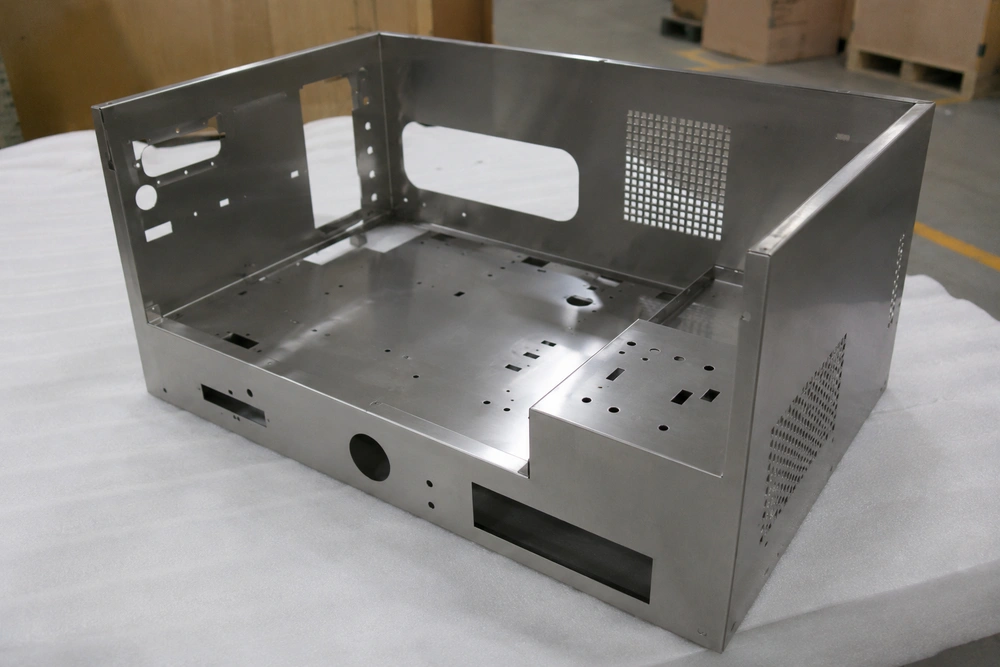
In addition to our tempering services, we also offer a variety of other steel forming and fabrication services. We specialize in Metal Furniture Parts Furniture Hardwares, High Precise CNC Metal Working Welded All Steel Fabrication, and Metal Housing Fabrication Service. Our team of experienced engineers and technicians can work with you to design and manufacture custom steel components that meet your exact specifications.
If you're in the market for high-quality steel forming and fabrication services, we'd love to hear from you. Whether you're a small business looking for a one-time project or a large corporation in need of ongoing production, we have the resources and capabilities to meet your needs. Contact us today to learn more about our services and to request a quote. Let's work together to create the perfect steel solution for your next project!
References
- "Steel Heat Treatment: Principles and Processes" by George E. Totten and M. A. MacKenzie
- "Metallurgy for Engineers: Physical Metallurgy Fundamentals" by George L. Kehl