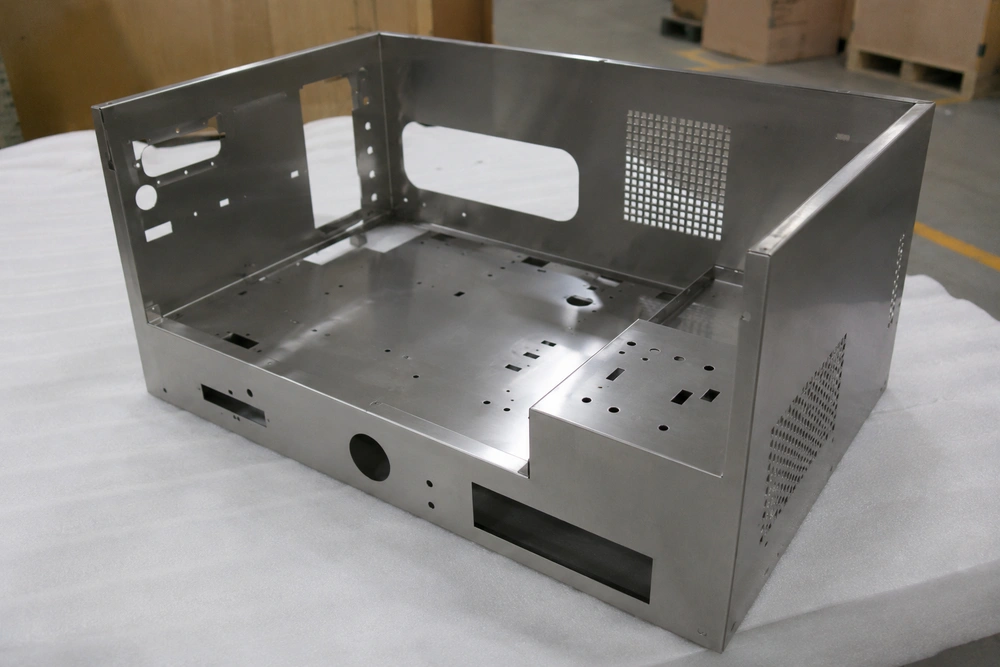

In the world of precision manufacturing, CNC (Computer Numerical Control) parts play a pivotal role. As a dedicated CNC parts supplier, I've witnessed firsthand the importance of understanding various material properties, and one such crucial property is the elastic modulus. This blog post aims to delve into what the elastic modulus of CNC parts is, why it matters, and how it impacts the performance of these parts.
What is the Elastic Modulus?
The elastic modulus, also known as Young's modulus, is a fundamental mechanical property of materials. It measures the stiffness of a material, specifically the ratio of stress (force per unit area) to strain (deformation) within the elastic range of the material. In simpler terms, it tells us how much a material will stretch or compress when a force is applied to it, as long as the force is not too large to cause permanent deformation.
Mathematically, the elastic modulus (E) is defined as:
[ E = \frac{\sigma}{\epsilon} ]
where (\sigma) is the stress and (\epsilon) is the strain.
The elastic modulus is expressed in units of pressure, typically gigapascals (GPa) in the SI system. Different materials have different elastic moduli, which depend on their atomic structure, bonding, and microstructure. For example, metals generally have high elastic moduli, indicating that they are relatively stiff and resist deformation. On the other hand, polymers usually have lower elastic moduli, making them more flexible.
Importance of Elastic Modulus in CNC Parts
The elastic modulus is a critical factor in the design and performance of CNC parts. Here are some key reasons why it matters:
1. Structural Integrity
In many applications, CNC parts need to withstand external forces without undergoing excessive deformation. The elastic modulus helps engineers and designers select the right material to ensure that the parts can maintain their shape and function under load. For instance, in aerospace components, where weight reduction is crucial, materials with high elastic moduli are preferred to provide the necessary stiffness while keeping the weight low.
2. Precision and Tolerance
CNC machining is known for its high precision and tight tolerances. The elastic modulus affects how a material responds to the cutting forces during machining. A material with a high elastic modulus is less likely to deform during machining, which helps in achieving accurate dimensions and surface finishes. This is particularly important for parts that require precise fits, such as gears and bearings.
3. Fatigue Resistance
CNC parts often experience cyclic loading in real-world applications. The elastic modulus plays a role in determining the fatigue resistance of the material. A material with a higher elastic modulus can better withstand repeated loading without developing cracks or failing prematurely. This is essential for parts used in automotive engines, industrial machinery, and other high-stress environments.
Elastic Modulus of Common Materials Used in CNC Parts
As a CNC parts supplier, we work with a wide range of materials, each with its own unique elastic modulus. Here are some common materials and their approximate elastic moduli:
1. Aluminum Alloys
Aluminum alloys are widely used in CNC machining due to their lightweight, good corrosion resistance, and high machinability. The elastic modulus of aluminum alloys typically ranges from 68 to 74 GPa. This makes them suitable for applications where weight reduction is important, such as in the automotive and aerospace industries. For more information on Custom High precision Aluminum Alloy CNC Machining Aluminium Machining, you can visit our website.


2. Steel
Steel is another popular material for CNC parts, known for its high strength and durability. The elastic modulus of steel varies depending on the type and composition, but it generally ranges from 190 to 210 GPa. Steel is commonly used in applications that require high stiffness and load-bearing capacity, such as in machinery frames and structural components.
3. Titanium Alloys
Titanium alloys are valued for their high strength-to-weight ratio, excellent corrosion resistance, and biocompatibility. The elastic modulus of titanium alloys is around 110 to 120 GPa. They are often used in aerospace, medical, and marine applications where performance under extreme conditions is required.
4. Plastics
Plastics are used in CNC machining for a variety of applications, including consumer products, electronics, and automotive interiors. The elastic modulus of plastics can vary widely depending on the type and grade, ranging from a few megapascals (MPa) for soft elastomers to several gigapascals for engineering plastics. Plastics offer advantages such as low cost, ease of processing, and design flexibility.
Measuring the Elastic Modulus of CNC Parts
There are several methods for measuring the elastic modulus of materials. One common method is the tensile test, where a sample of the material is subjected to a gradually increasing tensile force until it breaks. During the test, the stress and strain are measured, and the elastic modulus can be calculated from the linear portion of the stress-strain curve.
Another method is the ultrasonic method, which measures the velocity of ultrasonic waves in the material. The elastic modulus can be determined from the wave velocity and the density of the material. This method is non-destructive and can be used to test large or complex-shaped parts.
Impact of Elastic Modulus on CNC Machining Processes
The elastic modulus of a material can have a significant impact on the CNC machining processes. Here are some ways in which it affects machining:
1. Cutting Forces
Materials with high elastic moduli generally require higher cutting forces during machining. This is because they are more resistant to deformation, and the cutting tool needs to apply more force to remove the material. Higher cutting forces can lead to increased tool wear, reduced tool life, and potential damage to the workpiece. Therefore, it is important to select the appropriate cutting parameters, such as cutting speed, feed rate, and depth of cut, based on the elastic modulus of the material.
2. Chip Formation
The elastic modulus also affects the chip formation during machining. Materials with high elastic moduli tend to produce continuous chips, while materials with low elastic moduli may produce discontinuous or segmented chips. The type of chip formation can influence the surface finish of the machined part and the efficiency of the machining process. For example, continuous chips can be more difficult to break and remove from the cutting zone, which can lead to chip clogging and poor surface finish.
3. Residual Stresses
During CNC machining, residual stresses can be introduced into the workpiece due to the cutting forces and thermal effects. The elastic modulus of the material plays a role in determining the magnitude and distribution of these residual stresses. Materials with high elastic moduli are more likely to retain residual stresses, which can affect the dimensional stability and performance of the part. Post-machining processes, such as heat treatment or stress relieving, may be required to reduce the residual stresses.
Conclusion
In conclusion, the elastic modulus is a crucial property of materials used in CNC parts. It affects the structural integrity, precision, fatigue resistance, and machining processes of these parts. As a CNC parts supplier, we understand the importance of selecting the right material with the appropriate elastic modulus for each application. Whether you need Metal Machining Product CNC Parts OEM & ODM Service Factory or CNC machining part used for automotive devices, we have the expertise and capabilities to meet your requirements.
If you are interested in our CNC parts or have any questions about the elastic modulus or other material properties, please feel free to contact us for further discussion and procurement negotiation. We look forward to working with you to provide high-quality CNC parts that meet your specific needs.
References
- Callister, W. D., & Rethwisch, D. G. (2016). Materials Science and Engineering: An Introduction. Wiley.
- Kalpakjian, S., & Schmid, S. R. (2014). Manufacturing Engineering and Technology. Pearson.
- ASM Handbook Committee. (2000). ASM Handbook Volume 2: Properties and Selection: Nonferrous Alloys and Special-Purpose Materials. ASM International.