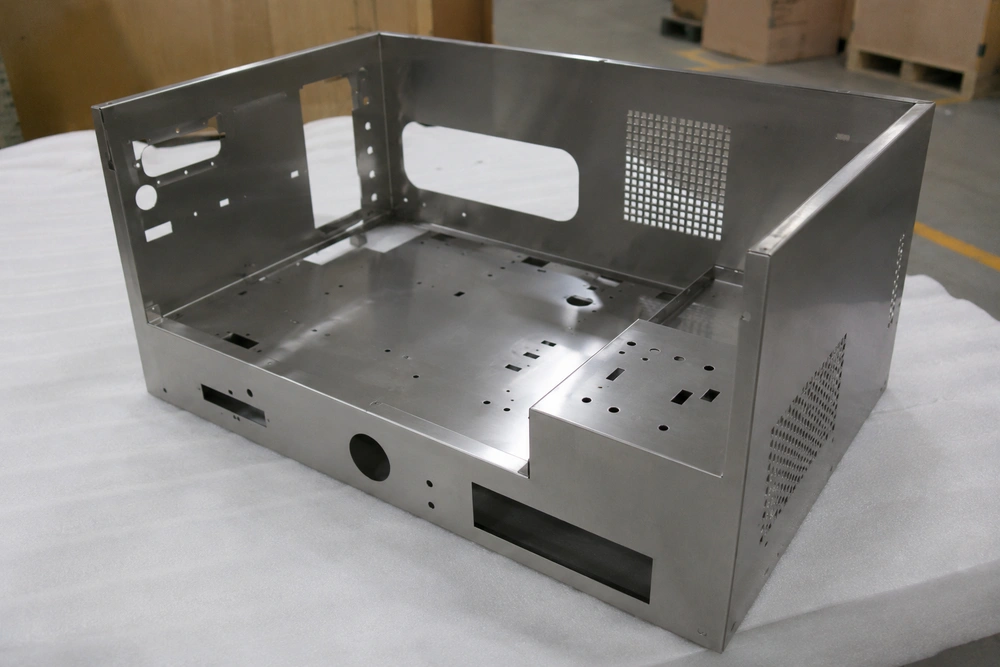

Pressure is a crucial factor in the production of CNC parts, influencing everything from material properties to the final product's dimensional accuracy. As a CNC parts supplier, I've witnessed firsthand how different levels and types of pressure can shape the quality and functionality of the parts we manufacture. In this blog post, I'll delve into the various effects of pressure on CNC parts, drawing on our experiences and industry knowledge.
Material Deformation
One of the most immediate effects of pressure on CNC parts is material deformation. When excessive pressure is applied during the machining process, the material can undergo plastic deformation, which permanently changes its shape. This is particularly problematic for high - precision CNC parts, where even the slightest deviation from the design specifications can render the part useless.
For example, in the production of CNC machining part used for automotive devices, precise dimensions are critical for proper fit and function within the vehicle's systems. If the pressure during machining is too high, the part may become warped or have uneven surfaces, leading to issues such as leaks, misalignments, or premature wear.
On the other hand, controlled pressure can be used to intentionally deform materials to achieve specific shapes or improve mechanical properties. For instance, in some metal forming processes, pressure is applied to create complex geometries that would be difficult or impossible to achieve through traditional machining methods alone.
Residual Stress
Pressure during CNC machining can also induce residual stress in the parts. Residual stress is the stress that remains in a material after the external forces have been removed. These stresses can have a significant impact on the part's performance and durability.
High levels of residual stress can cause parts to crack or deform over time, especially when exposed to additional loads or environmental factors. In the case of Custom High precision Aluminum Alloy CNC Machining Aluminium Machining, residual stress can lead to corrosion and reduced fatigue life. Aluminum is a relatively soft metal, and residual stress can make it more susceptible to stress - corrosion cracking, which can compromise the structural integrity of the part.
To mitigate the effects of residual stress, we often employ stress - relieving techniques such as heat treatment. By heating the part to a specific temperature and then slowly cooling it, we can reduce the internal stresses and improve the part's stability and reliability.

Surface Finish
The pressure applied during the cutting and finishing operations in CNC machining has a direct impact on the surface finish of the parts. High - pressure cutting can result in a rougher surface finish, as it may cause the material to tear or chip rather than being smoothly removed. This is particularly true for hard materials or when using dull cutting tools.
A poor surface finish not only affects the aesthetic appearance of the part but can also have functional implications. For example, in parts that require a tight seal or smooth movement, a rough surface can lead to leaks or increased friction. As a CNC parts supplier, we carefully control the cutting pressure and tool selection to achieve the desired surface finish for each part.
We use advanced machining techniques and high - quality cutting tools to minimize the pressure on the material while still maintaining efficient material removal rates. This allows us to produce parts with a smooth and consistent surface finish, meeting the strict quality requirements of our customers.

Tool Wear
Pressure also plays a significant role in tool wear during CNC machining. When high pressure is exerted on the cutting tool, it can cause increased friction and heat generation, leading to rapid tool wear. This not only affects the quality of the machined parts but also increases production costs due to the need for frequent tool replacement.
In our Metal Machining Product CNC Parts OEM & ODM Service Factory, we closely monitor the cutting pressure to optimize tool life. By using appropriate cutting parameters such as feed rate, spindle speed, and depth of cut, we can reduce the pressure on the tool and extend its service life. Additionally, we select high - performance cutting tools that are designed to withstand the pressures and forces encountered during machining.
Dimensional Accuracy
Maintaining dimensional accuracy is a top priority in CNC machining. Pressure can have a profound effect on the final dimensions of the parts. As mentioned earlier, excessive pressure can cause material deformation, which directly affects the part's size and shape.
During the machining process, we use precision measuring equipment to monitor the dimensions of the parts in real - time. If the pressure causes any deviations from the design specifications, we can adjust the machining parameters immediately to correct the issue. This ensures that each part meets the required tolerances and is fit for its intended application.
Impact on Different Materials
The effect of pressure on CNC parts can vary depending on the material being machined. For example, softer materials like plastics and aluminum are more susceptible to deformation under pressure compared to harder materials like steel and titanium.
When machining plastics, we need to be especially careful with the cutting pressure to avoid melting or warping the material. On the other hand, machining hard materials requires higher cutting forces, but we must also manage the pressure to prevent excessive tool wear and maintain dimensional accuracy.
Conclusion
In conclusion, pressure has a wide - ranging impact on CNC parts, affecting material deformation, residual stress, surface finish, tool wear, and dimensional accuracy. As a CNC parts supplier, we understand the importance of carefully controlling pressure during the machining process to ensure the production of high - quality parts.
By leveraging our expertise and advanced machining technologies, we can optimize the pressure conditions for each part, taking into account the material properties, design requirements, and intended application. This allows us to deliver parts that meet or exceed our customers' expectations in terms of quality, performance, and reliability.

If you're in need of high - quality CNC parts, we invite you to contact us for a procurement discussion. Our team of experts is ready to work with you to understand your specific needs and provide customized solutions. Whether you require CNC machining part used for automotive devices, Custom High precision Aluminum Alloy CNC Machining Aluminium Machining, or any other type of CNC parts, we have the capabilities and experience to meet your requirements.
References
- Kalpakjian, S., & Schmid, S. R. (2009). Manufacturing Engineering and Technology. Pearson Prentice Hall.
- Groover, M. P. (2010). Fundamentals of Modern Manufacturing: Materials, Processes, and Systems. John Wiley & Sons.
- Boothroyd, G., Dewhurst, P., & Knight, W. A. (2011). Product Design for Manufacture and Assembly. CRC Press.