
Hot rolling is a crucial process in steel forming, and as a leading steel forming supplier, I am excited to delve into the intricacies of how this process works. In this blog post, I will explore the fundamental principles, steps, and significance of hot rolling in the steel industry.
Understanding the Basics of Hot Rolling
Hot rolling is a metalworking process where steel is heated above its recrystallization temperature and then passed through one or more pairs of rolls to reduce its thickness and achieve the desired shape. The recrystallization temperature for steel typically ranges from 700°C to 900°C (1292°F to 1652°F), depending on the specific alloy composition. At this elevated temperature, the steel becomes more malleable and ductile, allowing it to be easily deformed without cracking or breaking.
The Hot Rolling Process
The hot rolling process can be divided into several key steps:


Heating
The first step in hot rolling is heating the steel to the appropriate temperature. This is typically done in a reheating furnace, where the steel is heated uniformly to ensure consistent properties throughout the material. The heating time and temperature are carefully controlled to achieve the desired microstructure and mechanical properties of the final product.
Roughing Mill
Once the steel reaches the desired temperature, it is transferred to the roughing mill. The roughing mill consists of a series of large rolls that gradually reduce the thickness of the steel. The rolls are powered by electric motors and are designed to apply a high amount of pressure to the steel, causing it to deform and elongate. The roughing mill may have multiple stands, each with a different set of rolls, to achieve the desired reduction in thickness.
Finishing Mill
After the steel has been reduced to a certain thickness in the roughing mill, it is transferred to the finishing mill. The finishing mill is similar to the roughing mill, but it has smaller rolls and is designed to produce a more precise and uniform thickness. The finishing mill may also have additional stands to further reduce the thickness and improve the surface finish of the steel.
Cooling
Once the steel has been rolled to the desired thickness, it is cooled rapidly to room temperature. This is typically done by passing the steel through a water spray or a cooling bed. The rapid cooling helps to lock in the desired microstructure and mechanical properties of the steel.
Coiling or Cutting
After cooling, the steel may be coiled into large rolls or cut into individual sheets or plates, depending on the customer's requirements. Coiling is a common method for handling large quantities of steel, as it allows for easy storage and transportation. Cutting is typically used for smaller quantities of steel or for applications where individual sheets or plates are required.
Advantages of Hot Rolling
Hot rolling offers several advantages over other steel forming processes, including:
Improved Mechanical Properties
Hot rolling helps to improve the mechanical properties of steel, such as strength, toughness, and ductility. The high temperature and pressure applied during the rolling process cause the steel to recrystallize, resulting in a finer and more uniform grain structure. This finer grain structure improves the steel's strength and toughness, while also making it more ductile and easier to form.
Cost-Effective
Hot rolling is a cost-effective method for producing large quantities of steel. The process is highly automated and can be completed quickly, resulting in lower production costs. Additionally, hot rolling allows for the use of large billets or slabs, which can be processed into a variety of shapes and sizes, further reducing costs.
Versatility
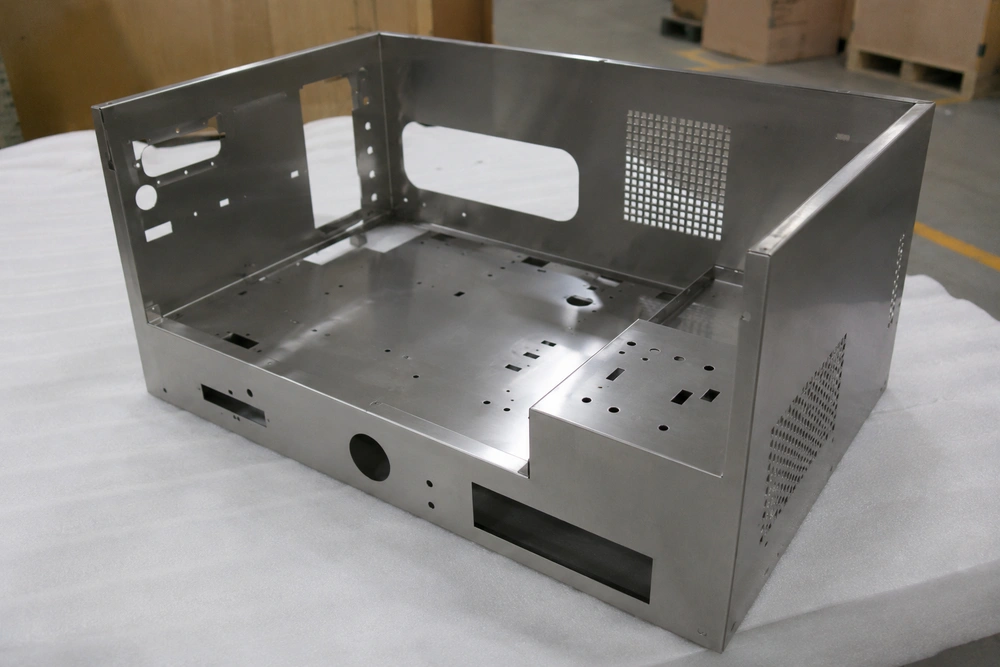
Hot rolling is a versatile process that can be used to produce a wide range of steel products, including sheets, plates, bars, and structural shapes. The process can also be used to produce custom stainless steel products and steel fabrication work, such as Custom Stainless Steel Products and Steel Fabrication Work. Additionally, hot rolling can be combined with other processes, such as powder coating and NCT punching, to produce high-quality steel products with unique properties and finishes, such as Custom OEM Carbon Steel Fabricators with Powder Coating and Custom Powder Coating NCT Punching Steel Manufacturing Process.
Applications of Hot Rolled Steel
Hot rolled steel is used in a wide range of applications, including:
Construction
Hot rolled steel is commonly used in the construction industry for structural applications, such as beams, columns, and frames. The high strength and durability of hot rolled steel make it an ideal choice for supporting heavy loads and withstanding harsh environmental conditions.
Automotive
Hot rolled steel is also used in the automotive industry for a variety of applications, including body panels, chassis components, and engine parts. The high strength and formability of hot rolled steel make it an ideal choice for producing complex shapes and structures.
Manufacturing
Hot rolled steel is used in the manufacturing industry for a wide range of products, including machinery, equipment, and tools. The high strength and durability of hot rolled steel make it an ideal choice for producing parts that require high performance and reliability.
Conclusion
Hot rolling is a crucial process in steel forming that offers several advantages over other steel forming processes. As a leading steel forming supplier, we have extensive experience in hot rolling and are committed to providing our customers with high-quality steel products that meet their specific requirements. Whether you need custom stainless steel products, steel fabrication work, or custom OEM carbon steel fabricators with powder coating, we have the expertise and capabilities to deliver the products you need. If you are interested in learning more about our hot rolling services or would like to discuss your specific requirements, please contact us today to start a procurement discussion.
References
- ASM Handbook, Volume 14A: Metalworking: Bulk Forming. ASM International, 2013.
- DeGarmo's Materials and Processes in Manufacturing. T. G. DeGarmo, J. T. Black, and R. A. Kohser. Wiley, 2003.
- Steel Rolling Technology. G. Krauss. ASM International, 2005.