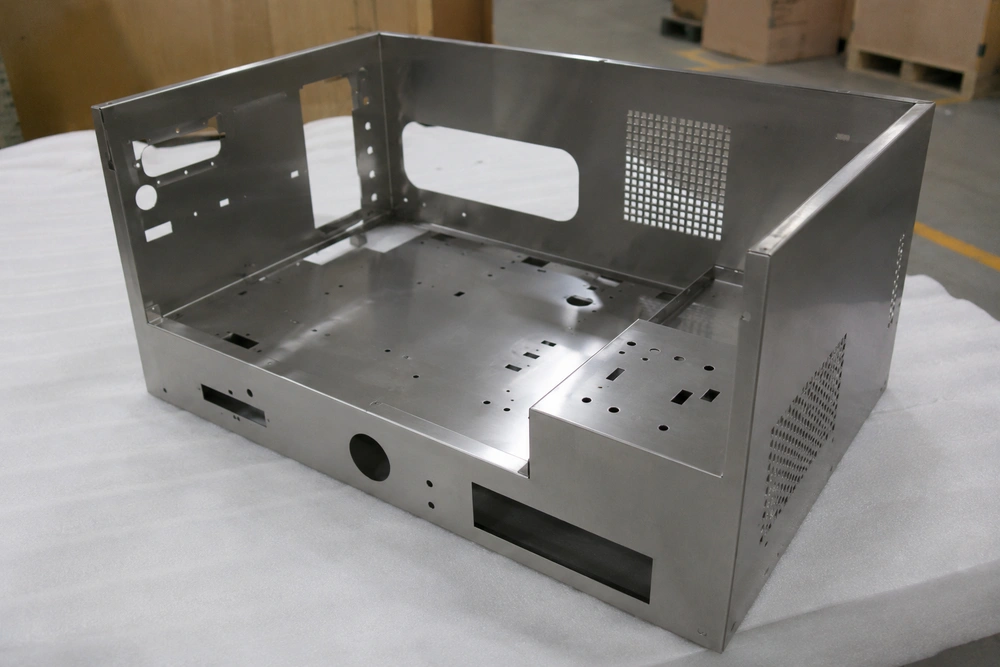

Hey there! I'm a supplier in the metal stamping business, and over the years, I've seen my fair share of quality issues. Metal stamping is a process that involves forming metal parts by applying pressure using a die. It's widely used in various industries, from automotive to electronics. But like any manufacturing process, it's not without its challenges. In this blog, I'll share some of the common quality issues in metal stamping and how we can address them.
1. Burrs
One of the most common quality issues in metal stamping is the formation of burrs. Burrs are small, sharp projections of metal that are left on the edges of the stamped part after the stamping process. They can be caused by several factors, including dull cutting edges on the die, improper clearance between the punch and the die, or excessive force during stamping.
Burrs can be a major problem as they can affect the fit and function of the stamped part. They can also pose a safety hazard to workers handling the parts. To prevent burrs, it's important to regularly maintain and sharpen the cutting edges of the die. We also need to ensure that there is proper clearance between the punch and the die to avoid excessive shearing forces. Additionally, using high - quality lubricants during the stamping process can help reduce friction and prevent burr formation.
2. Cracks
Cracks in stamped metal parts are another significant quality issue. Cracks can occur due to a variety of reasons, such as excessive stress during stamping, poor material quality, or improper die design. When the metal is subjected to too much force during the stamping process, it can exceed its yield strength and develop cracks.
To detect cracks, we use non - destructive testing methods such as visual inspection, magnetic particle inspection, or ultrasonic testing. To prevent cracks, we need to carefully select the right type of metal for the stamping process. The material should have the appropriate ductility and strength to withstand the stamping forces. We also need to optimize the die design to distribute the stress evenly across the part. For example, adding fillets and radii to sharp corners can help reduce stress concentration.
3. Dimensional Inaccuracies
Dimensional inaccuracies are a common headache in metal stamping. The stamped parts may not meet the required specifications in terms of length, width, height, or hole diameters. This can be caused by factors such as die wear, thermal expansion or contraction of the metal during stamping, or improper alignment of the punch and the die.
To ensure dimensional accuracy, we regularly measure the stamped parts using precision measuring tools like calipers, micrometers, and coordinate measuring machines (CMMs). We also need to monitor and control the stamping process parameters, such as temperature and pressure. If the die shows signs of wear, we need to replace or repair it promptly. Proper alignment of the punch and the die is crucial, and we use alignment fixtures and sensors to ensure accurate positioning.
4. Surface Defects
Surface defects like scratches, dents, and pits can also occur in metal stamping. Scratches can be caused by rough surfaces in the die, debris in the stamping area, or improper handling of the parts. Dents and pits can result from foreign objects getting trapped between the metal and the die during stamping.
To prevent surface defects, we keep the stamping area clean and free from debris. We also use protective coatings on the die surfaces to reduce friction and prevent scratching. When handling the stamped parts, we use proper tools and techniques to avoid causing damage. For example, we can use soft - tipped tongs instead of sharp - edged tools.
5. Springback
Springback is a phenomenon where the stamped part returns to a partially deformed shape after the stamping force is removed. This is due to the elastic properties of the metal. Springback can make it difficult to achieve the desired final shape of the part and can lead to dimensional inaccuracies.


To compensate for springback, we use advanced simulation software to predict the amount of springback that will occur. Based on the simulation results, we can adjust the die design or the stamping process parameters. For example, we can over - bend the part during stamping to account for the springback.
Our Solutions and Products
At our company, we take these quality issues seriously and have implemented a series of measures to ensure high - quality metal stamping products. We invest in state - of - the - art equipment and technologies to improve the stamping process. Our team of experienced engineers and technicians is constantly working on optimizing the die design and process parameters.
We offer a wide range of metal stamping products, including Customized Mould Stainless Steel Stamped Metal with High Precision. These products are made with high - quality stainless steel and are precision - stamped to meet your specific requirements. We also have BBQ Oven Cover Deep Drawing Stamping Part with Die or Mould. These parts are formed through deep drawing, a specialized stamping process that can create complex shapes. And for those in need of zinc - plated steel parts, we provide Zinc Plated Steel Metal Press Fabrication Customized, which are not only durable but also have excellent corrosion resistance.
Contact Us for Procurement
If you're in the market for high - quality metal stamping products, we'd love to hear from you. Whether you have a small - scale project or a large - volume order, we have the capabilities to meet your needs. Our team will work closely with you to understand your requirements and provide customized solutions. Don't hesitate to reach out to us for procurement and let's start a great business partnership!
References
- ASM Handbook, Volume 14A: Metalworking: Bulk Forming, ASM International
- Fundamentals of Metal Stamping, Society of Manufacturing Engineers (SME)