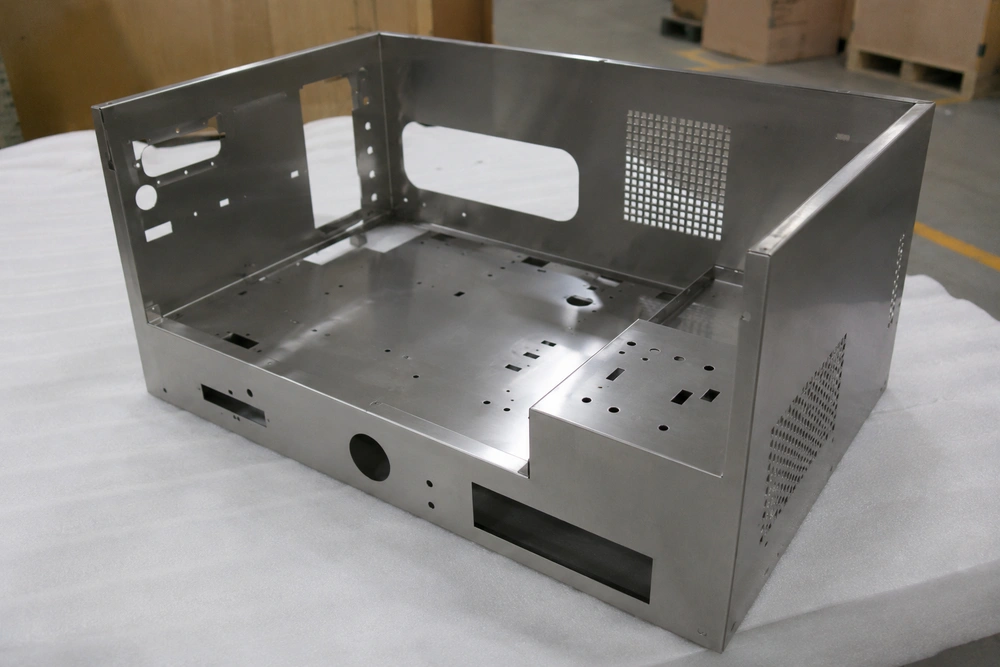

Stainless steel fabrication is a complex process that involves cutting, bending, welding, and finishing to transform raw stainless steel materials into various products. As a seasoned stainless steel fabrication supplier, I've encountered numerous challenges and defects during the fabrication process. In this blog, I'll share some of the most common defects in stainless steel fabrication and provide practical solutions to fix them.
1. Weld Defects
Welding is a critical step in stainless steel fabrication, but it can also introduce several defects.
Porosity
Porosity refers to the presence of small holes or voids in the weld. This defect is mainly caused by the entrapment of gas during the welding process. Contaminants on the surface of the stainless steel, such as oil, rust, or moisture, can release gases when heated, leading to porosity. Additionally, improper shielding gas flow or incorrect welding parameters can also contribute to this issue.
To fix porosity, it's essential to clean the stainless steel surfaces thoroughly before welding. Use a wire brush or a suitable cleaning agent to remove any contaminants. Ensure that the shielding gas flow rate is correct and that the gas nozzle is not blocked. Adjust the welding parameters, such as the welding current and voltage, to achieve a stable arc and proper fusion.
Lack of Fusion
Lack of fusion occurs when the weld metal fails to bond properly with the base metal. This can be due to insufficient heat input, improper welding technique, or the presence of contaminants. If the welding speed is too fast or the welding current is too low, the weld metal may not melt the base metal adequately, resulting in a weak bond.
To address lack of fusion, increase the heat input by adjusting the welding current and voltage. Use a proper welding technique, such as backstepping or weaving, to ensure good fusion between the weld metal and the base metal. Clean the joint surfaces thoroughly to remove any contaminants that may prevent fusion.
Cracks
Cracks in the weld can be classified into hot cracks and cold cracks. Hot cracks occur during the solidification of the weld metal, usually due to high levels of impurities, improper welding parameters, or excessive restraint. Cold cracks, on the other hand, develop after the weld has cooled down and are often caused by hydrogen embrittlement, residual stresses, or low-temperature service conditions.
To prevent and fix cracks, control the impurity levels in the stainless steel and the filler metal. Use low-hydrogen welding consumables and preheat the base metal if necessary to reduce the cooling rate and minimize residual stresses. Post-weld heat treatment can also be applied to relieve stresses and improve the toughness of the weld.
2. Surface Defects
Surface defects can affect the appearance and performance of stainless steel fabricated products.
Scratches
Scratches are one of the most common surface defects in stainless steel fabrication. They can occur during handling, cutting, or machining processes. Sharp tools, abrasive materials, or improper handling can cause scratches on the surface of the stainless steel.
To remove scratches, start by identifying the depth of the scratch. For shallow scratches, a fine-grit sandpaper or a polishing compound can be used to buff out the scratch. For deeper scratches, a more aggressive abrasive may be required, followed by a series of finer-grit sanding and polishing steps to restore the surface finish.
Stains and Discoloration
Stains and discoloration on the surface of stainless steel can be caused by exposure to chemicals, heat, or oxidation. For example, welding can cause heat discoloration around the weld area, and contact with certain chemicals can lead to staining.
To clean stains and discoloration, use a suitable stainless steel cleaner or a mild acid solution. Follow the manufacturer's instructions carefully and test the cleaner on a small, inconspicuous area first. After cleaning, rinse the surface thoroughly with water and dry it to prevent further staining.
Pitting Corrosion
Pitting corrosion is a localized form of corrosion that can occur in stainless steel when it is exposed to aggressive environments, such as chloride-containing solutions. Pits can form on the surface of the stainless steel, which can compromise its structural integrity over time.
To prevent pitting corrosion, choose the appropriate grade of stainless steel for the intended application. Ensure that the surface of the stainless steel is clean and free from contaminants. Apply a protective coating or passivation treatment to enhance the corrosion resistance of the stainless steel. If pitting corrosion has already occurred, the affected area can be repaired by grinding and polishing to remove the pits, followed by passivation.
3. Dimensional Defects
Dimensional accuracy is crucial in stainless steel fabrication, especially for products that require precise fitting and assembly.
Incorrect Dimensions
Incorrect dimensions can result from errors in measurement, improper machining, or tool wear. If the cutting or bending operations are not performed accurately, the final product may not meet the specified dimensions.


To ensure dimensional accuracy, use high-quality measuring tools and calibrate them regularly. Double-check the measurements before starting the fabrication process. Monitor the machining operations closely and make adjustments as needed. If an incorrect dimension is detected, the part may need to be reworked or, in some cases, scrapped.
Distortion
Distortion can occur during welding or heat treatment processes due to the expansion and contraction of the stainless steel. Uneven heating and cooling can cause the part to warp or bend out of shape.
To minimize distortion, use proper welding techniques, such as tack welding and backstepping, to distribute the heat evenly. Apply pre-weld and post-weld heat treatment to relieve stresses and reduce the likelihood of distortion. If distortion has already occurred, mechanical straightening or heat straightening techniques can be used to correct the shape of the part.
4. Assembly Defects
Assembly defects can affect the functionality and performance of the final stainless steel product.
Misalignment
Misalignment can occur when the components of a stainless steel assembly are not properly positioned or joined. This can be due to errors in machining, improper fixturing, or incorrect assembly procedures.
To ensure proper alignment, use accurate jigs and fixtures during the assembly process. Check the alignment of the components at each step and make adjustments as necessary. Use precision measuring tools to verify the alignment and ensure that the final assembly meets the specified tolerances.
Loose or Tight Fittings
Loose or tight fittings can cause problems in the operation of the stainless steel product. If the fittings are too loose, the product may not function properly or may be prone to vibration and noise. If the fittings are too tight, it may be difficult to assemble or disassemble the product, and it can also cause damage to the components.
To achieve the correct fit, use the appropriate fasteners and ensure that they are tightened to the specified torque. Check the fit of the components during the assembly process and make adjustments if necessary. If the fit is still not satisfactory, the components may need to be re-machined or replaced.
Conclusion
In conclusion, stainless steel fabrication is a challenging process that requires careful attention to detail to avoid common defects. By understanding the causes of these defects and implementing the appropriate solutions, we can ensure the quality and performance of our stainless steel fabricated products.
As a stainless steel fabrication supplier, we are committed to providing high-quality products and services. Our Sheet Steel Enclosure Custom offers customized solutions to meet your specific requirements. We also provide Customized Stainless Steel Works OEM Service to Drawings, allowing you to get the exact stainless steel products you need. And our Custom Laser Cut Bend Welded SS Fabrication High Quality ensures precision and reliability in every project.
If you are in need of stainless steel fabrication services, we invite you to contact us for a consultation and to discuss your specific needs. Our team of experts is ready to assist you in finding the best solutions for your projects.
References
- AWS Welding Handbook, American Welding Society
- Stainless Steel: A Practical Guide, ASM International
- Corrosion of Stainless Steels, John Wiley & Sons