

Pulsed vs CW Laser Cutting: Key Differences and Applications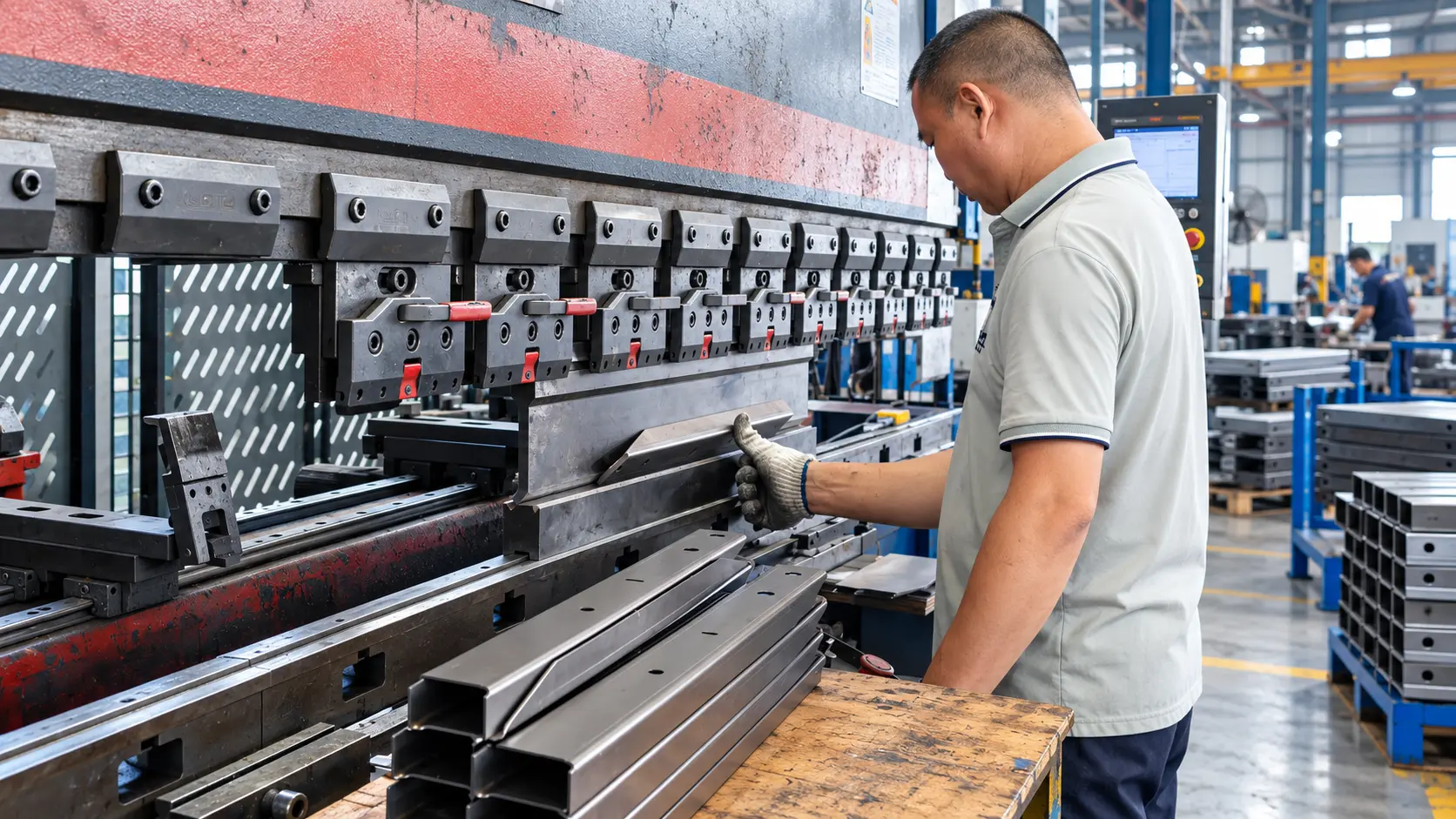
Laser cutting is widely used in custom sheet metal fabrication to produce precise profiles, complex geometries, and repeatable metal components. Two common laser operating modes are pulsed laser cutting and continuous-wave (CW) laser cutting. Although both use focused laser energy to process materials, they differ in how that energy is delivered and how it interacts with the workpiece.
Understanding these differences can help engineers, manufacturers, and OEM buyers evaluate cutting methods based on material type, thickness, part geometry, dimensional requirements, and production volume.
This guide explains how pulsed and CW laser cutting work, their advantages and limitations, and the factors that influence cutting quality in custom metal fabrication.
What Is Pulsed Laser Cutting?
Pulsed laser cutting uses laser energy delivered in discrete pulses rather than as a continuous beam. Each pulse has a defined duration, energy level, and repetition frequency.
Depending on the laser system, pulse durations may range from milliseconds to extremely short intervals measured in nanoseconds or less. The interaction between these pulses and the material determines how heat is transferred and how material is removed.
Several parameters influence pulsed laser processing:
Pulse Duration: The length of time each laser pulse delivers energy.
Pulse Repetition Frequency (PRF): The number of pulses emitted per second, typically measured in hertz (Hz).
Pulse Energy: The amount of energy delivered in each pulse.
Peak Power: The maximum power reached during a pulse.
Cutting Speed: The movement speed of the laser beam relative to the workpiece.
By adjusting these parameters, manufacturers can control energy delivery for specific processing requirements.
Pulsed laser operation can be useful in certain precision cutting and micromachining applications, particularly when localized energy delivery is important. However, its suitability depends on the laser source, material properties, thickness, and required cutting performance.
How Does Continuous-Wave Laser Cutting Work?
Continuous-wave laser cutting delivers a sustained laser beam to the material during processing. Unlike pulsed operation, the laser output remains continuous while the cutting process is active.
The concentrated laser energy heats the material, while an assist gas helps remove molten material from the cutting zone.
CW fiber lasers are widely used in industrial sheet metal cutting because they can provide efficient processing and consistent cutting performance across many common manufacturing applications.
Typical materials processed using industrial laser cutting systems include:
Carbon steel
Stainless steel
Aluminum and aluminum alloys
Certain other metals, depending on machine capabilities
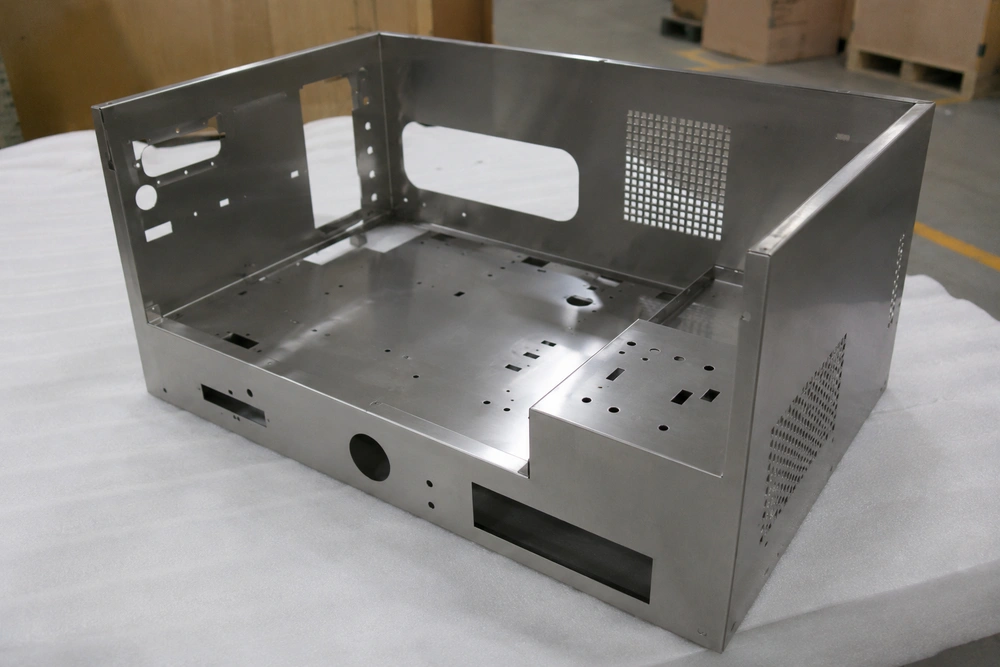
CW laser cutting is commonly used to manufacture metal enclosures, brackets, panels, frames, and other components requiring accurate profiles and repeatable production.
For more information about custom metal cutting applications, explore our Custom Laser Cutting Services.
Pulsed vs CW Laser Cutting: Key Differences
Although pulsed and CW lasers can both process metal, their performance depends on the application and operating conditions.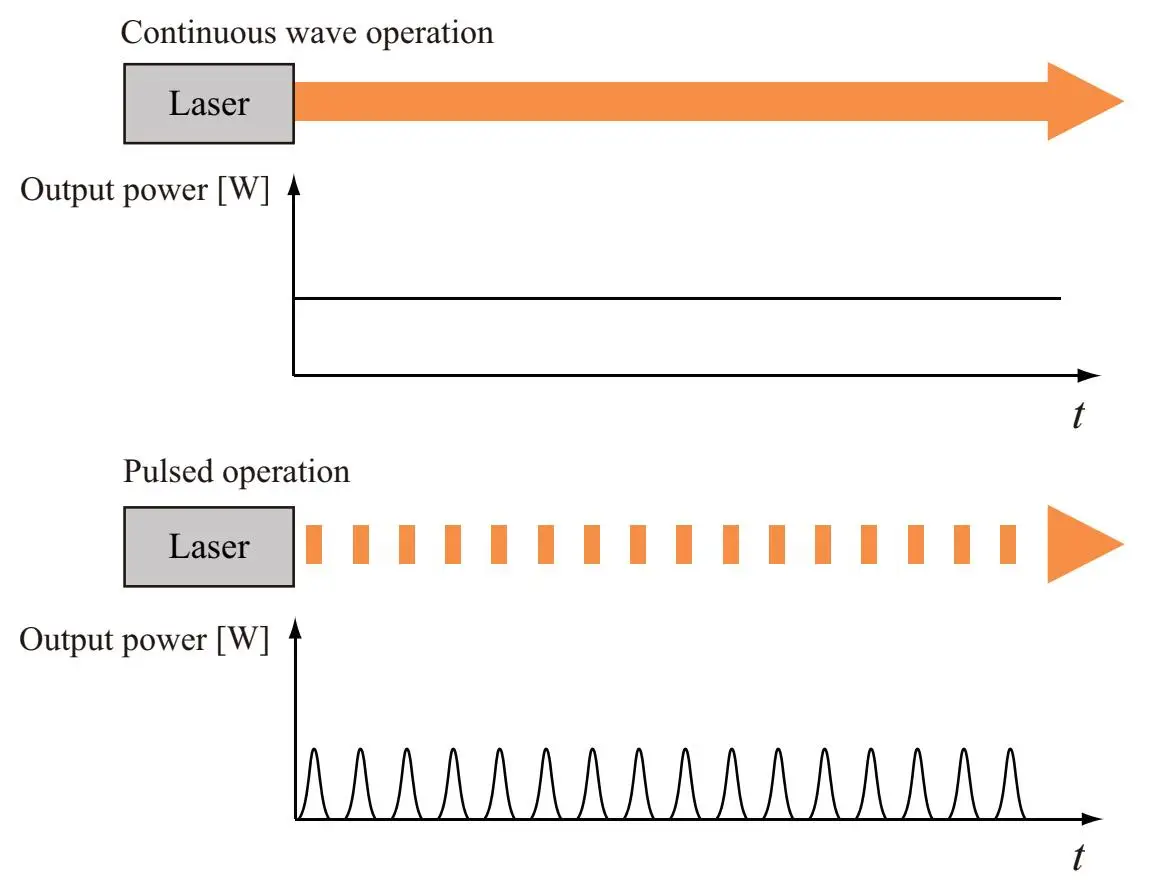
| Comparison Factor | Pulsed Laser Cutting | CW Laser Cutting |
|---|---|---|
| Energy Delivery | Discrete laser pulses | Continuous laser output |
| Heat Input | Can provide localized energy control | Sustained heating during cutting |
| Cutting Speed | Depends on pulse parameters and application | Often efficient for conventional sheet metal profile cutting |
| Edge Quality | Can support precise features in suitable applications | Can produce consistent industrial cutting edges |
| Material Thickness | Depends on laser type, pulse energy, and process | Widely applied across industrial sheet metal thickness ranges |
| Typical Applications | Fine-feature processing, micromachining, specialized cutting | Sheet metal components, brackets, enclosures, production parts |
Neither operating mode is universally superior.
Pulsed laser systems may offer advantages for certain fine-feature or heat-sensitive processing requirements. CW laser systems are frequently more practical for conventional sheet metal profile cutting and production applications.
The appropriate process should be selected according to part specifications rather than laser operating mode alone.
How Laser Operating Modes Affect Cutting Quality
Cutting quality depends on more than whether the laser operates in pulsed or continuous mode.
1. Heat-Affected Zone (HAZ)
The heat-affected zone is the area surrounding a cut where material properties may change due to thermal exposure.
Controlling heat input is important for components requiring dimensional stability or specific material properties.
Certain pulsed laser processes can reduce thermal effects in suitable applications. However, the actual HAZ also depends on pulse duration, laser power, cutting speed, material properties, and processing conditions.
A smaller HAZ does not automatically guarantee a burr-free edge or eliminate the need for secondary finishing.
2. Edge Quality and Burr Formation
Laser-cut edges may vary in surface roughness, perpendicularity, dross formation, and burr characteristics.
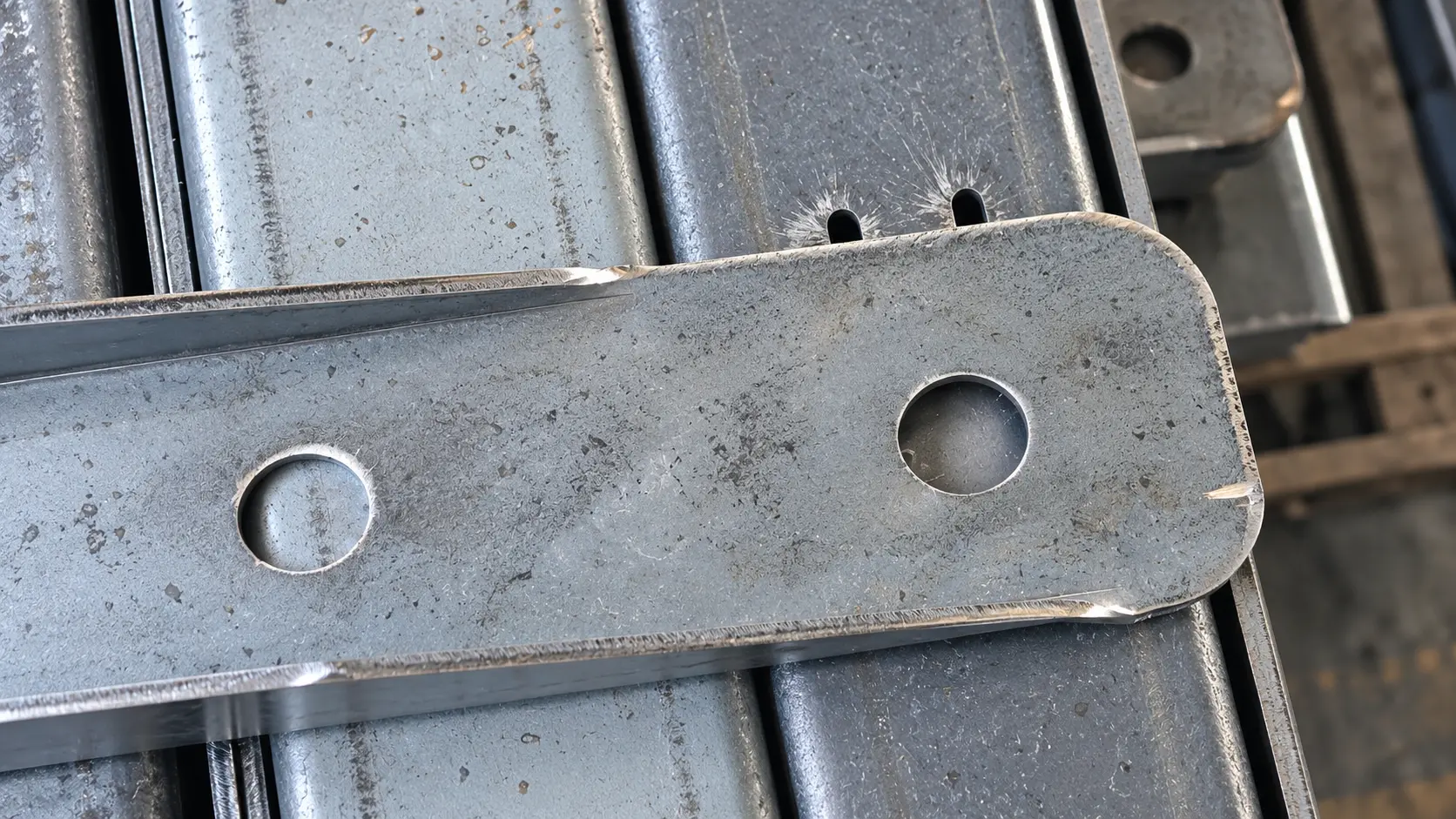
These outcomes are influenced by:
Laser power and cutting speed
Focus position and beam characteristics
Assist gas type and pressure
Material composition and thickness
Machine setup and process stability
Optimized cutting parameters help improve edge consistency and reduce unnecessary finishing requirements.
Depending on the component's intended use, additional deburring or surface finishing may still be necessary.
3. Dimensional Accuracy
Dimensional accuracy is particularly important for metal parts that must fit into larger assemblies.
Laser cutting can produce complex contours, mounting holes, slots, and other features with repeatable positioning.
However, achievable tolerances depend on the material, thickness, equipment, cutting conditions, and part geometry.
For components requiring tight dimensional control, manufacturers should review critical dimensions and inspection requirements before production.
Factors Affecting Laser Cutting Performance
Choosing an appropriate laser cutting process requires evaluating several manufacturing factors.
Material Type
Different metals absorb and respond to laser energy differently.
Carbon steel, stainless steel, and aluminum have different thermal properties, which influence cutting behavior, heat distribution, and edge formation.
Highly reflective materials may require additional equipment capabilities or specialized processing parameters.
Material Thickness
Material thickness affects the laser power, cutting speed, assist gas selection, and overall processing strategy.
Thin materials may require careful heat management to reduce distortion, while thicker materials often require sufficient sustained energy and effective molten-material removal.
The relationship between thickness and cutting performance varies by machine and laser configuration.
Part Geometry
Complex contours, narrow slots, small holes, and closely spaced features can create additional manufacturing challenges.
The feasibility of these features depends on material thickness, feature dimensions, and cutting capabilities.
Design for Manufacturability (DFM) reviews can help identify potential issues before production.
Production Volume
Production quantity also influences process selection.
For prototypes and small batches, setup flexibility and design verification may be important. For larger production runs, cutting efficiency, material utilization, repeatability, and downstream processing costs become increasingly significant.
The best manufacturing approach should balance quality requirements with overall production efficiency.
Applications in Custom Sheet Metal Fabrication
Laser cutting is an important process in manufacturing custom metal components for industrial and commercial applications.
Electrical Enclosures and Chassis Components
Custom electrical enclosures and chassis parts often require accurately positioned mounting holes, ventilation openings, and assembly features.
Laser cutting can be used to create flat patterns before bending, welding, or other manufacturing operations.
Metal Brackets and Mounting Components
Metal brackets may include slots, holes, tabs, and complex profiles designed for specific installation requirements.
Consistent cutting dimensions help support subsequent bending and assembly operations.
Explore our Precision Laser-Cut Sheet Metal Parts for examples of custom metal fabrication applications.
Industrial Panels and Covers
Industrial panels and covers may require cutouts for connectors, displays, switches, or mechanical interfaces.
Laser cutting allows manufacturers to produce customized profiles without dedicated stamping tooling for every design.
Custom Metal Parts for Equipment
Many industrial equipment manufacturers require fabricated components with specific dimensions, materials, and functional features.
These parts may undergo additional operations such as bending, welding, deburring, or surface finishing.
Learn more about the manufacturing processes involved in Sheet Metal Fabrication Services.
How to Choose the Right Laser Cutting Process
For OEM buyers and product engineers, the most important question is not simply whether pulsed or CW laser cutting is better.
Instead, the manufacturing process should be evaluated against the actual part requirements.
Before requesting a quotation, consider providing:
Material Specifications: Metal type, grade, and required thickness.
Engineering Drawings: 2D drawings or suitable CAD files showing dimensions and features.
Tolerance Requirements: Critical dimensions, fit requirements, and inspection expectations.
Production Quantity: Prototype, small-batch, or volume production requirements.
Surface Requirements: Edge quality, deburring, finishing, and appearance expectations.
Assembly Requirements: Bending, welding, hardware installation, or other downstream operations.
Providing these details helps manufacturers evaluate cutting feasibility and recommend an appropriate production approach.
For examples of laser-cut components, visit our Laser-Cut Metal Parts page.
Conclusion
Pulsed and continuous-wave laser cutting use different energy delivery methods, resulting in different processing characteristics.
Pulsed operation can be beneficial in selected precision applications where controlled energy delivery is important. Continuous-wave laser cutting is widely used for conventional industrial sheet metal processing, particularly where cutting efficiency and production consistency are priorities.
Neither process guarantees superior results in every situation.
Material properties, thickness, geometry, equipment capabilities, and quality requirements should all be considered when selecting a manufacturing process.
For custom sheet metal components, reviewing the complete manufacturing workflow-including cutting, bending, welding, finishing, and inspection-can be more valuable than evaluating the cutting method in isolation.
Looking for Custom Laser-Cut Metal Parts?
CustomizedFab provides custom sheet metal fabrication services for industrial and OEM applications, including laser cutting, CNC bending, welding, and finishing.
Whether you need prototype components or production parts, selecting the right manufacturing process begins with understanding your drawings, materials, and quality requirements.
Contact our team to discuss your project and request a quotation for custom metal fabrication services.