
Hey there, fellow electronics enthusiasts! I'm here as a supplier of metal parts to share some cool insights on how to use metal parts in electrical circuits. Whether you're a hobbyist tinkering in your garage or a professional engineer working on a big project, this blog is for you.
First off, let's talk about why metal parts are so important in electrical circuits. Metals are great conductors of electricity, which means they can carry electrical current with relatively low resistance. This property makes them essential for creating paths for electricity to flow within a circuit.
One of the most common metal parts used in electrical circuits is the wire. Wires are typically made of copper or aluminum because these metals have high conductivity and are relatively inexpensive. Copper wires are often preferred for their better conductivity, but aluminum wires are also widely used, especially in large-scale electrical installations where cost is a major factor.
When using wires in a circuit, it's important to choose the right gauge. The gauge of a wire refers to its thickness, and it determines how much current the wire can safely carry. A thicker wire (lower gauge number) can carry more current than a thinner wire (higher gauge number). If you use a wire with too small a gauge for the amount of current in your circuit, the wire can overheat and potentially cause a fire.
Another important metal part in electrical circuits is the terminal. Terminals are used to connect wires to other components in the circuit, such as switches, resistors, or batteries. They come in various shapes and sizes, and are usually made of brass or copper. Brass terminals are durable and corrosion-resistant, while copper terminals offer excellent conductivity.
To connect a wire to a terminal, you typically strip the insulation off the end of the wire and then insert it into the terminal. You can then secure the wire in place using a screw or a crimping tool. It's important to make sure the connection is tight and secure to prevent any loose connections that could cause electrical problems.
Now, let's talk about some more specialized metal parts that you might encounter in electrical circuits. One such part is the heat sink. Heat sinks are used to dissipate heat generated by electronic components, such as transistors or integrated circuits. They are usually made of aluminum or copper because these metals have high thermal conductivity, which means they can transfer heat away from the component quickly.
Heat sinks work by increasing the surface area of the component, which allows more heat to be radiated into the surrounding air. They are often finned to further increase the surface area. When installing a heat sink, it's important to use a thermal compound between the component and the heat sink to improve heat transfer.
Another specialized metal part is the circuit breaker. Circuit breakers are used to protect electrical circuits from overcurrent. They work by automatically interrupting the flow of current when the current exceeds a certain limit. Circuit breakers are typically made of metal contacts and a trip mechanism. When the current exceeds the rated limit, the trip mechanism is activated, and the contacts open, interrupting the circuit.
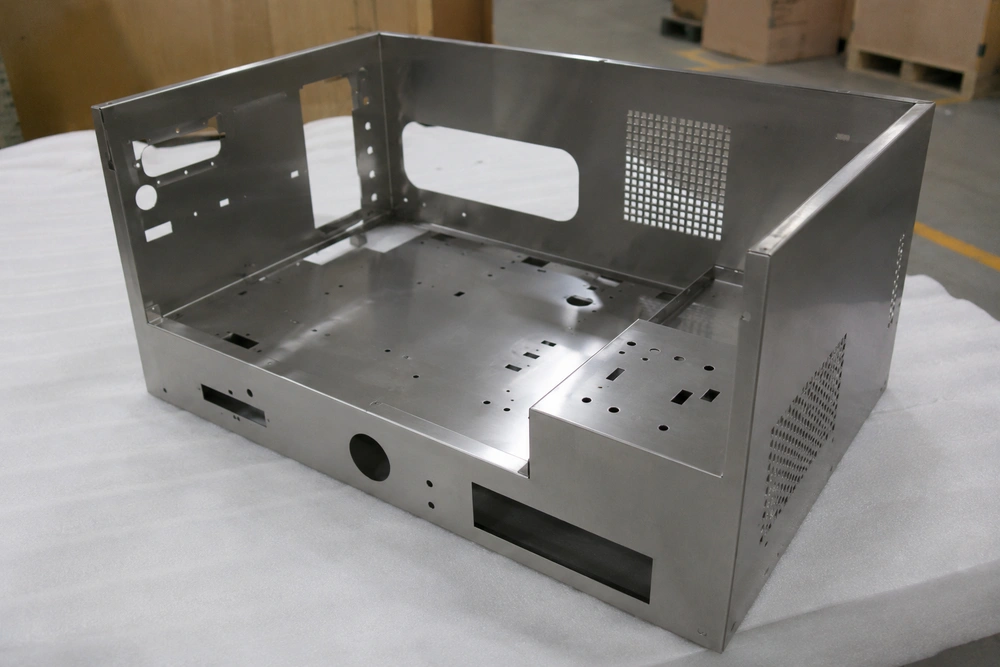
Now, let's take a look at some of the metal parts we offer as a supplier. We have a wide range of custom stainless steel product parts, including pipes, boxes, and enclosures. Our LBT Custom Stainless Steel Product Parts/pipe/box/enclosure Cnc Processing Sheet Metal Fabrication services allow us to create high-quality parts that meet your specific requirements.
We also offer Welding Aluminium Tanks Fabrication services. Aluminum tanks are commonly used in electrical applications for storing batteries or other fluids. Our welding services ensure that the tanks are strong and leak-proof.
And if you're looking for stainless steel pipes, we have the Hot in Canada 22*1.2 304 Round Stainless Steel Pipe Seamless Stainless Steel Pipe/Tube. These pipes are made of high-quality 304 stainless steel and are suitable for a variety of electrical and plumbing applications.
When choosing metal parts for your electrical circuits, it's important to consider the quality and reliability of the parts. Using low-quality parts can lead to electrical problems and potentially dangerous situations. That's why we take pride in offering high-quality metal parts that are tested and certified to meet industry standards.


In addition to quality, it's also important to consider the cost of the parts. We understand that cost is a major factor for many of our customers, and we strive to offer competitive prices without compromising on quality. We also offer bulk discounts for large orders, which can help you save even more money.
If you're interested in using our metal parts in your electrical circuits, we'd love to hear from you. We can provide you with more information about our products and services, and help you choose the right parts for your specific needs. Whether you're a small business or a large corporation, we have the expertise and resources to meet your requirements.
So, don't hesitate to reach out to us if you have any questions or if you're ready to place an order. We're here to help you succeed in your electrical projects.
References
- Boylestad, R. L., & Nashelsky, L. (2012). Electronic Devices and Circuit Theory. Pearson.
- Nilsson, J. W., & Riedel, S. A. (2014). Electric Circuits. Pearson.