
Hey there! I'm part of a steel forming supplier team, and today I wanna chat about something super important in our line of work: how the presence of internal defects in steel affects the forming process.
First off, let's talk about what these internal defects in steel are. You've got things like inclusions, porosity, and cracks. Inclusions are basically non - metallic particles that get trapped in the steel during the manufacturing process. Porosity is tiny holes or voids in the steel, and cracks can be either microscopic or visible to the naked eye.
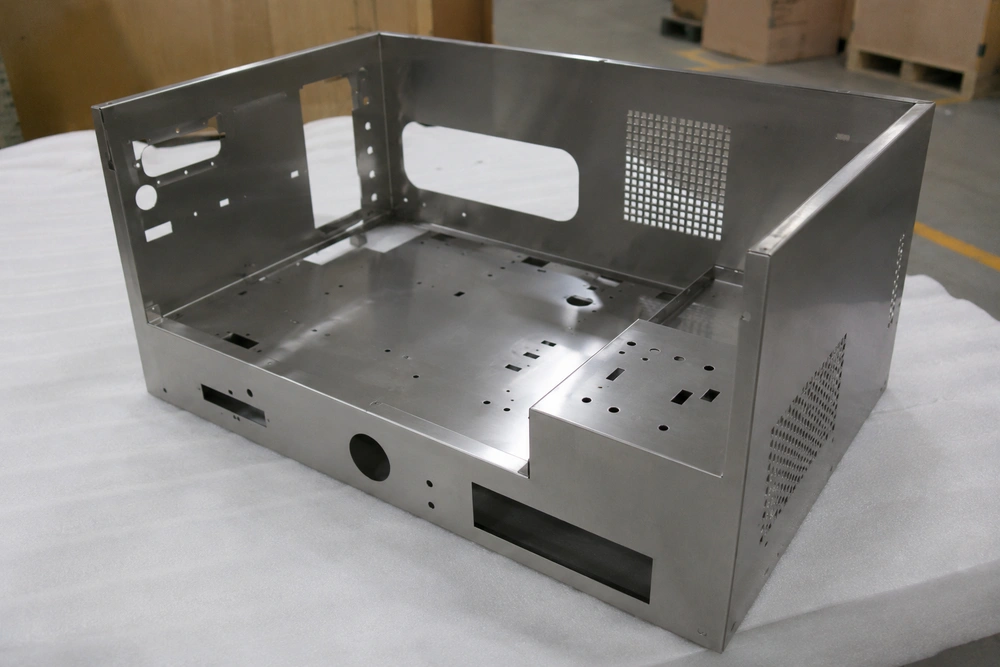
So, how do these defects mess with the forming process? Well, let's start with inclusions. These little buggers can cause all sorts of problems. When we're trying to form the steel, say by bending or stamping it, inclusions can act as stress concentrators. This means that when we apply force to the steel, the stress builds up around these inclusions instead of being evenly distributed across the material. As a result, the steel is more likely to crack or break at these points. For example, if we're making a custom stainless steel product Custom Stainless Steel Products and Steel Fabrication Work, and there are inclusions in the steel, the forming process might cause the product to develop cracks right where the inclusions are. This not only ruins the aesthetic appeal of the product but also weakens its structural integrity.
Porosity is another big issue. The voids in the steel make it less dense and less strong. During the forming process, when we're applying pressure to shape the steel, these porous areas can collapse or expand in an unpredictable way. This can lead to uneven shaping of the steel. For instance, if we're doing metal housing fabrication service Metal Housing Fabrication Service, porosity in the steel can cause the housing to have uneven walls or a distorted shape. It can also make the steel more prone to corrosion because the porous areas can trap moisture and other corrosive substances.
Cracks, whether they're pre - existing or develop during the forming process, are a major headache. A small crack can grow and spread under the stress of forming. If we're forming a large piece of steel, like in custom carbon steel cabinet iron fabrication with powder coating Custom Carbon Steel Cabinet Iron Fabrication with Powder Coating, a crack can quickly turn the whole piece into scrap. Cracks can also affect the surface finish of the product. When the steel is formed, the crack edges can become rough and jagged, which is not only bad for the look of the product but can also pose a safety hazard.
Now, let's look at how these defects impact the different types of forming processes. In hot forming, the steel is heated to a high temperature to make it more malleable. But internal defects can still cause problems. For example, inclusions can melt or react differently than the surrounding steel at high temperatures. This can lead to changes in the steel's composition and properties in the areas around the inclusions. Porosity can also be exacerbated during hot forming. The heat can cause the gases trapped in the porous areas to expand, increasing the size of the voids and further weakening the steel.
Cold forming, on the other hand, is done at room temperature. Since the steel is not as malleable in cold forming, internal defects can have an even more significant impact. The stress required to shape the steel is higher, and cracks are more likely to propagate. Inclusions can cause the steel to fracture prematurely, and porosity can make it difficult to achieve the desired shape and dimensions.


We also need to consider the cost implications of these internal defects. When we encounter defects during the forming process, it often means additional work and expense. We might have to scrap the defective piece and start over, which wastes materials and time. Or, we might try to repair the defective area, but this also adds to the production cost. In some cases, the presence of defects can even lead to customer dissatisfaction and loss of business.
So, what can we do to deal with these internal defects? One approach is to improve the steel manufacturing process. By using better quality raw materials and more advanced refining techniques, we can reduce the number of inclusions and porosity in the steel. Another option is to use non - destructive testing methods before the forming process. This allows us to detect internal defects early and decide whether to use the steel or not. For example, ultrasonic testing can detect cracks and inclusions inside the steel without damaging it.
At our steel forming company, we take these issues very seriously. We work closely with our steel suppliers to ensure that the steel we receive is of the highest quality. We also have a rigorous quality control process in place to catch any defects before they cause problems during the forming process.
If you're in the market for high - quality steel forming products, whether it's custom stainless steel products, metal housing fabrication, or custom carbon steel cabinet iron fabrication, we'd love to hear from you. We've got the expertise and experience to handle all your steel forming needs, and we'll make sure that the products we deliver are free from the problems caused by internal defects. So, don't hesitate to reach out and start a conversation about your project.
References:
- "Metallurgy for Dummies" by John H. Davies
- "The Science of Steel Forming" by Robert W. Hertel
- Various industry research papers on steel defects and forming processes