
Metal engineering plays a pivotal role in enhancing the surface properties of metals, which are crucial for various applications across multiple industries. As a leading supplier in the field of metal engineering, we are deeply involved in leveraging advanced techniques to improve the performance and durability of metal surfaces. In this blog, we will explore how metal engineering contributes to the improvement of metal surface properties.
Surface Hardening
One of the primary goals in metal engineering is to increase the hardness of metal surfaces. Harder surfaces are more resistant to wear, abrasion, and deformation, which is essential for components that are subjected to high stress and friction. There are several methods used in metal engineering to achieve surface hardening.
Heat Treatment
Heat treatment is a widely used technique in metal engineering for surface hardening. Processes such as carburizing, nitriding, and induction hardening are commonly employed. Carburizing involves introducing carbon into the surface layer of a low - carbon steel component. The component is heated in a carbon - rich environment, allowing carbon atoms to diffuse into the surface. After carburizing, the component is quenched to form a hard, wear - resistant surface layer. Nitriding, on the other hand, introduces nitrogen into the metal surface. This process can significantly improve the hardness, fatigue resistance, and corrosion resistance of the metal. Induction hardening uses electromagnetic induction to heat the surface of the metal rapidly, followed by quenching to harden the surface layer. These heat treatment methods can be precisely controlled to achieve the desired hardness and depth of the hardened layer, ensuring optimal performance for different applications.
Coating and Deposition
Another effective way to improve surface hardness is through coating and deposition techniques. For example, physical vapor deposition (PVD) and chemical vapor deposition (CVD) can be used to apply thin, hard coatings on metal surfaces. PVD involves vaporizing a solid material in a vacuum chamber and depositing it onto the metal surface. Coatings such as titanium nitride (TiN), titanium carbonitride (TiCN), and chromium nitride (CrN) are commonly used in PVD. These coatings have high hardness, good wear resistance, and low friction coefficients, making them suitable for cutting tools, molds, and other high - performance applications. CVD, on the other hand, uses chemical reactions to deposit a coating on the metal surface. CVD coatings can have excellent adhesion and can be tailored to specific requirements.
Corrosion Resistance
Corrosion is a major concern in many metal applications, as it can lead to the degradation of metal components and reduce their service life. Metal engineering offers several solutions to improve the corrosion resistance of metal surfaces.
Surface Passivation
Surface passivation is a process that forms a thin, protective oxide layer on the metal surface. For example, stainless steel is passivated by treating it with an acid solution, which removes impurities from the surface and promotes the formation of a chromium - rich oxide layer. This oxide layer acts as a barrier, preventing oxygen and other corrosive agents from reaching the underlying metal. Passivation can significantly improve the corrosion resistance of stainless steel in various environments, including those with high humidity, chemicals, and saltwater.
Coating and Painting
Applying coatings and paints is a common method to protect metal surfaces from corrosion. Organic coatings, such as epoxy, polyurethane, and acrylic paints, can provide a physical barrier between the metal and the corrosive environment. These coatings can be formulated to have specific properties, such as good adhesion, flexibility, and resistance to UV radiation. In addition to organic coatings, metallic coatings such as zinc - based coatings (galvanizing) are also widely used. Galvanizing involves coating the metal with a layer of zinc, which acts as a sacrificial anode. When the zinc layer corrodes, it protects the underlying metal from corrosion.
Surface Finish and Aesthetics
In addition to functional properties, the surface finish and aesthetics of metal products are also important, especially in consumer products and architectural applications. Metal engineering can be used to achieve different surface finishes and enhance the visual appeal of metal products.
Machining and Polishing
Machining processes such as milling, turning, and grinding can be used to create smooth and precise surface finishes on metal components. These processes can remove surface irregularities and improve the dimensional accuracy of the parts. Polishing is another technique used to achieve a high - gloss surface finish. By using abrasive materials, the surface of the metal can be smoothed and made more reflective, enhancing its visual appeal.
Anodizing and Electroplating
Anodizing is a process that forms a thick, porous oxide layer on the surface of aluminum and other metals. This oxide layer can be dyed to achieve different colors, providing a decorative and protective finish. Anodized aluminum is widely used in architectural applications, consumer electronics, and automotive parts. Electroplating involves depositing a thin layer of metal onto the surface of another metal using an electrochemical process. Common electroplating metals include nickel, chrome, and gold. Electroplated finishes can improve the corrosion resistance, wear resistance, and aesthetics of the metal products.
Our Services in Metal Engineering
As a Metal Engineering supplier, we offer a comprehensive range of services to meet the diverse needs of our customers. Our 3D CAD Sheet Metal Engineering for Medical Sheet Metal Products service uses advanced 3D CAD technology to design and engineer sheet metal components for medical applications. We can optimize the design to ensure the best performance and functionality of the products.
Our Professional CNC Engineering for OEM ODM Sheet Metal Products service utilizes state - of - the - art CNC machines to manufacture high - precision sheet metal parts. CNC machining offers high accuracy, repeatability, and flexibility, allowing us to produce complex parts with tight tolerances.
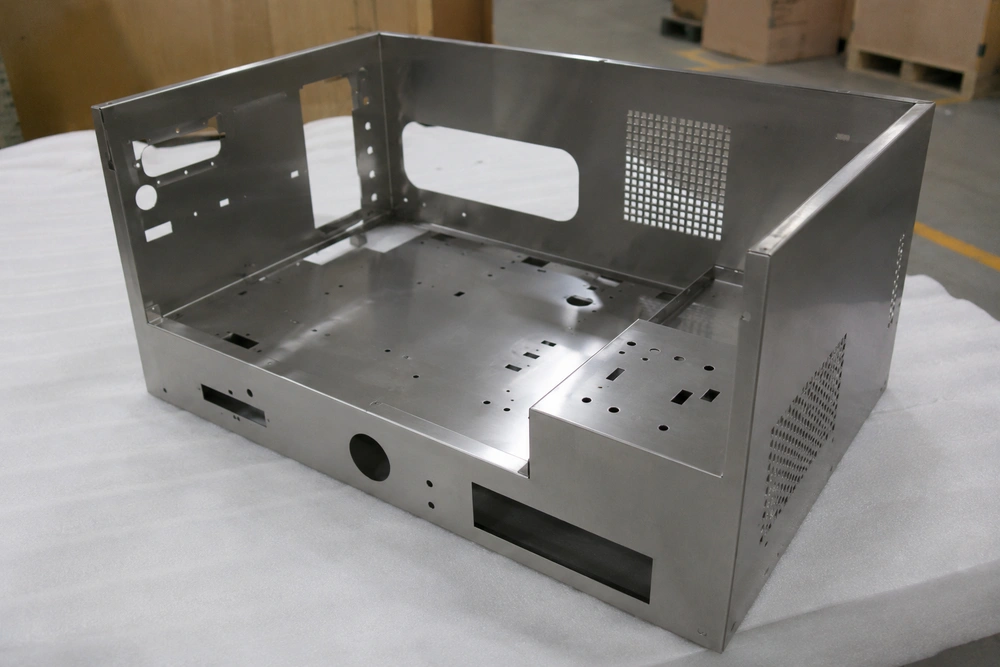
In addition, our OEM ODM Sheet Metal Processing Metal Fabrication Design for Cabinet Enclosure service provides customized solutions for cabinet enclosures. We can design and fabricate cabinet enclosures that meet the specific requirements of our customers, including size, shape, and functionality.
Contact Us for Procurement
If you are interested in our metal engineering services and would like to discuss your procurement needs, we encourage you to reach out to us. Our team of experts is ready to provide you with professional advice and customized solutions. Whether you need to improve the surface properties of your metal products, enhance their aesthetics, or optimize their performance, we have the expertise and capabilities to meet your requirements.
References
-ASM Handbook Volume 4: Heat Treating. ASM International.
-Schwartz, M. M. (2006). Surface Engineering for Wear Resistance. CRC Press.
-Trojanowski, B. (2017). Corrosion Engineering: Principles and Solved Problems. Elsevier.