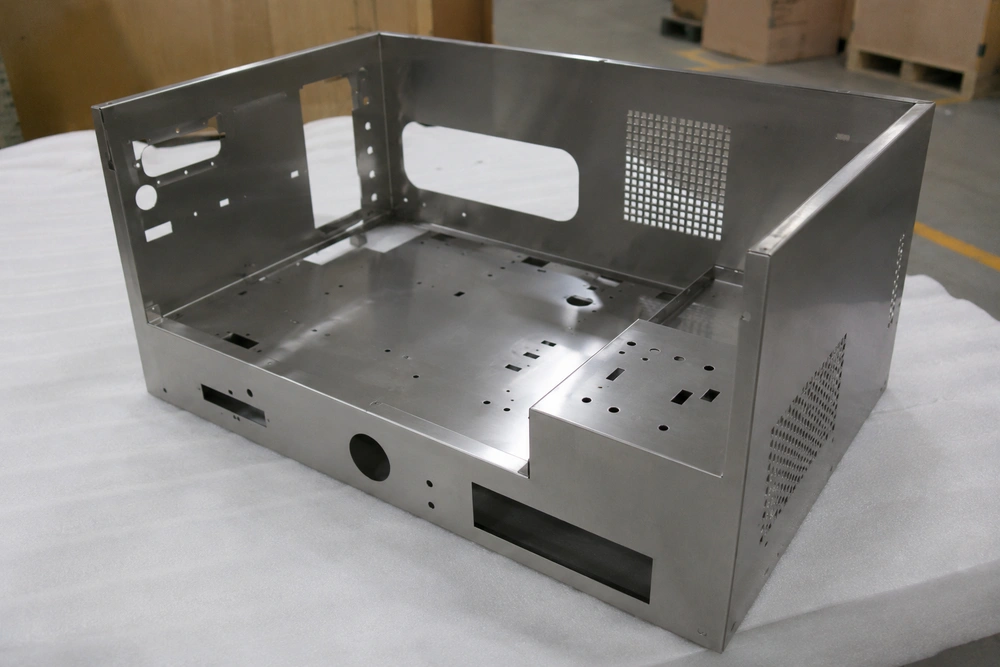

Hey there! As a metal bending supplier, I've been getting a bunch of questions lately about how metal bending works in high - altitude environments. It's a super interesting topic, and I'm stoked to share what I know with you.
First off, let's talk about what makes high - altitude environments different. The most obvious factor is the lower air pressure. At higher altitudes, there's less air pressing down on everything. This might not seem like a big deal at first, but it can have some real impacts on the metal bending process.


One of the key things affected by lower air pressure is the cooling rate of the metal. When we're bending metal, we often heat it up to make it more malleable. Once the bending is done, the metal needs to cool down. In a normal, low - altitude environment, the air provides a certain amount of resistance and helps with the cooling process. But at high altitudes, the thinner air means that heat dissipates more quickly.
This can be both a good and a bad thing. On the plus side, faster cooling can save time in the production process. We don't have to wait as long for the metal to reach a stable state after bending. However, it also means that the metal might cool too fast, which can lead to some issues. For example, rapid cooling can cause internal stresses in the metal. These stresses can make the metal more brittle and prone to cracking, especially if it's a complex bend.
Another aspect to consider is the behavior of lubricants. We use lubricants during the metal bending process to reduce friction between the metal and the bending tools. In high - altitude environments, the lower air pressure can cause lubricants to evaporate more quickly. This means that we might need to re - apply lubricants more often to keep the bending process smooth. If we don't, the increased friction can damage both the metal and the bending tools.
Now, let's talk about the equipment we use for metal bending. At our company, we have some really top - notch machinery. For instance, we offer a Custom CNC Precise Brake Press for Machinery Sheet Metal Parts. This machine is designed to handle all sorts of metal bending tasks with high precision. But when it comes to high - altitude environments, we need to make some adjustments.
The hydraulic systems in our bending machines rely on fluid pressure to operate. The lower air pressure at high altitudes can affect the performance of these hydraulic systems. The fluid might experience some cavitation, which is when vapor bubbles form in the fluid due to changes in pressure. This can lead to reduced efficiency and even damage to the hydraulic components over time. To counter this, we need to use special hydraulic fluids that are more resistant to cavitation and adjust the pressure settings on the machines.
Our CNC Machining Precise Sheet Metal Bending Manufacturer in China also takes into account the impact of high - altitude conditions on the accuracy of the bending. The thinner air can cause some minor vibrations in the machinery that might not be noticeable at lower altitudes. These vibrations can affect the precision of the bends, especially when we're working on parts that require very tight tolerances. To deal with this, we use advanced vibration - damping technologies and calibration procedures to ensure that our bends are still as accurate as possible.
When it comes to the actual bending process, the type of metal also plays a crucial role in high - altitude environments. Different metals have different thermal properties. For example, aluminum tends to have a higher thermal conductivity than steel. This means that aluminum will cool even faster at high altitudes compared to steel. So, when we're bending aluminum in a high - altitude area, we need to be extra careful about the cooling rate to avoid cracking.
We also offer Precision CNC Bending Sheet Metal Fabricated Parts OEM ODM. Our team of experts has years of experience in dealing with different metals and bending them to meet our customers' specific requirements. When working in high - altitude areas, we take into account the unique properties of each metal and adjust our processes accordingly.
In addition to the physical and mechanical aspects, there are also some logistical challenges when working in high - altitude environments. Transporting the metal and the bending equipment to these areas can be difficult. The roads might be more treacherous, and the weather conditions can be harsher. We need to plan our transportation carefully to ensure that everything arrives in good condition.
Moreover, the availability of skilled labor can be an issue in high - altitude regions. Metal bending is a specialized skill, and finding experienced workers in remote, high - altitude areas can be a challenge. That's why we often send our own trained technicians to these locations to oversee the bending process and ensure that everything is done correctly.
So, if you're in need of metal bending services for a project in a high - altitude environment, don't worry. We've got the knowledge, the equipment, and the experience to handle it. Our team is always ready to take on new challenges and find solutions to any problems that might arise. Whether it's adjusting our machinery, dealing with the unique properties of metals at high altitudes, or overcoming logistical hurdles, we're up for it.
If you're interested in our metal bending services, we'd love to have a chat with you. We can discuss your specific project requirements, the type of metal you need to bend, and the challenges posed by the high - altitude environment. Just reach out to us, and we'll work together to come up with the best solution for your needs.
References
- "Metal Forming Handbook: Processes and Applications" by G. E. Dieter
- "High - Altitude Engineering: Challenges and Solutions" by R. K. Sharma