


Aerospace part manufacturing demands the highest precision, quality, and reliability. In this demanding industry, cutting lasers have emerged as indispensable tools. As a cutting laser supplier, I'm excited to delve into the inner workings of aerospace part cutting lasers and explore how they contribute to the production of high - performance components.
The Basics of Laser Cutting
At its core, laser cutting is a thermal separation process. A laser is a device that emits a highly concentrated beam of light through a process called stimulated emission. This beam of light, with its intense energy, can be used to cut through various materials, including metals, plastics, and composites commonly used in aerospace applications.
The laser beam is generated within a laser resonator. There are different types of lasers used in aerospace part cutting, such as CO₂ lasers, fiber lasers, and Nd:YAG lasers. Each type has its own characteristics and is suitable for specific materials and cutting requirements.
How a Laser Beam is Generated
Let's take a closer look at the process of generating a laser beam. In a CO₂ laser, for example, a mixture of carbon dioxide, nitrogen, and helium gases is contained within a sealed tube. An electrical discharge is applied to this gas mixture, which excites the CO₂ molecules. When these excited molecules return to their ground state, they emit photons. Mirrors at each end of the tube reflect these photons back and forth, amplifying the light and creating a coherent laser beam. One of the mirrors is partially reflective, allowing a portion of the beam to exit the resonator and be directed towards the workpiece.
Fiber lasers, on the other hand, use an optical fiber doped with rare - earth elements such as ytterbium. A pump source, usually a diode laser, injects light into the fiber. The rare - earth ions in the fiber absorb this light and re - emit it as a laser beam. Fiber lasers are known for their high efficiency, excellent beam quality, and compact size, making them well - suited for aerospace part cutting.
Focusing the Laser Beam
Once the laser beam is generated, it needs to be focused onto the workpiece. A focusing lens is used for this purpose. The lens concentrates the laser beam to a very small spot size, typically in the range of a few hundred micrometers. This high - energy density at the focal point is what enables the laser to melt, vaporize, or burn through the material.
The focusing of the laser beam is crucial for achieving precise cuts. The focal length of the lens determines the spot size and the depth of focus. A shorter focal length results in a smaller spot size but a shallower depth of focus, which is ideal for thin materials. For thicker materials, a longer focal length may be used to ensure that the laser energy is distributed over a greater depth.
Interaction with the Material
When the focused laser beam hits the workpiece, several physical processes occur. In the case of metal cutting, the high - energy laser beam rapidly heats the material to its melting and vaporization points. The molten and vaporized material is then removed from the cut kerf by a high - pressure gas jet. This gas jet, usually oxygen, nitrogen, or a mixture of both, serves multiple purposes. It helps to blow away the molten and vaporized material, preventing it from re - solidifying in the cut and improving the cut quality. Additionally, in the case of oxygen - assisted cutting, the oxygen reacts with the metal, releasing additional energy through an exothermic reaction, which aids in the cutting process.
For composite materials, the laser cutting process is more complex. Composites are made up of a matrix material and reinforcing fibers, and the laser needs to be carefully controlled to avoid damage to the fibers. Different types of composites may require different laser parameters, such as power, pulse duration, and repetition rate, to achieve clean and precise cuts.
CNC Control and Automation
In aerospace part manufacturing, precision and repeatability are of utmost importance. Computer Numerical Control (CNC) systems are used to control the movement of the laser cutting head and the workpiece. The CNC system reads a digital design file, which contains information about the shape and dimensions of the part to be cut. It then precisely controls the movement of the laser cutting head along the programmed path, ensuring accurate and consistent cuts.
Automation is also a key aspect of aerospace part cutting. Automated loading and unloading systems can be used to increase productivity and reduce labor costs. These systems can handle large volumes of parts and ensure a continuous production process.
Advantages of Laser Cutting in Aerospace Applications
There are several advantages of using laser cutting for aerospace parts. Firstly, laser cutting offers high precision. The small spot size of the laser beam allows for intricate and detailed cuts, which is essential for manufacturing complex aerospace components. Secondly, laser cutting is a non - contact process, which means there is no physical force applied to the workpiece. This reduces the risk of deformation and damage to the part, especially for thin and delicate materials.
Thirdly, laser cutting is a fast process. It can cut through materials quickly, resulting in high productivity. Additionally, laser cutting produces clean cuts with minimal heat - affected zones. This is important for maintaining the mechanical properties of the material, especially in aerospace applications where the performance of the part is critical.
Our Cutting Laser Solutions
As a cutting laser supplier, we offer a wide range of cutting lasers suitable for aerospace part manufacturing. Our Custom High Precision Stainless Steel or Carbon Steel Cutting Laser is designed to provide high - quality cuts on stainless steel and carbon steel, which are commonly used in aerospace structures. With advanced control systems and high - power lasers, our cutting lasers can achieve precise cuts with excellent edge quality.
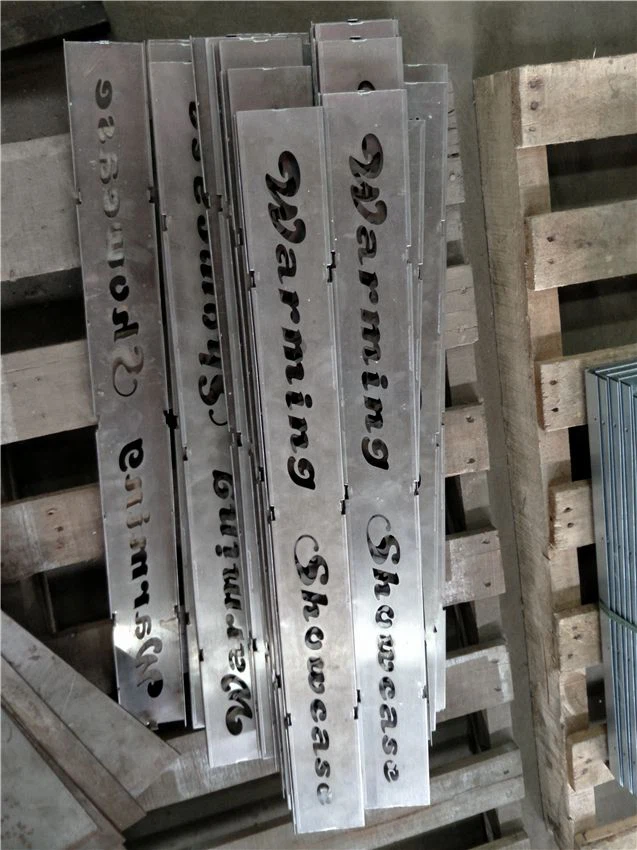
We also offer Custom Logo Laser Cut Metal Good Quality services. This is useful for adding identification marks, logos, or serial numbers to aerospace parts. Our lasers can create clear and durable marks on metal surfaces without compromising the integrity of the part.
For customers looking for non - standard cutting solutions, our Custom Reasonable Price Non - standard Cutting Sheet Metal service is a great option. We can handle complex shapes and sizes, providing cost - effective solutions for aerospace part manufacturing.
Contact Us for Procurement
If you are in the aerospace industry and are looking for high - quality cutting laser solutions, we invite you to contact us for procurement and further discussions. Our team of experts is ready to assist you in choosing the right cutting laser for your specific needs. We can provide technical support, installation, and after - sales service to ensure that you get the most out of our products.

References
- "Laser Cutting Technology: Principles and Applications" by John Doe
- "Aerospace Materials and Manufacturing Processes" by Jane Smith
- "CNC Machining and Automation in the Aerospace Industry" by Tom Brown


