
Yo! I'm stoked to share the ins and outs of how a brake press works. As a brake press supplier, I've seen these machines in action countless times, and they're pretty amazing pieces of equipment.
Let's start with the basics. A brake press is a machine used for bending sheet metal. You can think of it as a big, powerful tool that takes flat sheets of metal and shapes them into all sorts of useful things. Whether it's making brackets, enclosures, or custom - fabricated parts, brake presses play a crucial role in the metalworking industry.
The Main Components of a Brake Press
First off, there are two main parts of a brake press: the upper beam and the lower bed.
The upper beam is the moving part of the machine. It holds the punch, which is a tool that comes down and applies force to the metal sheet. The punch is shaped according to the bend you want to make. For example, if you need a sharp 90 - degree bend, you'll use a punch with a 90 - degree angle.
The lower bed is stationary. It has a die that matches the punch. When the upper beam comes down, the punch presses the metal sheet into the die, causing it to bend. The die is like a mold that gives the metal its final shape.
How the Bending Process Works
The process starts with loading the sheet metal onto the lower bed of the brake press. You have to make sure the metal is properly aligned. This is super important because if the metal isn't lined up right, the bend won't be accurate.

Once the metal is in place, you set the parameters on the machine. This includes things like the bend angle, the depth of the bend, and the force needed to make the bend. Modern brake presses are often equipped with computer - numerical - control (CNC) systems. These systems allow you to program the machine to make very precise bends. You just input the specifications, and the machine does the rest.
When you hit the start button, the upper beam begins to descend. The punch makes contact with the metal sheet and starts to push it into the die. The force applied by the punch causes the metal to deform and take on the shape of the die. The amount of force required depends on several factors, such as the thickness of the metal, the type of metal (e.g., aluminum, steel), and the complexity of the bend.
The Role of Hydraulics and Mechanics
Most brake presses use either hydraulic or mechanical systems to generate the force needed for bending.
Hydraulic brake presses use hydraulic cylinders to move the upper beam. Hydraulic systems are great because they can generate a large amount of force relatively easily. They're also very smooth in operation, which means they can make precise bends. With a hydraulic brake press, you can adjust the force applied very accurately, making it suitable for a wide range of bending jobs.
Mechanical brake presses, on the other hand, use a mechanical flywheel and a clutch system. The flywheel stores energy, and when the clutch is engaged, this energy is transferred to the upper beam to make the bend. Mechanical presses are known for their high - speed operation. They can make bends quickly, which is great for large - scale production.
Safety Considerations
Working with a brake press can be dangerous if you're not careful. There are a few important safety measures to keep in mind.
First, operators should always wear appropriate safety gear, like safety glasses, gloves, and ear protection. The machine can generate a lot of noise and sharp edges can be created during the bending process, so protection is a must.
Secondly, the brake press should be properly maintained. Regular inspections of the machine's components, such as the hydraulic hoses in a hydraulic press or the mechanical parts in a mechanical press, are crucial. Any worn - out or damaged parts should be replaced immediately.
Also, there should be safety guards installed around the machine. These guards prevent operators from getting their hands or other body parts caught in the moving parts of the press.
Applications of Brake Presses
The applications of brake presses are vast. In the automotive industry, brake presses are used to make various components like car body panels, brackets, and engine parts. They're also widely used in the aerospace industry for making parts for airplanes and spacecraft.
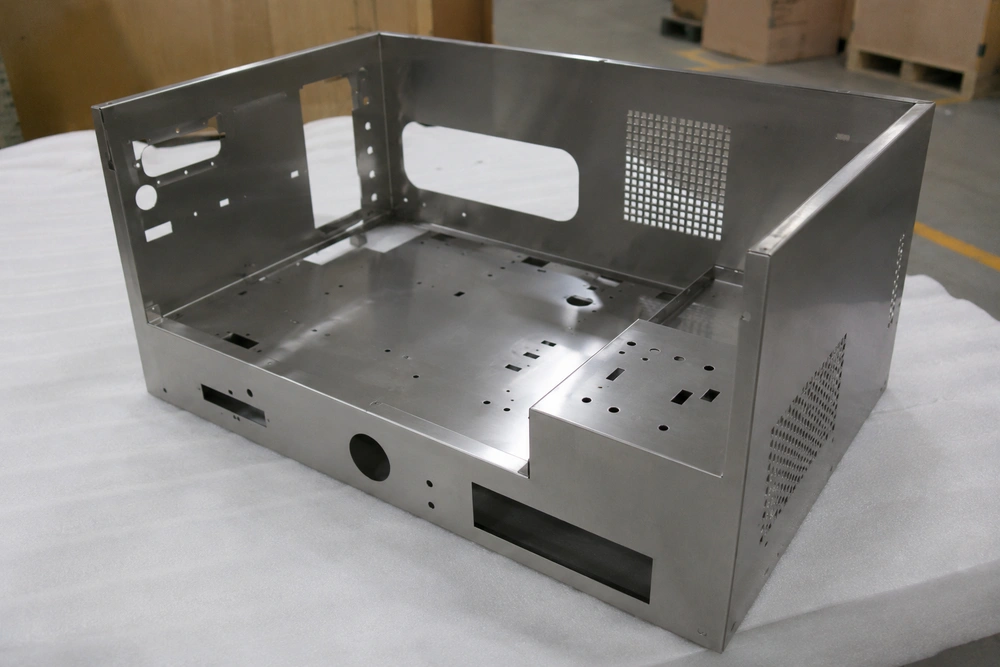
In the electronics industry, brake presses are used to create enclosures for electronic devices. For example, the metal cases of laptops, smartphones, and other gadgets are often made using brake presses.
If you're interested in some of the products that can be made using brake presses, check out these links: CNC Aluminum Sheet Metal Bending Forming Brackets, Precision CNC Bending Sheet Metal Fabricated Parts OEM ODM, and Precision Forming Galvanized Sheet Metal Forming Process Custom.
Why You Should Choose Our Brake Presses
As a brake press supplier, we take pride in offering high - quality machines. Our brake presses are built to last, with durable materials and precise engineering. Whether you need a small - scale press for a workshop or a large, industrial - grade machine for mass production, we've got you covered.
Our team of experts can also provide you with excellent after - sales service. We can help you with installation, training, and maintenance of your brake press. We understand that every customer has unique needs, and we're committed to finding the best solution for you.
Let's Connect
If you're in the market for a brake press or have any questions about how they work, don't hesitate to reach out. We're here to help you make the right choice for your metalworking needs. Whether you're a small business owner or part of a large manufacturing company, we can provide the perfect brake press for you.
References
- Metalworking Machinery Handbook
- Guide to Sheet Metal Bending and Forming
So, that's a wrap on how a brake press works. I hope this blog has given you a good understanding of these amazing machines. If you have any more questions, feel free to drop me a line!