
Can Metal Bending be used to purify metals?
As a supplier in the field of metal bending, I often encounter various inquiries and discussions regarding the capabilities and applications of metal bending. One question that has recently piqued my interest is whether metal bending can be used to purify metals. In this blog post, I will delve into this topic, exploring the scientific principles behind metal purification and the potential role of metal bending in this process.
To understand the possibility of using metal bending for purification, we first need to grasp the concept of metal purification itself. Metal purification is the process of removing impurities from a metal to improve its quality and properties. These impurities can include other metals, non - metallic elements, or compounds that may have adverse effects on the metal's strength, conductivity, or corrosion resistance.
Traditional methods of metal purification include processes such as smelting, electrolysis, and distillation. Smelting involves heating the metal ore to a high temperature in the presence of a reducing agent to separate the metal from its ore and remove some of the impurities. Electrolysis uses an electric current to deposit pure metal at the cathode while the impurities either dissolve in the electrolyte or settle at the bottom as sludge. Distillation takes advantage of the different boiling points of the metal and its impurities to separate them.
Now, let's consider the process of metal bending. Metal bending is a manufacturing process in which a force is applied to a metal sheet or bar to change its shape. The most common methods of metal bending include press brake bending, roll bending, and stretch bending. Press brake bending uses a punch and die to bend the metal at a specific angle, while roll bending involves passing the metal through a series of rolls to create a curved shape. Stretch bending is used to form complex shapes by stretching the metal while bending it.
At first glance, metal bending may not seem directly related to metal purification. However, there are some potential indirect ways in which metal bending could play a role in the purification process.
One possible connection lies in the fact that metal bending can cause changes in the internal structure of the metal. When a metal is bent, it undergoes plastic deformation, which means that the atoms in the metal lattice are rearranged. This plastic deformation can cause the movement of dislocations within the metal. Dislocations are line defects in the crystal structure of the metal, and their movement can interact with impurities present in the metal.
In some cases, the movement of dislocations during metal bending can cause the impurities to segregate. Segregation is the process by which impurities accumulate in certain regions of the metal. If the segregated impurities can be removed from these regions, it could potentially lead to a purification of the metal. For example, if the impurities segregate at the surface of the bent metal, they could be removed through a simple surface treatment such as grinding or chemical etching.
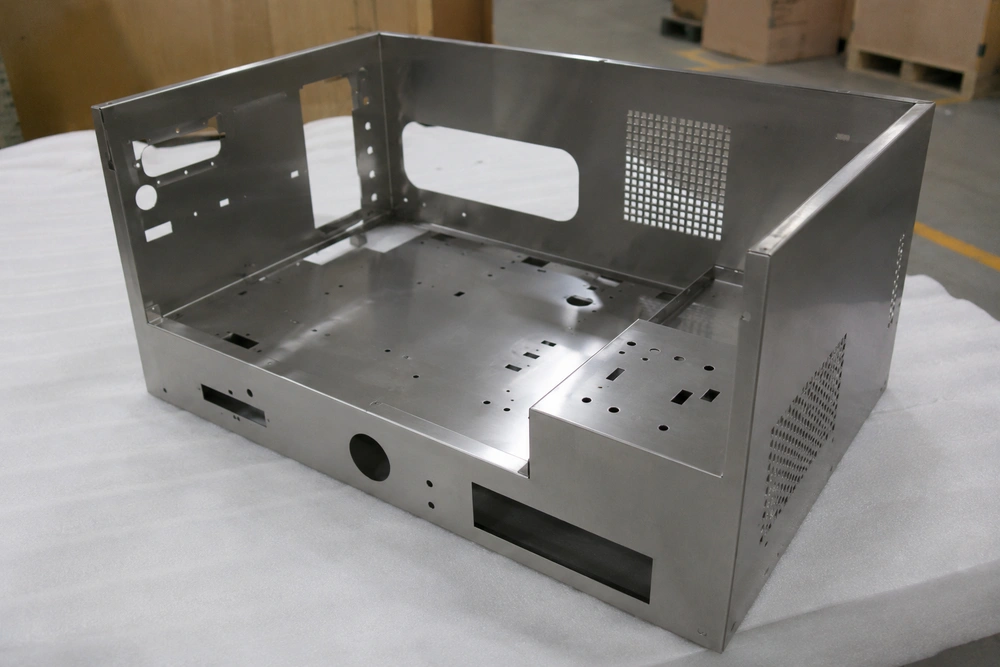
Another aspect to consider is the fact that metal bending can be used in the manufacturing of components for purification equipment. For instance, CNC Machining Precise Sheet Metal Bending Manufacturer in China can produce high - precision sheet metal parts that are used in distillation columns or electrolytic cells. These components need to be made with high accuracy to ensure the efficient operation of the purification process. The ability to bend metal precisely allows for the creation of complex shapes and structures that are essential for the proper functioning of these purification systems.
CNC Aluminum Sheet Metal Bending Forming Brackets are also crucial in the construction of purification equipment. Aluminum is a lightweight and corrosion - resistant metal, and its use in brackets can help support and stabilize the various components of the purification system. By using CNC technology for bending, we can ensure that the brackets have the exact dimensions and angles required for a perfect fit.
Moreover, Custom CNC Precise Brake Press for Machinery Sheet Metal Parts can be used to produce parts for machinery used in metal purification. The precise bending capabilities of these brake presses allow for the creation of parts with tight tolerances, which is essential for the efficient operation of the machinery.


However, it's important to note that metal bending alone is not a primary method of metal purification. The amount of purification that can be achieved through the segregation of impurities during bending is likely to be limited. It can only remove a small fraction of the impurities present in the metal, and for most industrial applications, more established purification methods are still required.
In conclusion, while metal bending may not be a direct or standalone method of metal purification, it can have some indirect contributions to the process. Through the changes in the internal structure of the metal during bending and the production of components for purification equipment, metal bending can play a role in improving the overall efficiency and quality of metal purification.
If you are involved in the metal purification industry or any other industry that requires high - quality metal components, I encourage you to reach out for a discussion. We, as a metal bending supplier, have the expertise and equipment to provide you with the best - suited metal bending solutions for your specific needs. Whether it's for the production of purification equipment or other applications, we can work together to ensure that you get the most precise and reliable metal bending products.
References
- Callister, W. D., & Rethwisch, D. G. (2017). Materials Science and Engineering: An Introduction. Wiley.
- ASM Handbook Committee. (2008). ASM Handbook, Volume 14A: Metalworking: Bending. ASM International.