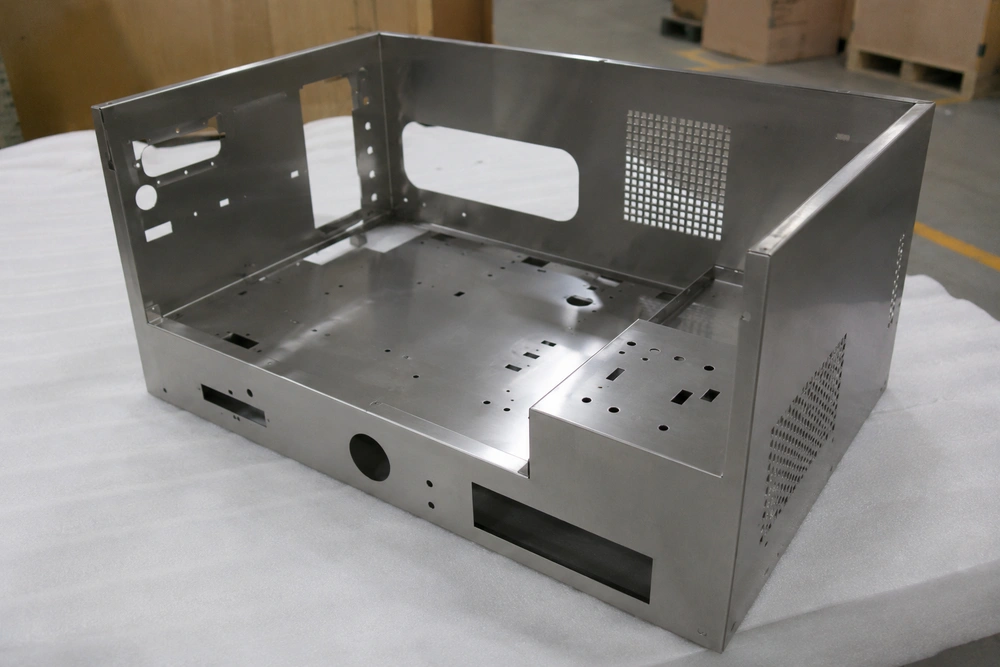

Hey there! As a supplier of metal presses, I often get asked if a metal press can be used for the cold forming of metals. Well, the short answer is yes, and in this blog, I'll break down how and why this is possible.
First off, let's talk about what cold forming actually means. Cold forming is a process where metal is shaped at room temperature, or close to it, without the need for heating the metal to extremely high temperatures like in hot forming. This process is great because it can save a ton of energy and also has some unique benefits when it comes to the properties of the finished metal parts.
So, how does a metal press fit into all of this? A metal press is a versatile machine that can apply a large amount of force to shape metal. It uses a combination of dies and punches to deform the metal into the desired shape. When it comes to cold forming, the press can be used to perform a variety of operations such as blanking, bending, coining, and embossing.
Let's start with blanking. Blanking is the process of cutting a flat piece of metal into a specific shape. A metal press can use a blanking die to cut out precise shapes from a larger sheet of metal. This is commonly used in the production of parts like washers, brackets, and other small components. The advantage of using a metal press for blanking in cold forming is that it can produce parts with clean edges and high precision, which is crucial for many applications.
Bending is another important cold - forming operation that can be done with a metal press. By using a bending die, the press can bend the metal at a specific angle. This is useful for creating parts like channels, angles, and frames. The press can apply a controlled amount of force to ensure that the bend is accurate and consistent. This is especially important in industries where the fit and function of the parts are critical, such as in automotive and aerospace applications.
Coining is a process where the metal is compressed between two dies to create a detailed pattern or to increase the density of the metal in a specific area. A metal press can be used to perform coining operations in cold forming. This is often used in the production of coins, medals, and other decorative items. The high pressure applied by the press can transfer the detailed design of the dies onto the metal surface, resulting in a high - quality finished product.
Embossing is similar to coining, but instead of compressing the metal, it creates a raised or sunken design on the surface of the metal. A metal press can use an embossing die to create these designs. This is commonly used in the production of nameplates, signage, and other decorative metal parts.
Now, let's talk about the types of metals that can be cold - formed using a metal press. Most common metals such as steel, aluminum, copper, and brass can be cold - formed. For example, Aluminum Sheet Metal Forming Stamping Parts for Machine Cover are often produced using cold - forming techniques with a metal press. Aluminum is a popular choice because it is lightweight, corrosion - resistant, and has good formability at room temperature.
Steel is another widely used metal in cold forming. Zinc Plated Steel Metal Stamping Press Custom Made parts are often made using cold - forming processes. Steel has high strength and can be formed into a variety of shapes. However, it's important to note that different grades of steel have different formability characteristics, so the press settings may need to be adjusted accordingly.
Copper and brass are also suitable for cold forming. They are often used in electrical and plumbing applications. The metal press can be used to create parts like connectors, fittings, and terminals.
One of the key factors in successful cold forming with a metal press is the design of the dies. The dies need to be carefully designed to ensure that they can withstand the high pressures involved in the cold - forming process and also to produce parts with the desired shape and quality. The material of the dies is also important. High - strength tool steels are commonly used for die making because they can resist wear and deformation.
Another important aspect is the lubrication. Lubrication is used to reduce friction between the metal and the dies during the cold - forming process. This helps to prevent the metal from sticking to the dies, reduces wear on the dies, and improves the surface finish of the formed parts. There are different types of lubricants available, such as oil - based and water - based lubricants, and the choice depends on the type of metal and the specific cold - forming operation.
In addition to the technical aspects, there are also some economic benefits of using a metal press for cold forming. Cold forming is generally more cost - effective than hot forming because it requires less energy. The production rate can also be relatively high, especially when using automated metal presses. This means that large quantities of parts can be produced in a short period of time, which is beneficial for mass production.
However, there are also some limitations to cold forming with a metal press. Some metals may have limited formability at room temperature, and excessive deformation can lead to cracking or other defects in the parts. Also, the initial investment in a metal press and the dies can be significant, especially for complex parts.


If you're in the market for metal - stamping parts or looking to start a cold - forming project, we've got some great options for you. Check out our Matt Black Anodized Aluminum Press Accessories Metal Stamping Parts Custom for high - quality custom - made parts.
We're here to help you with all your metal - pressing and cold - forming needs. Whether you're a small - scale manufacturer or a large - scale industrial company, we can provide you with the right solutions. If you're interested in learning more about our products and services, or if you have any questions about cold forming with a metal press, don't hesitate to reach out. We'd love to have a chat with you and discuss how we can work together to meet your specific requirements.
In conclusion, a metal press can definitely be used for the cold forming of metals. It offers a cost - effective, efficient, and precise way to produce a wide range of metal parts. With the right dies, lubrication, and press settings, you can achieve high - quality results in cold forming. So, if you're considering using cold - forming processes for your metal parts production, a metal press is a great option to explore.
References
- "Metal Forming Handbook" by ASM International
- "Cold Forming Technology" by Peter Groche