
Are there any rules or ethics in Metal Bending?


As a metal bending supplier, I've been deeply involved in the industry for quite some time, and one question that often comes up in discussions is whether there are rules or ethics in metal bending. In this blog, I'll explore this topic in detail, sharing insights from my experiences and industry knowledge.
The Technical Rules in Metal Bending
First and foremost, there are numerous technical rules in metal bending. These rules are based on scientific principles and engineering knowledge, aiming to ensure the quality and safety of the final products.
One of the fundamental rules is related to the material properties. Different metals have different mechanical properties, such as ductility, hardness, and tensile strength. For example, aluminum is relatively soft and ductile, which makes it easier to bend compared to stainless steel. When bending a particular metal, we need to understand its specific properties to determine the appropriate bending methods and parameters. If we try to bend a metal beyond its ductility limit, it may crack or break, resulting in a defective product.
The bending radius is another crucial factor. The minimum bending radius is determined by the thickness and type of the metal. A smaller bending radius may cause excessive stress on the metal, leading to deformation or even failure. For instance, in sheet metal bending, a general rule of thumb is that the bending radius should be at least equal to the thickness of the sheet for most common metals. However, for some high - strength metals, a larger bending radius may be required to avoid damage.
The angle of bending also needs to be precisely controlled. In many applications, such as in the manufacturing of brackets or frames, the bending angle must meet strict tolerances. Deviations from the specified angle can affect the fit and functionality of the final product. Advanced CNC (Computer Numerical Control) machines are often used to achieve high - precision bending angles. These machines can be programmed to bend the metal with an accuracy of a few degrees or even less, ensuring consistent quality across multiple parts.
Quality Control Rules
Quality control is an essential part of metal bending, and there are well - established rules in this area. Inspection procedures are carried out at various stages of the bending process. Before bending, the raw materials are inspected for surface defects, thickness variations, and other potential issues. Any defective materials are rejected to prevent problems in the subsequent bending operations.
During the bending process, in - process inspections are conducted to check the bending angle, radius, and overall shape of the part. This may involve using measuring tools such as calipers, protractors, and coordinate measuring machines (CMMs). If any non - conformities are detected, adjustments are made to the bending parameters or the process is stopped to correct the problem.
After the bending is completed, a final inspection is carried out to ensure that the part meets all the required specifications. This includes checking for any signs of cracking, deformation, or other quality issues. Only parts that pass the final inspection are considered acceptable for further processing or shipment to customers.
The Ethics in Metal Bending
In addition to the technical rules, there are also important ethical considerations in metal bending. One of the key ethical aspects is environmental responsibility. Metal bending processes often involve the use of energy - intensive machinery and may generate waste materials. As a responsible supplier, we have an obligation to minimize our environmental impact.
This can be achieved through several means. For example, we can invest in energy - efficient machinery to reduce energy consumption. Modern CNC machines are designed to be more energy - efficient than their older counterparts, and they can also optimize the use of raw materials, reducing waste. Additionally, we can recycle the waste materials generated during the bending process. Scrap metal can be melted down and reused, reducing the need for virgin materials and conserving natural resources.
Another ethical consideration is worker safety. Metal bending operations can be dangerous if proper safety measures are not in place. Workers are exposed to risks such as sharp edges, high - pressure machinery, and flying debris. As an employer, it is our responsibility to provide a safe working environment for our employees. This includes providing appropriate personal protective equipment (PPE) such as safety glasses, gloves, and helmets, as well as training employees on safe operating procedures.
Honesty and transparency with customers are also important ethical principles. We should provide accurate information about our products and services, including the capabilities of our metal bending processes, the quality of our products, and the lead times. We should not make false claims or over - promise what we can deliver. If there are any issues or delays in the production process, we should communicate them to the customers in a timely manner.
Meeting Customer Requirements
As a metal bending supplier, our ultimate goal is to meet the needs and expectations of our customers. This requires us to follow the rules and ethics mentioned above while also being flexible and innovative.
We understand that different customers may have different requirements for their metal - bent parts. Some customers may need parts with extremely high precision, while others may prioritize cost - effectiveness. By having a deep understanding of the technical rules and ethical principles, we can provide customized solutions to meet these diverse needs.
For customers who are looking for high - precision parts, we can utilize our advanced CNC machining capabilities. Our CNC Machining Precise Sheet Metal Bending Manufacturer in China offers a wide range of sheet metal bending services with high accuracy and quality. We can produce parts with tight tolerances, ensuring that they fit perfectly into the customer's applications.
If a customer needs aluminum brackets, our CNC Aluminum Sheet Metal Bending Forming Brackets service can provide them with well - formed and durable brackets. We use state - of - the - art CNC machines to bend the aluminum sheets into the desired shape, and our quality control procedures ensure that the brackets meet all the required specifications.
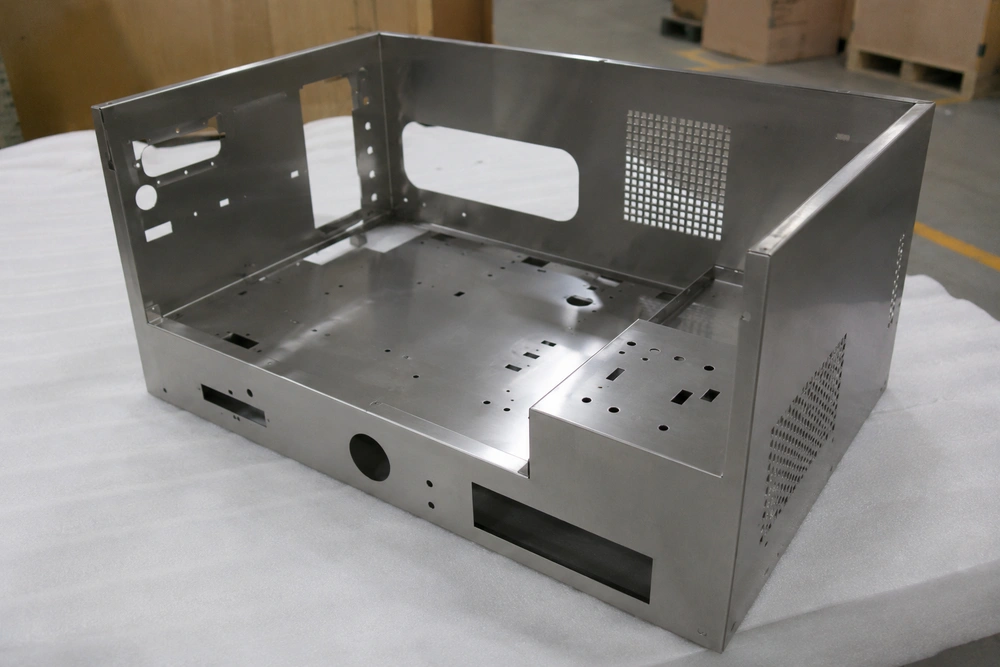
For customers who require stainless steel parts, our Custom Stainless Steel Bending Sheet Metal Forming Parts service can offer customized solutions. Stainless steel is a popular material due to its corrosion resistance and strength, and we have the expertise to bend it into various shapes while maintaining its quality.
Contact Us for Your Metal Bending Needs
If you are in need of high - quality metal bending services, we are here to help. Whether you have a small - scale project or a large - volume production requirement, we can provide you with customized solutions that meet your specific needs. Our team of experienced engineers and technicians is dedicated to delivering products of the highest quality while adhering to all the rules and ethics in metal bending.
We invite you to contact us to discuss your metal bending requirements. Our sales representatives will be happy to provide you with more information about our services, answer your questions, and provide you with a competitive quote. Let's work together to achieve your goals in metal bending.
References
- ASM Handbook Volume 14A: Metalworking: Bulk Forming. ASM International.
- Machinery's Handbook, 31st Edition. Industrial Press Inc.
- ISO 128 - 24:2004 Technical drawings -- General principles of presentation -- Part 24: Dimensioning and tolerancing of angles.