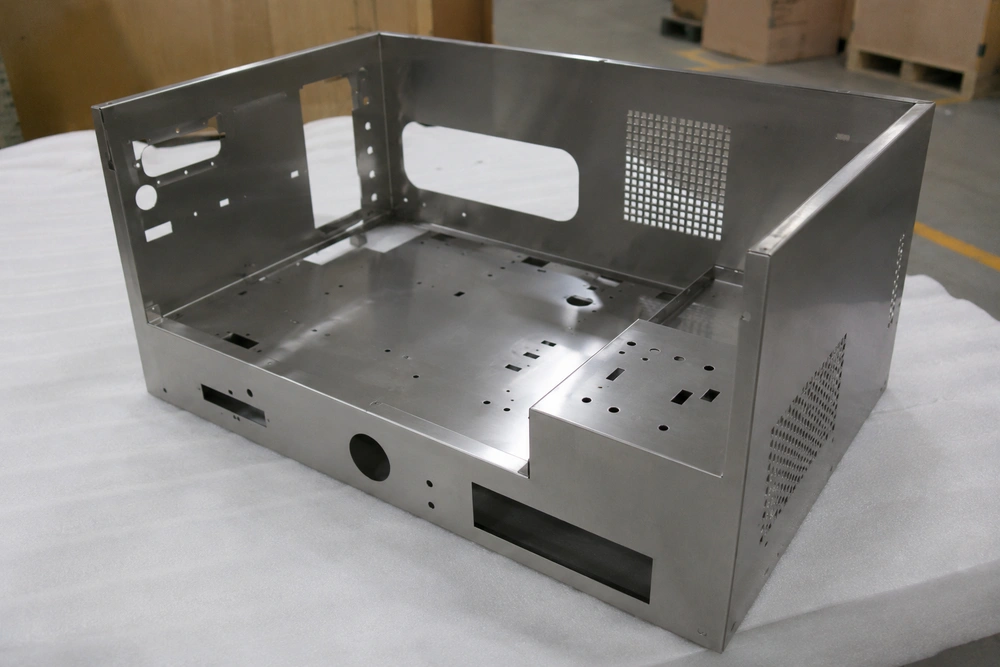

Surface roughness is a crucial factor in stainless steel fabrication. As a stainless steel fabrication supplier, I've dealt with all sorts of projects, and understanding the surface roughness requirements is super important. So, let's dig into what these requirements are and why they matter.
First off, what exactly is surface roughness? It refers to the irregularities on the surface of a stainless - steel part. These irregularities can be tiny bumps, valleys, or waviness. We measure surface roughness in units like micrometers (μm) or micro - inches (μin). The rougher the surface, the more pronounced these irregularities are.
Now, why does surface roughness matter in stainless steel fabrication? Well, it impacts several aspects of the final product.
1. Corrosion Resistance
Stainless steel is known for its corrosion - resistant properties. But the surface roughness can affect how well it resists corrosion. A smoother surface has fewer crevices and pits where corrosive agents can accumulate. For example, in a marine environment, where stainless steel parts are exposed to saltwater, a smooth surface can prevent the formation of rust and other forms of corrosion. According to industry standards, for applications in highly corrosive environments, the surface roughness should be as low as possible, often in the range of 0.2 - 0.8 μm.
2. Hygiene and Cleanliness
In industries like food processing, pharmaceuticals, and medical equipment, hygiene is of utmost importance. A smooth surface is easier to clean and sanitize. Rough surfaces can trap dirt, bacteria, and other contaminants, which can lead to product contamination. For instance, in a food processing plant, stainless steel equipment with a smooth surface can be quickly and effectively cleaned, reducing the risk of foodborne illnesses. The surface roughness requirement for such applications typically falls between 0.4 - 1.6 μm.
3. Aesthetic Appeal
Let's not forget about how the product looks. In architectural and decorative applications, the surface finish of stainless steel plays a big role in the overall aesthetic. A smooth, shiny surface can give a high - end, modern look, while a rougher finish might be used for a more rustic or industrial look. Depending on the design requirements, the surface roughness can vary widely. For a mirror - like finish, the surface roughness needs to be extremely low, around 0.05 - 0.2 μm.
4. Friction and Wear
When stainless steel parts are in contact with other surfaces or moving parts, the surface roughness affects friction and wear. A smoother surface generally has lower friction, which can reduce energy consumption and wear on the parts. For example, in a machinery application, where stainless steel components are constantly moving against each other, a smooth surface can extend the lifespan of the parts. The surface roughness requirements for such applications can range from 0.8 - 3.2 μm, depending on the specific operating conditions.
Methods to Control Surface Roughness
As a stainless steel fabrication supplier, we use several methods to control the surface roughness of our products.
Machining
CNC machining is a common method for shaping stainless steel parts. By adjusting the cutting parameters such as cutting speed, feed rate, and depth of cut, we can control the surface roughness. For more precise control, we offer CNC Precision Steel Sheet Metal Fabrication. This process allows us to achieve very smooth surfaces with tight tolerances.
Grinding and Polishing
Grinding and polishing are effective ways to reduce surface roughness. Grinding removes material from the surface, while polishing further refines the surface to make it smoother. We can use different abrasive materials and techniques to achieve the desired surface finish. For applications that require a high - quality, smooth surface, like in machine parts, we offer High Quality Welding Hairline Stainless Fabrication for Machines.
Laser Cutting
Laser cutting is another method that can affect surface roughness. The heat generated during laser cutting can cause some surface irregularities. However, by optimizing the laser cutting parameters, we can minimize these effects. For custom - made stainless steel parts with high - quality surface finishes, we provide Custom Laser Cut Bend Welded SS Fabrication High Quality.


Industry Standards and Specifications
Different industries have their own standards and specifications for surface roughness in stainless steel fabrication. For example, the American Society of Mechanical Engineers (ASME) has standards for surface finish in pressure vessels and piping systems. The International Organization for Standardization (ISO) also has a set of standards related to surface texture. It's essential for us as a supplier to stay up - to - date with these standards and ensure that our products meet the required surface roughness requirements.
Meeting Customer Requirements
Every customer has unique requirements when it comes to surface roughness. Some might need a very smooth surface for a high - end decorative application, while others might require a rougher surface for better grip in a machinery part. That's why we work closely with our customers to understand their needs and provide the best - suited solutions.
We have a team of experienced engineers and technicians who can analyze the application and recommend the appropriate surface roughness. We also use advanced measuring equipment to ensure that the surface roughness of our products meets the specified requirements.
If you're in need of stainless steel fabrication services, whether it's for a small - scale project or a large - scale industrial application, we're here to help. We can produce high - quality stainless steel parts with the right surface roughness to meet your specific needs. Don't hesitate to reach out to us to discuss your project and get a quote. We're always ready to engage in a productive conversation about your stainless steel fabrication requirements and how we can provide the best solutions.
References
- ASME Boiler and Pressure Vessel Code.
- ISO Standards on Surface Texture.
- Various industry research papers on stainless steel corrosion and surface finish.