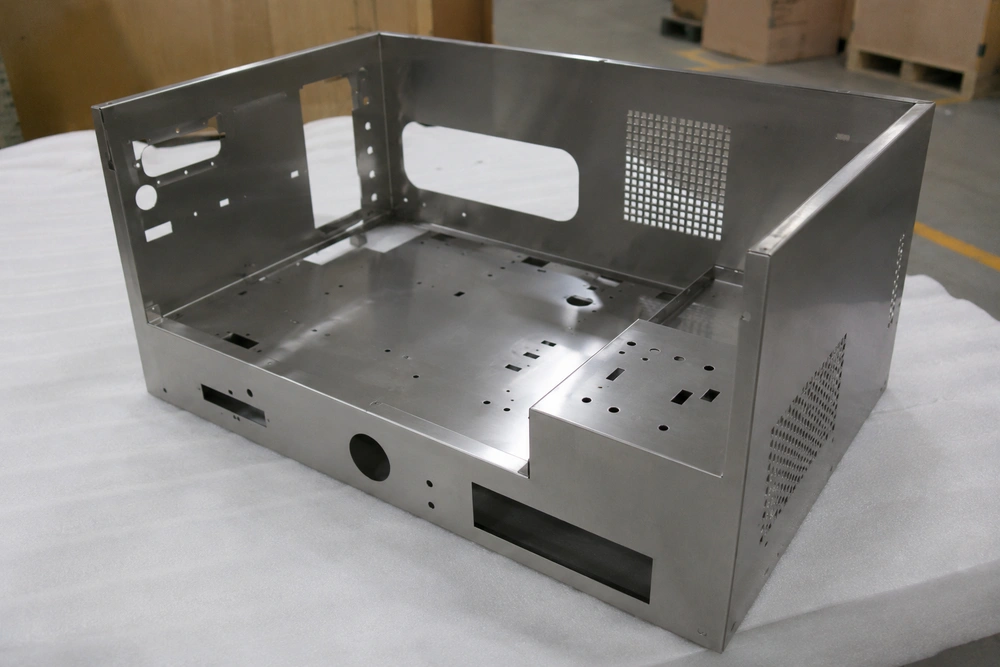

In the realm of steel welding, ensuring high - quality welds is not just a matter of craftsmanship but a necessity for safety, durability, and customer satisfaction. As a steel welding supplier, I understand the significance of adhering to strict quality inspection standards. In this blog, I will delve into the key aspects of the quality inspection standard for steel welding.
Visual Inspection
Visual inspection is the most basic yet crucial step in the quality assessment of steel welding. It involves a thorough examination of the weld's surface appearance. The first thing to check is the weld bead profile. A well - formed weld bead should have a smooth, uniform shape without any excessive convexity or concavity. Irregularities in the bead profile can indicate problems such as improper welding speed, incorrect electrode angle, or inconsistent current settings.
The presence of cracks is a major concern during visual inspection. Cracks can significantly weaken the weld and compromise the integrity of the entire structure. Cracks can occur due to various reasons, including high residual stresses, rapid cooling, or impurities in the base metal or filler material. Any visible cracks, whether longitudinal, transverse, or in the heat - affected zone (HAZ), are unacceptable and require immediate attention.
Porosity is another defect that can be detected through visual inspection. Porosity appears as small holes on the surface of the weld. It is caused by the entrapment of gas during the welding process, often due to improper shielding gas coverage, contaminated filler metal, or high welding speeds. A high level of porosity can reduce the strength and corrosion resistance of the weld. For most applications, a maximum allowable porosity percentage is specified, typically around 1 - 5% depending on the industry and the specific requirements of the project.
Undercutting is also a common visual defect. It is characterized by a groove or depression along the edge of the weld bead. Undercutting weakens the base metal and can lead to stress concentration. It is usually caused by excessive current, incorrect electrode angle, or improper welding technique. In general, undercutting should be limited to a certain depth, and in some cases, it may need to be repaired if it exceeds the specified tolerance.
Dimensional Inspection
Dimensional inspection ensures that the welded components meet the required size and shape specifications. This includes checking the length, width, height, and angle of the welded parts. The dimensions of the weld itself, such as the weld width, leg length (in the case of fillet welds), and throat thickness, are also critical.
For example, in structural steel welding, the dimensions of the welds are carefully controlled to ensure the structural integrity of the building or bridge. The leg length of a fillet weld, which is the distance from the root of the weld to the toe, must be within the specified range. If the leg length is too short, the weld may not be strong enough to withstand the applied loads. On the other hand, if it is too long, it can lead to excessive heat input and distortion of the base metal.


Tolerance levels are established for each dimension, and the welded parts must fall within these tolerances. The tolerance values are determined based on the design requirements, manufacturing processes, and the intended use of the product. In precision welding applications, such as in the aerospace or automotive industries, very tight tolerances are required, often in the range of a few thousandths of an inch.
Non - Destructive Testing (NDT)
Non - destructive testing methods are used to detect internal defects in the weld without damaging the component. One of the most commonly used NDT methods is ultrasonic testing (UT). UT uses high - frequency sound waves to detect internal flaws such as cracks, lack of fusion, and porosity. The sound waves are transmitted into the weld, and any discontinuities in the material will cause the waves to reflect back. By analyzing the reflected waves, the location, size, and type of the defect can be determined.
Another popular NDT method is radiographic testing (RT). RT uses X - rays or gamma rays to create an image of the internal structure of the weld. Similar to a medical X - ray, the rays pass through the weld, and any defects appear as dark areas on the film or digital detector. RT is particularly effective in detecting volumetric defects such as porosity and inclusions. However, it requires special safety precautions due to the use of radiation.
Magnetic particle testing (MT) is used to detect surface and near - surface defects in ferromagnetic materials, such as most steels. A magnetic field is applied to the weld, and iron particles are then sprinkled on the surface. Any defects in the material will cause a distortion in the magnetic field, and the iron particles will accumulate at the location of the defect, making it visible. MT is a relatively quick and inexpensive method for detecting surface cracks.
Liquid penetrant testing (PT) is used to detect surface - opening defects. A liquid penetrant is applied to the surface of the weld and allowed to seep into any cracks or pores. After a certain period, the excess penetrant is removed, and a developer is applied. The penetrant trapped in the defects will be drawn out by the developer, making the defects visible. PT is a simple and effective method for detecting surface - breaking cracks, porosity, and other surface defects.
Destructive Testing
Destructive testing involves the physical destruction of a sample of the welded component to evaluate its mechanical properties. Tensile testing is one of the most common destructive testing methods. A tensile test specimen is cut from the welded joint and pulled in a testing machine until it breaks. The test measures the ultimate tensile strength, yield strength, and elongation of the weld. These properties are important indicators of the weld's ability to withstand applied loads.
Bend testing is another destructive testing method. A specimen is bent to a specific angle to check for any signs of cracking or lack of fusion in the weld. Bend tests can be classified into face bend, root bend, and side bend tests, depending on the orientation of the specimen. A successful bend test indicates that the weld has good ductility and integrity.
Hardness testing is also a form of destructive testing. The hardness of the weld and the heat - affected zone is measured using a hardness tester. Excessive hardness in the HAZ can indicate the presence of brittle microstructures, which can reduce the toughness of the weld and increase the risk of cracking.
Chemical Analysis
Chemical analysis is used to determine the chemical composition of the weld metal and the base metal. This is important because the chemical composition affects the mechanical properties, corrosion resistance, and weldability of the materials. For example, the carbon content in steel can significantly affect its strength and hardness. Too high a carbon content can make the steel more prone to cracking during welding.
Spectroscopic analysis is a common method for chemical analysis. It uses a spectrometer to measure the wavelengths of light emitted or absorbed by the elements in the material. This allows for the accurate determination of the elemental composition of the weld and the base metal. The results of the chemical analysis are compared with the specified requirements to ensure that the materials meet the quality standards.
Industry Standards and Codes
In the steel welding industry, there are various standards and codes that govern the quality inspection process. For example, the American Welding Society (AWS) has developed a series of standards, such as AWS D1.1 for structural steel welding and AWS D17.1 for aerospace welding. These standards specify the requirements for welding procedures, inspection methods, and acceptance criteria.
The International Organization for Standardization (ISO) also has relevant standards, such as ISO 5817 for arc - welded joints in steel, nickel, titanium, and their alloys. These standards provide a global framework for ensuring the quality of steel welding and are widely recognized and adopted by industries around the world.
Our Services and Call to Action
As a steel welding supplier, we are committed to meeting and exceeding the highest quality inspection standards. We offer a wide range of services, including Customized Carbon Steel Welding and Fabrication with Powder Coating and Assembly Processing, High Accuracy Jig Welded Parts Fabrication and Welding, and Custom Sheet Metal Aluminum Frame Aluminium Welding.
Our team of experienced welders and inspectors uses the latest equipment and techniques to ensure that every weld meets the strictest quality requirements. Whether you need a small batch of custom - welded parts or a large - scale structural welding project, we have the expertise and resources to deliver high - quality products.
If you are in need of steel welding services, we invite you to contact us for a free consultation. Our sales team will be happy to discuss your specific requirements and provide you with a detailed quote. Let's work together to bring your welding projects to life with the highest level of quality and reliability.
References
- American Welding Society (AWS). AWS D1.1/D1.1M:2020 Structural Welding Code - Steel.
- International Organization for Standardization (ISO). ISO 5817:2014 Arc - welded joints in steel, nickel, titanium and their alloys - Quality levels for imperfections.
- ASM Handbook Volume 6: Welding, Brazing, and Soldering. ASM International.