
Hey there! I'm a supplier in the metal fabrication industry, and today I wanna chat about the productivity of MIG welding in metal fabrication.
First off, let's understand what MIG welding is. MIG stands for Metal Inert Gas welding. It's a popular welding process where a continuous solid wire electrode is fed through a welding gun into the weld pool, along with a shielding gas to protect the weld from contaminants in the air.
One of the key factors that make MIG welding so productive is its speed. Compared to some other welding methods, MIG welding allows for a relatively high travel speed. This means that you can cover more ground in less time when you're joining metal parts. For example, in a large - scale metal fabrication project where you have to weld long seams on sheet metal, MIG welding can get the job done much faster than traditional stick welding. You can keep the welding gun moving steadily along the joint, and the wire feed system keeps supplying the electrode, so there's less downtime between welds.
Another aspect that boosts productivity is the ease of use. MIG welding is relatively easy to learn, especially for beginners. The equipment is straightforward to set up, and once you get the hang of adjusting the wire feed speed and voltage, you can start producing quality welds. This means that you don't have to spend a long time training your workers. In a metal fabrication shop, you can quickly get new employees up to speed on MIG welding, and they can start contributing to the production process right away.
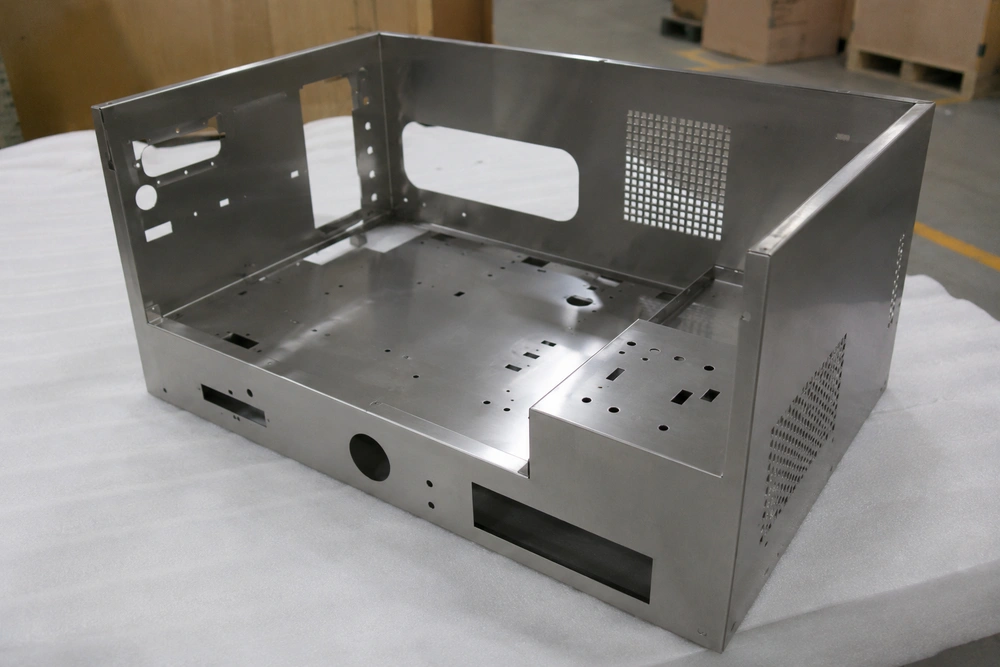
The versatility of MIG welding also plays a big role in its productivity. It can be used on a wide variety of metals, including steel, stainless steel, and aluminum. Whether you're working on a project that involves Price Custom Stamping Bending Welding Sheet Metal or 304 316 Stainless Steel Welding Metal Processing, MIG welding can handle it. You don't have to switch to different welding processes for different metals, which saves time and effort.


In addition, MIG welding produces clean welds with minimal spatter. Spatter is the small droplets of molten metal that can fly off during the welding process and stick to the surrounding area. With MIG welding, the shielding gas helps to reduce spatter, so there's less post - weld cleanup required. This is a huge time - saver in a metal fabrication shop. You don't have to spend hours grinding and cleaning up the spatter, and you can move the welded parts straight to the next stage of production.
When it comes to automation, MIG welding is well - suited for it. In modern metal fabrication, many companies are turning to automated welding systems to increase productivity. MIG welding can be easily integrated into robotic welding cells. The robots can be programmed to perform repetitive welding tasks with high precision and consistency. This not only increases the speed of production but also improves the quality of the welds. For instance, in the production of Oem Precision Fabrication Custom Brass Stainless Steel Titanium Metal 6061 Aluminum Turning Milling Service Cnc Machining Parts, automated MIG welding can ensure that each part is welded exactly the same way, reducing the chances of errors and rework.
However, like any welding process, MIG welding also has its challenges that can affect productivity. One of the issues is the need for proper shielding gas. If the shielding gas is not flowing correctly or if there's a leak in the gas supply system, it can lead to poor - quality welds. This means that you have to regularly check and maintain the gas supply equipment to ensure that the welding process runs smoothly.
Another challenge is the cost of consumables. The wire electrodes and shielding gas can add up over time, especially in high - volume production. But if you factor in the increased productivity and the quality of the welds, the overall cost - effectiveness of MIG welding is still quite high.
In a metal fabrication shop, to maximize the productivity of MIG welding, you need to have a well - organized workflow. You should have a proper inventory management system for the wire electrodes and shielding gas so that you never run out during a project. You also need to keep the welding equipment in good condition through regular maintenance.
Overall, the productivity of MIG welding in metal fabrication is quite high. It offers speed, ease of use, versatility, and the potential for automation. If you're in the metal fabrication business, MIG welding can be a great tool to increase your production capacity and improve the quality of your products.
If you're interested in learning more about how MIG welding can benefit your metal fabrication projects or if you're looking to source high - quality metal fabrication services, feel free to reach out. We're here to help you with all your metal fabrication needs and can have a detailed discussion about how MIG welding can be incorporated into your production process.
References
- AWS Welding Handbook, Volume 2: Welding Processes
- Welding: Principles and Applications by Larry Jeffus