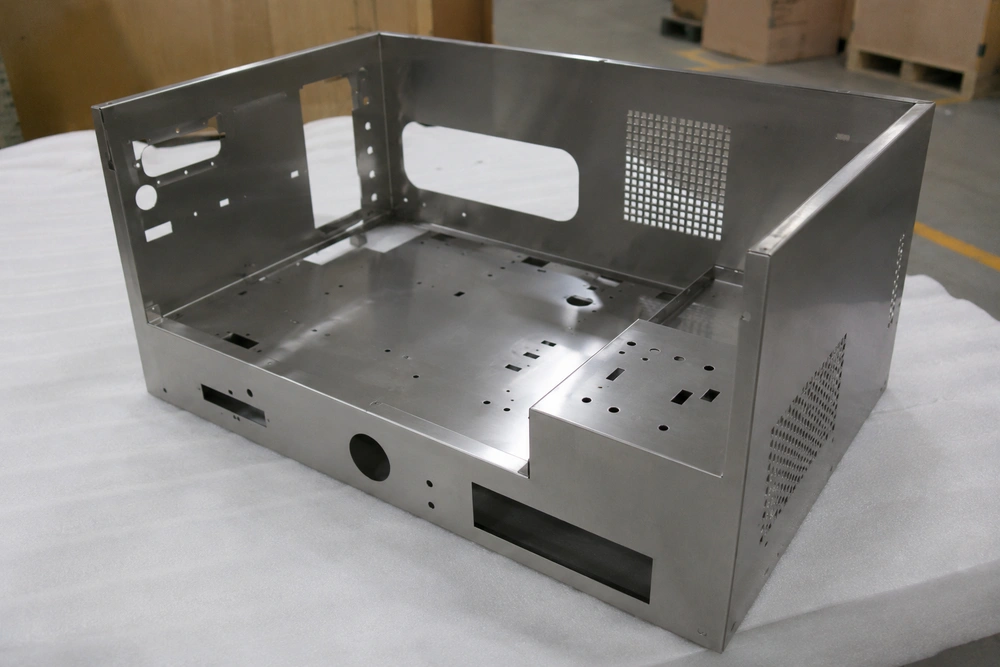

Hey there! As a supplier of metal parts, I often get asked about the hardness of common metal parts. It's a pretty important topic, especially if you're in the market for high - quality metal components. So, let's dive right in and explore what hardness means for different metal parts.
What is Hardness?
First things first, what exactly is hardness? In simple terms, hardness is a material's ability to resist deformation, indentation, or scratching. When it comes to metal parts, hardness can determine how well they'll hold up under various conditions, like wear and tear, pressure, or exposure to harsh environments. There are different ways to measure hardness, but the most common ones are the Rockwell, Brinell, and Vickers scales.


Common Metals and Their Hardness
Steel
Steel is one of the most widely used metals in the manufacturing of metal parts. It's an alloy made primarily of iron and carbon, with other elements sometimes added to enhance its properties. The hardness of steel can vary greatly depending on its composition and how it's heat - treated.
For example, mild steel, which has a relatively low carbon content (usually less than 0.3%), is quite soft. It's easy to machine and form, but it may not be the best choice for applications that require high hardness and wear resistance. On the other hand, high - carbon steel can be extremely hard. After proper heat treatment, such as quenching and tempering, high - carbon steel can achieve a Rockwell hardness of up to 60 HRC (Rockwell C scale). This makes it suitable for things like cutting tools, springs, and high - stress components.
If you're looking for steel parts with specific hardness requirements, we offer a Wholesale Price Sheet Metal Fabrication Service that can customize the steel parts according to your needs.
Aluminum
Aluminum is another popular metal for metal parts. It's lightweight, corrosion - resistant, and has good electrical and thermal conductivity. However, in its pure form, aluminum is relatively soft. The hardness of pure aluminum is around 20 - 30 Brinell.
But don't let that fool you. Aluminum alloys can be much harder. For instance, the 7075 aluminum alloy is known for its high strength and hardness. It's often used in aerospace and automotive applications where lightweight yet strong components are needed. After heat treatment, 7075 aluminum can have a Rockwell hardness of around 15 - 20 HRC.
Copper
Copper is a ductile and malleable metal with excellent electrical conductivity. Pure copper is relatively soft, with a Brinell hardness of about 40 - 50. It's commonly used in electrical wiring, plumbing, and decorative applications.
However, copper alloys like brass (copper and zinc) and bronze (copper and tin) can have different hardness levels. Brass can be harder than pure copper, depending on the zinc content. For example, some brass alloys can have a Brinell hardness of up to 120. Bronze, especially phosphor - bronze, is also known for its good hardness and wear resistance, making it suitable for bearings and bushings.
Stainless Steel
Stainless steel is a corrosion - resistant alloy that contains chromium and other elements. There are different grades of stainless steel, each with its own hardness characteristics.
Austenitic stainless steels, like 304 and 316, are relatively soft in their annealed state. They have a Rockwell hardness of around 20 - 30 HRC. However, they can be work - hardened to increase their hardness. Martensitic stainless steels, such as 410 and 420, are much harder. After heat treatment, they can achieve a Rockwell hardness of up to 50 - 60 HRC. These are often used in applications where corrosion resistance and high hardness are both required, like cutlery and surgical instruments. We provide Stainless Steel Sheet Metal Fabrication Part services to meet your stainless - steel needs.
Why Hardness Matters
The hardness of metal parts is crucial for several reasons. Firstly, it affects the part's durability. A harder metal part is less likely to wear out quickly, which means it will last longer in service. This is especially important for parts that are subject to friction, abrasion, or high - pressure loads.
Secondly, hardness can impact the machinability of the metal. Softer metals are generally easier to machine, but they may not hold their shape as well under high - speed machining operations. Harder metals, while more difficult to machine, can provide better dimensional stability and surface finish.
Finally, the hardness of a metal part can also influence its performance in specific applications. For example, in a cutting tool, a high - hardness material is needed to maintain a sharp edge and cut through other materials effectively. In a bearing, the right hardness is essential to ensure smooth rotation and reduce wear.
Our Metal Fabrication Capabilities
As a metal parts supplier, we have the expertise and equipment to fabricate metal parts with the desired hardness. We use advanced manufacturing processes, such as Turret Punch Laser Cut Metal Fabricator, to ensure precision and quality in every part we produce.
Whether you need steel parts with high hardness for heavy - duty applications or aluminum parts with a specific hardness for lightweight designs, we can help. Our team of engineers and technicians can work with you to select the right metal and heat - treatment process to achieve the hardness you need.
Contact Us for Your Metal Part Needs
If you're in the market for metal parts and have questions about hardness or any other aspect of metal fabrication, don't hesitate to reach out. We're here to provide you with the best solutions for your projects. Whether it's a small - scale prototype or a large - scale production run, we have the resources and experience to meet your requirements.
Let's start a conversation about your metal part needs today. We're confident that we can deliver high - quality metal parts that meet your hardness and performance expectations.
References
- "Metals Handbook: Properties and Selection: Irons, Steels, and High - Performance Alloys" by ASM International.
- "Materials Science and Engineering: An Introduction" by William D. Callister Jr. and David G. Rethwisch.