As a leading Pipe Fabrication supplier, I have witnessed the evolution and the importance of understanding the acoustic properties of fabricated pipes. In various industries, from construction to manufacturing, the acoustic behavior of pipes plays a crucial role in the overall performance and functionality of a system. This blog aims to delve into the acoustic properties of fabricated pipes, exploring their significance and how they can impact different applications.
1. Basics of Acoustic Properties in Pipes
Acoustic properties in pipes are primarily concerned with how sound waves propagate through the pipe material and the fluid (such as water or gas) inside the pipe. The two main aspects of acoustic properties are sound transmission and sound absorption.

Sound transmission refers to the ability of a pipe to allow sound waves to pass through it. This is influenced by factors such as the material of the pipe, its thickness, and the frequency of the sound waves. For example, metal pipes like steel are generally good conductors of sound due to their high density and stiffness. Sound waves can travel through steel pipes with relatively low attenuation, which means that they can carry sound over long distances. On the other hand, plastic pipes, such as PVC, tend to have lower sound transmission capabilities because they are less dense and have more internal damping.
Sound absorption, on the contrary, is the ability of a pipe to convert sound energy into other forms of energy, such as heat. Materials with high sound absorption coefficients can reduce the amount of sound that is transmitted through the pipe or reflected back. For instance, some composite pipes are designed with special inner linings that can absorb sound waves, which is particularly useful in applications where noise reduction is a priority.
2. Factors Affecting Acoustic Properties
2.1 Pipe Material
As mentioned earlier, the material of the pipe has a significant impact on its acoustic properties. Different materials have different densities, elastic moduli, and internal damping characteristics, which all affect how sound waves interact with the pipe.
- Steel Pipes: Steel is a commonly used material in pipe fabrication. It is strong, durable, and can withstand high pressures. However, its high density and stiffness make it a good conductor of sound. In industrial settings, where there are often high - pressure fluids flowing through steel pipes, the sound generated by the fluid flow can be easily transmitted through the pipes, causing noise pollution. But steel pipes can also be treated or insulated to reduce sound transmission. For more information on steel pipe fabrication, you can visit Direct Factory Custom Tube Processing Steel Pipe Fabrication.
- Plastic Pipes: Plastic pipes, such as PVC and PE, are lightweight and have good corrosion resistance. They are also known for their relatively low sound transmission. The internal structure of plastic materials provides some degree of damping, which helps to reduce the propagation of sound waves. Plastic pipes are often used in residential plumbing systems where noise reduction is important.
- Composite Pipes: Composite pipes are made by combining different materials to achieve specific properties. For example, a pipe with a metal outer layer and a plastic inner layer can combine the strength of the metal with the sound - absorbing properties of the plastic. These pipes are becoming increasingly popular in applications where both mechanical strength and acoustic performance are required.
2.2 Pipe Wall Thickness
The thickness of the pipe wall also affects its acoustic properties. A thicker pipe wall generally has a higher mass per unit area, which can increase the impedance mismatch between the pipe and the surrounding medium. This impedance mismatch can lead to more sound reflection and less sound transmission. However, increasing the wall thickness also increases the cost and weight of the pipe, so a balance needs to be struck between acoustic performance and other factors such as cost and structural requirements.
2.3 Fluid Inside the Pipe
The type of fluid flowing inside the pipe can have a major impact on the acoustic properties. For example, the flow velocity, density, and viscosity of the fluid all affect the generation and propagation of sound waves. High - velocity fluid flow can cause turbulence, which in turn generates noise. In addition, the density of the fluid affects the speed of sound in the fluid. For instance, sound travels faster in liquids than in gases, and this difference can influence how sound waves interact with the pipe walls.
3. Applications and the Importance of Acoustic Properties
3.1 Plumbing Systems
In residential and commercial plumbing systems, the acoustic properties of pipes are crucial for maintaining a quiet and comfortable environment. Noisy pipes can be a nuisance to occupants, especially in multi - story buildings where sound can easily travel through the pipe network. By using pipes with good sound - absorbing properties, such as plastic pipes or insulated steel pipes, the noise generated by water flow, such as the sound of water rushing through the pipes or the noise from water hammer, can be significantly reduced.
3.2 Industrial Piping Systems
In industrial settings, pipes are used to transport various fluids, including chemicals, gases, and high - pressure steam. The acoustic properties of these pipes are important for several reasons. Firstly, excessive noise from industrial pipes can be a safety hazard, as it can mask warning signals or cause hearing damage to workers. Secondly, noise can also indicate problems in the piping system, such as leaks or blockages. By monitoring the acoustic signals from the pipes, engineers can detect and diagnose these problems early. For example, in a petrochemical plant, the sound generated by the flow of oil and gas through the pipes can be analyzed to ensure the integrity of the system.
3.3 HVAC Systems
In heating, ventilation, and air - conditioning (HVAC) systems, pipes are used to distribute hot and cold air or water. The acoustic properties of these pipes can affect the overall comfort level in a building. Noisy HVAC pipes can disrupt the normal operation of the system and cause discomfort to the occupants. By using pipes with appropriate acoustic properties, the noise generated by the air or water flow can be minimized, improving the efficiency and comfort of the HVAC system.
4. Pipe Fabrication Techniques and Acoustic Performance
Pipe fabrication techniques can also influence the acoustic properties of the final product. For example, bending the pipe can change its cross - sectional shape and internal structure, which in turn affects the propagation of sound waves. Mould bending Fabrication U Shaped Bending Steel Pipe is a common fabrication process that can be used to create pipes with specific shapes for different applications. However, improper bending can cause stress concentrations and changes in the pipe's acoustic characteristics.
Welding is another important fabrication technique. A well - welded joint can ensure the structural integrity of the pipe and also maintain its acoustic performance. Poor welding can create irregularities in the pipe wall, which can scatter sound waves and increase sound transmission.
5. Custom Fabrication for Specific Acoustic Requirements
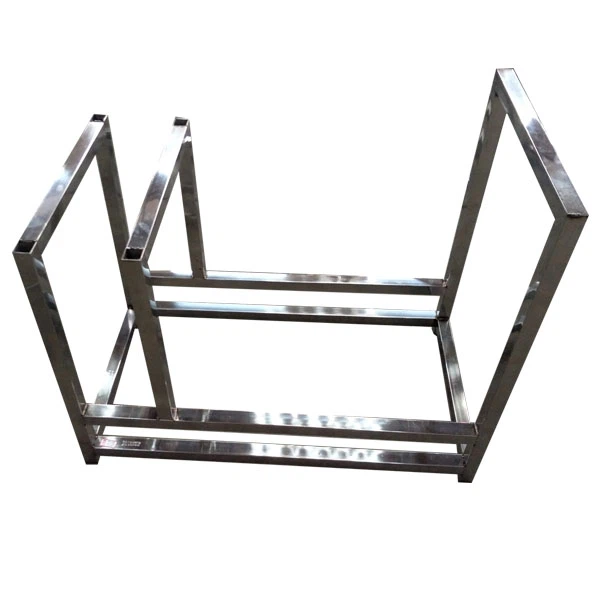
At our Pipe Fabrication company, we understand that different customers have different acoustic requirements. That's why we offer custom fabrication services to meet these specific needs. Whether it's a custom steel pipework fabrication for a display rack with specific noise - reduction requirements or a complex industrial piping system that needs to meet strict acoustic standards, we can provide tailored solutions. You can learn more about our custom steel pipework fabrications on Custom Steel Pipework Fabrications for Display Rack.
6. Conclusion and Call to Action
In conclusion, the acoustic properties of fabricated pipes are complex and influenced by many factors, including the pipe material, wall thickness, fluid inside the pipe, and fabrication techniques. Understanding these properties is essential for ensuring the optimal performance of pipes in various applications, from plumbing to industrial systems.
If you are in need of high - quality fabricated pipes with specific acoustic properties, we invite you to contact us for procurement and further discussions. Our team of experts is ready to assist you in finding the best solutions for your projects.
References
- Beranek, Leo L. "Acoustics." American Institute of Physics, 1954.
- Fahy, Frank J. "Foundations of Engineering Acoustics." Academic Press, 2001.
- Morse, Philip M., and K. Uno Ingard. "Theoretical Acoustics." Princeton University Press, 1968.