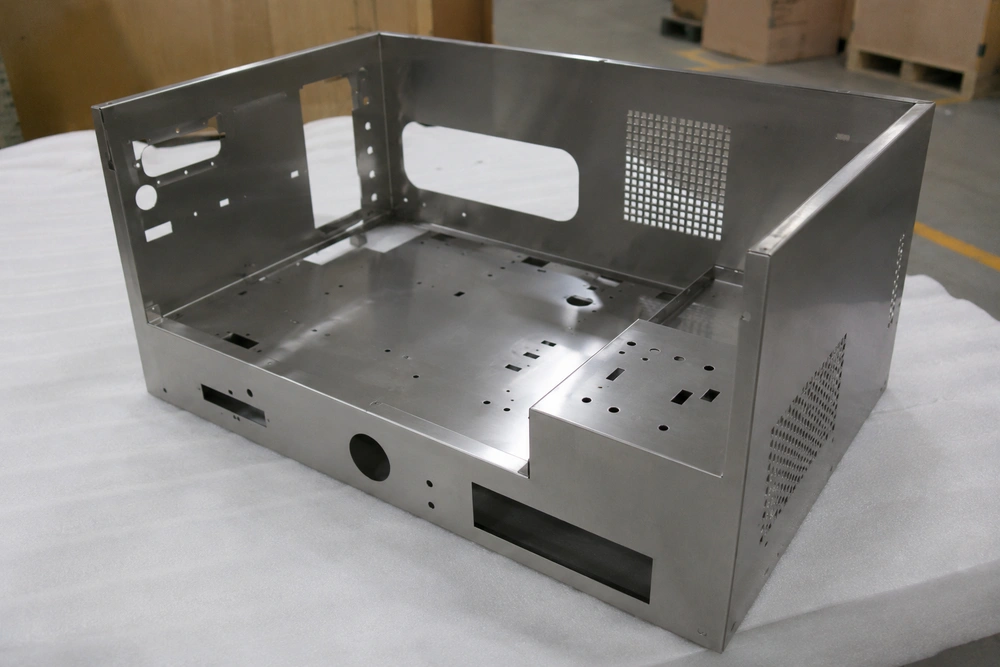

As a seasoned supplier in the Aluminium Fabrication industry, I understand the paramount importance of ensuring the quality of our fabricated products. Aluminium, known for its lightweight, corrosion-resistant, and malleable properties, is widely used in various sectors, from automotive to construction. However, the quality of aluminium fabricated products can vary significantly, and it is crucial for both suppliers and customers to have a comprehensive understanding of how to test their quality. In this blog, I will share some effective methods and techniques that we use to test the quality of our aluminium fabricated products.
Visual Inspection
The first and most basic step in testing the quality of aluminium fabricated products is visual inspection. This involves examining the product with the naked eye to check for any visible defects such as scratches, dents, cracks, or uneven surfaces. Visual inspection can also reveal issues with the finish of the product, such as poor powder coating or inconsistent color.
When conducting a visual inspection, it is important to have good lighting and a clean, flat surface to place the product on. Use a magnifying glass if necessary to detect small defects. Look for any signs of oxidation or corrosion, which can indicate poor quality or improper storage. A smooth, uniform surface without any visible flaws is a good indication of a high-quality product.
Dimensional Accuracy
Dimensional accuracy is another critical aspect of aluminium fabricated products. Products that do not meet the specified dimensions can cause problems during installation or use. To test dimensional accuracy, we use precision measuring tools such as calipers, micrometers, and coordinate measuring machines (CMMs).
Calipers are used to measure the external and internal dimensions of a product, such as length, width, and thickness. Micrometers provide even more precise measurements, especially for small components. CMMs are the most advanced measuring tools, capable of measuring complex geometries with high accuracy. They use a probe to touch the surface of the product and record the coordinates, which are then compared to the design specifications.


Material Composition Analysis
The material composition of aluminium fabricated products can have a significant impact on their quality and performance. To ensure that the products are made from the correct alloy and have the desired properties, we conduct material composition analysis.
One common method of material composition analysis is spectroscopy. Spectroscopy involves using a spectrometer to analyze the elemental composition of the aluminium alloy. This method can quickly and accurately determine the percentage of different elements in the alloy, such as copper, magnesium, and silicon. Another method is chemical analysis, which involves dissolving a small sample of the product in a chemical solution and analyzing the resulting solution to determine the elemental composition.
Mechanical Testing
Mechanical testing is used to evaluate the strength, ductility, and other mechanical properties of aluminium fabricated products. There are several types of mechanical tests that can be performed, including tensile testing, hardness testing, and impact testing.
Tensile testing involves applying a pulling force to a sample of the product until it breaks. This test measures the ultimate tensile strength, yield strength, and elongation of the material. Hardness testing measures the resistance of the material to indentation or scratching. There are several hardness testing methods, such as Brinell, Rockwell, and Vickers. Impact testing measures the ability of the material to absorb energy when subjected to a sudden impact.
Corrosion Resistance Testing
Aluminium is known for its excellent corrosion resistance, but the quality of the corrosion resistance can vary depending on the alloy, surface treatment, and environmental conditions. To test the corrosion resistance of aluminium fabricated products, we use several methods, including salt spray testing and immersion testing.
Salt spray testing involves exposing the product to a salt spray mist in a controlled environment for a specified period of time. After the test, the product is examined for any signs of corrosion, such as rust or pitting. Immersion testing involves immersing the product in a corrosive solution for a certain period of time and then evaluating the extent of corrosion.
Weld Quality Testing
If the aluminium fabricated product involves welding, it is important to test the quality of the welds. Weld quality can affect the strength and integrity of the product. There are several methods for testing weld quality, including visual inspection, non-destructive testing (NDT), and destructive testing.
Visual inspection of welds involves looking for any visible defects such as cracks, porosity, or incomplete fusion. NDT methods, such as ultrasonic testing, radiographic testing, and magnetic particle testing, can detect internal defects in the welds without damaging the product. Destructive testing, such as tensile testing or bend testing of weld samples, can provide more detailed information about the strength and quality of the welds.
Surface Finish Testing
The surface finish of aluminium fabricated products can affect their appearance, corrosion resistance, and functionality. To test the surface finish, we use methods such as gloss measurement, roughness measurement, and adhesion testing.
Gloss measurement measures the amount of light reflected from the surface of the product. A high gloss finish can indicate a smooth and uniform surface. Roughness measurement measures the irregularities on the surface of the product. A smooth surface with low roughness is generally preferred. Adhesion testing measures the strength of the bond between the coating and the substrate. This is important for products with powder coating or other surface treatments.
Conclusion
Testing the quality of aluminium fabricated products is a multi-step process that requires a combination of visual inspection, dimensional accuracy measurement, material composition analysis, mechanical testing, corrosion resistance testing, weld quality testing, and surface finish testing. By using these methods, we can ensure that our products meet the highest quality standards and satisfy the needs of our customers.
If you are interested in our Powder Coating Toolbox Custom Aluminium Fabrication Work, Customized CNC Processing Aluminum Fabrication for Truck Tool Cabinet, or Customized Training Bike Frame Fabrication Aluminium with Powder Coating, or if you have any other requirements for aluminium fabricated products, please feel free to contact us for procurement discussions. We are committed to providing you with high-quality products and excellent service.
References
- ASM Handbook Volume 2: Properties and Selection: Nonferrous Alloys and Special-Purpose Materials
- ASTM International Standards for Aluminium and Aluminium Alloys
- Aluminum Association Technical Publications